

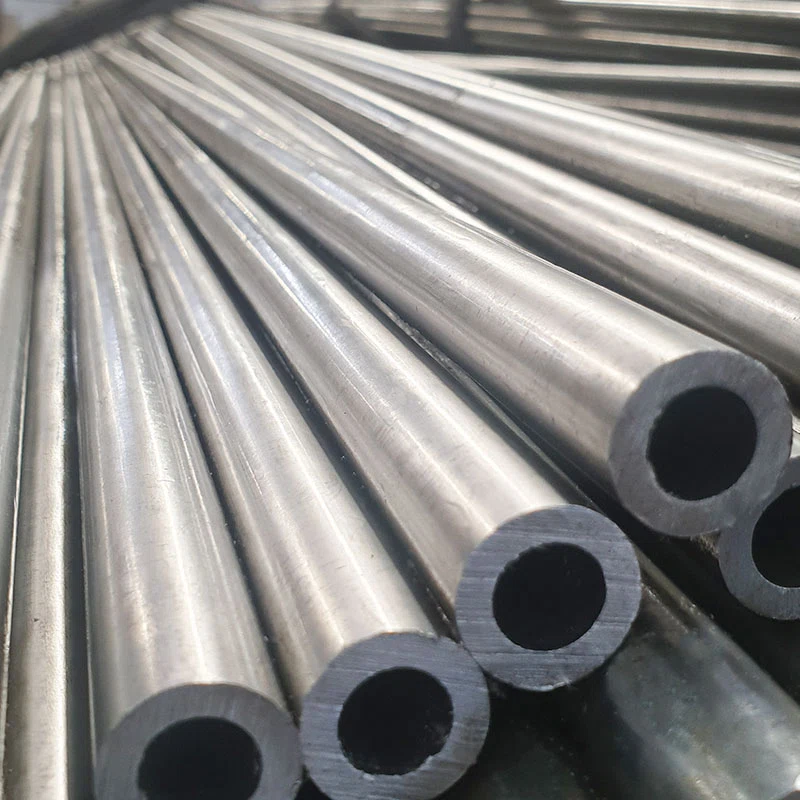
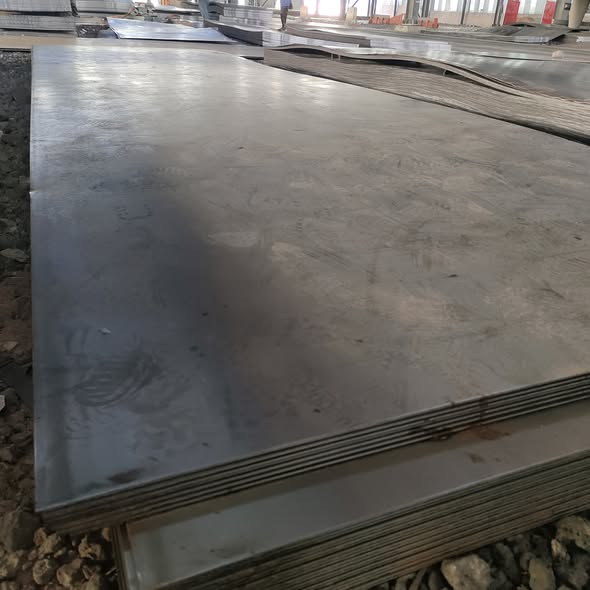
Quick Answer: Seamless steel pipe is manufactured without a weld seam through hot-rolling or extrusion, delivering superior pressure resistance and structural uniformity. Welded pipe uses formed and fused steel strip, offering cost efficiency for lower-pressure applications.
Manufacturing Process: Where the Difference Begins
1. How Seamless Pipe Is Made
The hot-rolling mandrel process defines seamless pipe production:
- A solid steel billet is heated to ~1,200°C and pierced by a rotating mandrel
- The mandrel expands the billet into a hollow shell without cutting or joining
- Subsequent rolling mills reduce wall thickness to specification
- No fusion line is created — the grain structure remains continuous
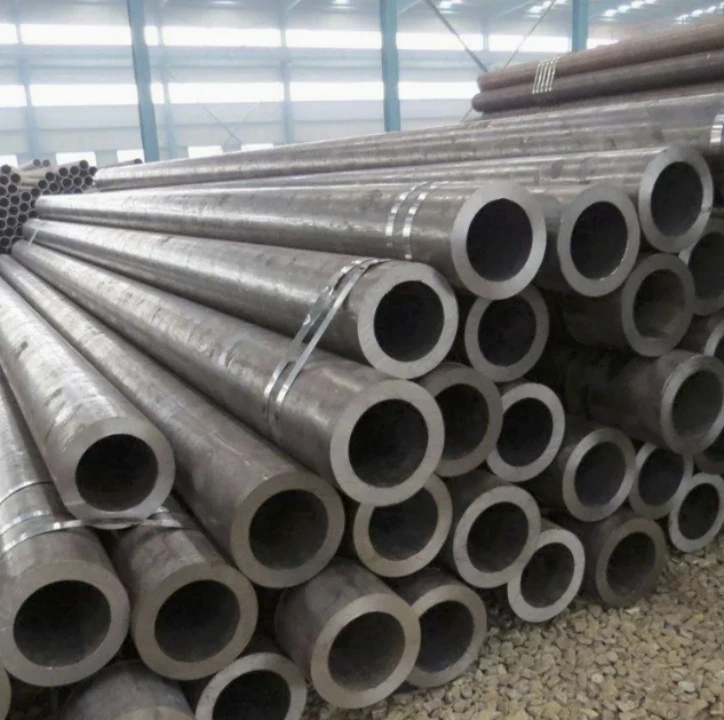
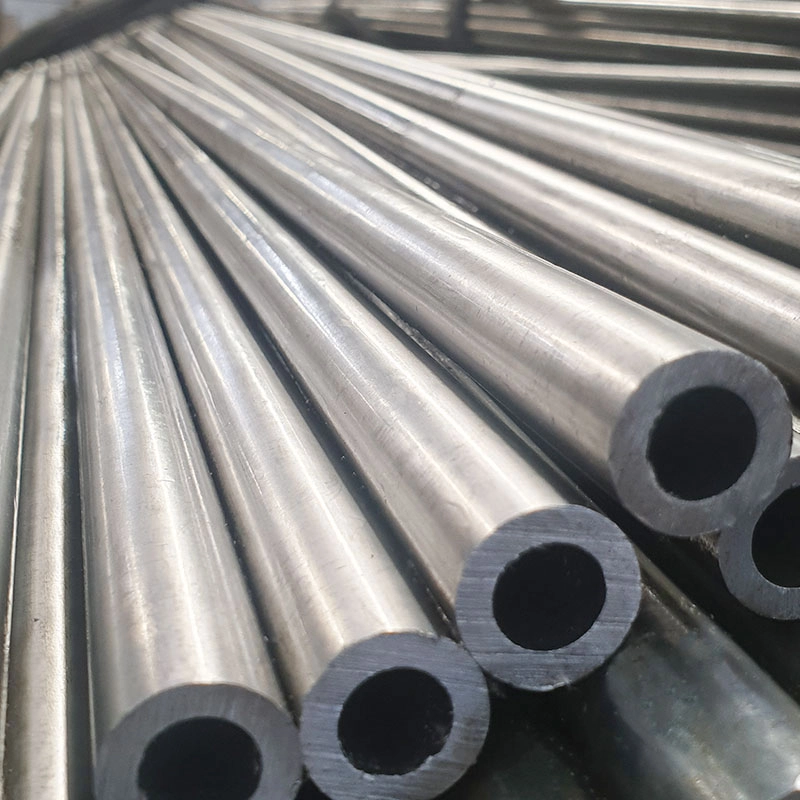
This process eliminates the weld seam entirely. Carbon seamless steel pipe produced via this method retains isotropic mechanical properties across the full cross-section, which directly influences fatigue resistance and burst pressure performance.
Cold-drawing variant: For tighter tolerances, the hot-rolled shell is cold-drawn through a die, achieving surface finishes under Ra 1.6 µm and wall thickness tolerances within ±5%.
2. How Welded Pipe Is Made
Three primary welding methods exist:
| Method | Full Name | Typical Use |
|---|---|---|
| ERW | Electric Resistance Welding | Line pipe, structural |
| LSAW | Longitudinal Submerged Arc Welding | Large-diameter pipeline |
| SSAW | Spiral Submerged Arc Welding | Water/gas transmission |
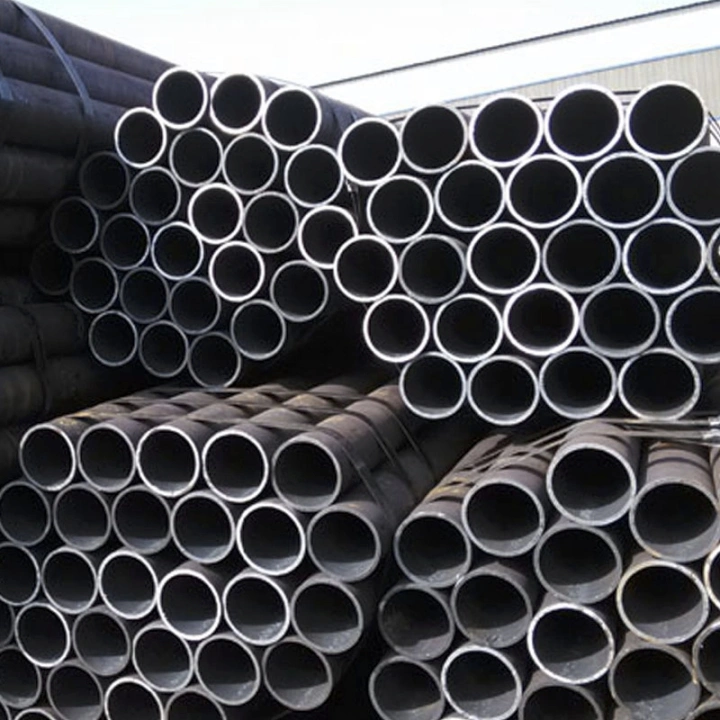
ERW pipe is formed by rolling steel coil into a tube and fusing edges under high-frequency current. The weld zone has a distinct metallurgical boundary — a known stress concentration point under cyclic loading.
Mechanical Performance Comparison
1. Pressure Rating Under ASME B31.3
ASME B31.3 Process Piping Code assigns a weld joint quality factor (E):
- Seamless pipe: E = 1.0 (no derating required)
- ERW pipe: E = 0.85 (15% pressure capacity reduction)
- Furnace butt-welded pipe: E = 0.60
Practical impact: A seamless pipe rated at 10,000 psi allowable stress yields 10,000 psi design pressure. The equivalent ERW pipe yields only 8,500 psi — requiring a heavier wall schedule to compensate, negating some cost savings.
2. Fatigue Behavior Under Cyclic Loading
Longitudinal weld seam fatigue failure is a documented failure mode in pressure cycling applications:
- Weld toe stress concentration factor (Kt): 1.5–3.0 depending on geometry
- Seamless pipe Kt: effectively 1.0 (no geometric discontinuity)
- API 5L fatigue test data shows ERW pipe fails at 60–75% of the cycle count of equivalent seamless pipe under identical alternating stress amplitudes
- In hydraulic systems with >10,000 pressure cycles/year, seamless pipe is the engineering default
| Parameter | Seamless | ERW | LSAW |
|---|---|---|---|
| ASME B31.3 E-factor | 1.00 | 0.85 | 0.80 |
| Fatigue Kt | ~1.0 | 1.5–3.0 | 1.2–2.0 |
| Max typical OD (mm) | 660 | 610 | 1,620 |
| Wall thickness uniformity | ±5–8% | ±10–12% | ±10–15% |
| Relative cost (equal spec) | 1.3–1.8× | 1.0× | 1.1–1.4× |
Dimensional Tolerances and Standards
1. ASTM A519 Tolerance Classes for Seamless Mechanical Tubing
ASTM A519 governs seamless mechanical tubing for precision applications. It specifies four tolerance classes:
- Class 1 (Hot-finished): OD ±1%, wall ±12.5%
- Class 2 (Cold-drawn, standard): OD ±0.5%, wall ±10%
- Class 3 (Cold-drawn, precision OD): OD ±0.25 mm, wall ±10%
- Class 4 (Cold-drawn, precision OD + wall): OD ±0.25 mm, wall ±7.5%
Class 3 and 4 tubing is specified in hydraulic cylinder barrels, precision shafting, and aerospace structural components where concentricity directly affects performance.
2. Key Standards Cross-Reference
| Standard | Scope | Pipe Type |
|---|---|---|
| ASTM A106 Grade B | High-temp seamless carbon pipe | Seamless |
| ASTM A53 Type S | General seamless carbon pipe | Seamless |
| ASTM A519 | Seamless mechanical tubing | Seamless |
| API 5L PSL2 | Line pipe (both types) | Both |
| EN 10210 | Hot-finished structural hollow sections | Seamless |
| ASTM A513 | ERW mechanical tubing | Welded |
Quality Certification: EN 10204 3.1 and Supplier Differentiation
EN 10204 defines inspection document types. For high-pressure and critical service:
- 2.2 Test Report: Generic batch data — not traceable to specific pipe heat
- 3.1 Certificate: Issued by the manufacturer’s authorized inspector; heat-specific chemical and mechanical data
- 3.2 Certificate: Co-signed by independent third party (TÜV, Bureau Veritas, Lloyd’s)
How EN 10204 3.1 mill certifications differentiate high-quality seamless steel pipe suppliers:
- 3.1 certificates must include heat number, ladle analysis, tensile/yield/elongation test results, and hydrostatic test confirmation
- Reputable seamless steel pipe manufacturers maintain traceability from billet cast to finished pipe
- Suppliers offering only 2.2 documents for pressure service pipe represent a procurement risk
- NACE MR0175/ISO 15156 sour service applications additionally require sulfide stress cracking (SSC) test data on the certificate
When evaluating a seamless steel pipe supplier, request 3.1 mill test reports with full heat traceability as a minimum qualification criterion.
Industry Applications: Where Each Pipe Type Performs
1. Seamless Pipe Applications
Oil and gas upstream (HPHT wells):
- Tubing strings in wells exceeding 10,000 psi BHFP
- Christmas tree and wellhead manifold piping
- API 5CT casing in sour gas service (requires SSC-resistant grades)
Petrochemical and refining:
- ASTM A335 P91/P22 alloy seamless pipe in steam reformers at 540–650°C
- Hydrotreater reactor feed/effluent piping under ASME B31.3 severe cyclic service
Hydraulic and mechanical systems:
- Hydraulic cylinder barrels (ASTM A519 Class 3/4)
- Precision mechanical tubing for automotive transmission shafts
2. Welded Pipe Applications
Structural and civil:
- ASTM A500 ERW hollow structural sections (HSS) in building frames
- ASTM A252 welded piling in foundation systems
Water and gas distribution:
- AWWA C200 steel water pipe (LSAW, large diameter)
- API 5L Grade X52/X65 ERW in onshore gas gathering at <1,500 psi
Key decision rule: When operating pressure exceeds 1,500 psi, temperature exceeds 300°C, or cyclic loading exceeds 5,000 cycles/year — default to seamless pipe for high-pressure systems.
Cost-Benefit Analysis for Procurement
Seamless pipe costs 30–80% more per unit length than equivalent ERW pipe. The economic case for seamless:
- Avoided failure cost: A single weld-seam failure in a refinery process line averages $2M–$15M in unplanned downtime
- Wall schedule savings: E=1.0 factor allows thinner walls vs. ERW at identical design pressure
- Inspection cost reduction: Seamless pipe requires less volumetric NDE (no weld seam to radiograph)
- Lifecycle advantage: In corrosive service, uniform wall thickness prevents localized thinning at weld zones
For carbon seamless steel pipe in ASME B31.3 Category M fluid service, the premium is consistently justified by risk-adjusted lifecycle cost.
FAQ: Seamless vs. Welded Steel Pipe
Q: How does the hot-rolling mandrel process eliminate weld seams?
The mandrel pierces a solid billet, forming a continuous hollow tube with no fusion joint.
Q: What is the ASME B31.3 pressure rating difference between seamless and ERW?
Seamless uses E=1.0; ERW uses E=0.85 — a 15% pressure capacity reduction.
Q: What do EN 10204 3.1 certificates confirm for seamless pipe suppliers?
Heat-specific chemical composition, mechanical test results, and hydrostatic test data with full traceability.
Q: What ASTM A519 tolerance class suits hydraulic cylinder applications?
Class 3 or Class 4 cold-drawn tubing meets the concentricity and wall uniformity required.
Q: How much faster does ERW pipe fail under fatigue vs. seamless?
ERW pipe typically fails at 60–75% of the cycle count of seamless pipe under equivalent stress.
Q: Which seamless pipe standard applies to high-temperature steam service?
ASTM A335 P91 or P22 alloy seamless pipe for service above 450°C.
Q: When is welded pipe the correct choice over seamless?
Structural, low-pressure fluid service below 1,500 psi, or large-diameter applications where seamless is not manufacturable.
Q: What certifies a high-quality seamless steel pipe manufacturer?
EN 10204 3.1 mill certificates, API monogram license, and full billet-to-pipe heat traceability.
Conclusion
Seamless steel pipe delivers measurable engineering advantages — E=1.0 pressure factor, Kt ≈ 1.0 fatigue performance, and dimensional precision under ASTM A519 — that welded pipe cannot replicate. These properties justify its use in oil and gas, petrochemical, and high-pressure hydraulic systems where failure consequences are severe.
Procurement recommendation: Specify seamless pipe for any application exceeding 1,500 psi, 300°C, or 5,000 pressure cycles annually. Require EN 10204 3.1 mill certificates from your seamless steel pipe supplier. Validate that your carbon seamless steel pipe manufacturer holds API 5L or equivalent product licenses with third-party audit records.
For structural and low-pressure distribution applications, ERW and LSAW welded pipe remain cost-effective and code-compliant choices.
References and Standards:
- ASME B31.3-2022, Process Piping, Table A-1B and Para. 302.3.5
- ASTM A519-22, Standard Specification for Seamless Carbon and Alloy Steel Mechanical Tubing
- ASTM A106/A106M-22, Seamless Carbon Steel Pipe for High-Temperature Service
- API 5L-2018, Specification for Line Pipe, 46th Edition
- EN 10204:2004, Metallic Products — Types of Inspection Documents
- NACE MR0175/ISO 15156-2015, Petroleum and Natural Gas Industries — Materials for Use in H₂S-Containing Environments
- API 5CT-2018, Specification for Casing and Tubing
- ASTM A335/A335M-22, Seamless Ferritic Alloy-Steel Pipe for High-Temperature Service