

Article Summary: Steel rebar (short for ‘steel reinforcing bar’) is a steel product embedded in concrete to improve its ability to resist tensile forces and control cracking. According to the Concrete Reinforcing Steel Institute (CRSI) and ASTM International, reinforcing bars are manufactured to specific standards that cover properties such as dimensions, strength, deformation patterns, and testing. This helps engineers to specify the right type of reinforcement for concrete structures.
What Is Steel Rebar?
Steel rebar, also known as reinforced bar, is a steel bar used to reinforce concrete in buildings, bridges, foundations, roads, retaining walls and other civil engineering structures. While concrete performs well under compression, it is comparatively weak in tension. When tensile forces develop due to bending, shrinkage, temperature changes or other structural actions, the reinforcing steel helps to carry these forces and limits the development of cracks. The combination of concrete and steel creates reinforced concrete, a composite material that is widely used due to its compressive capacity, tensile reinforcement, durability, and practical construction methods.
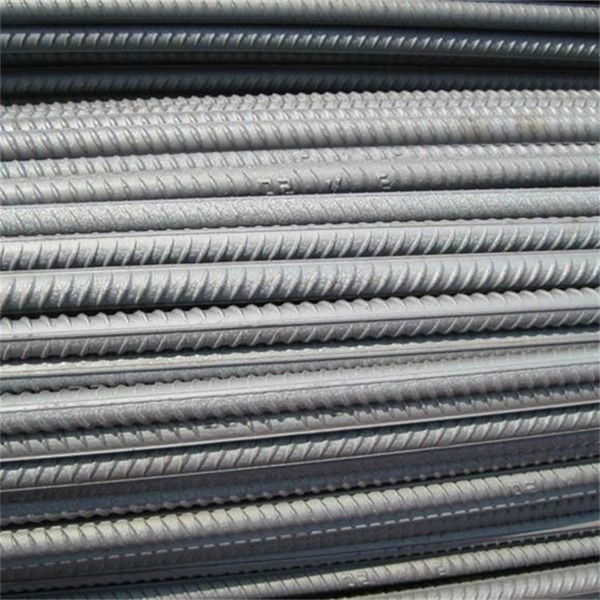
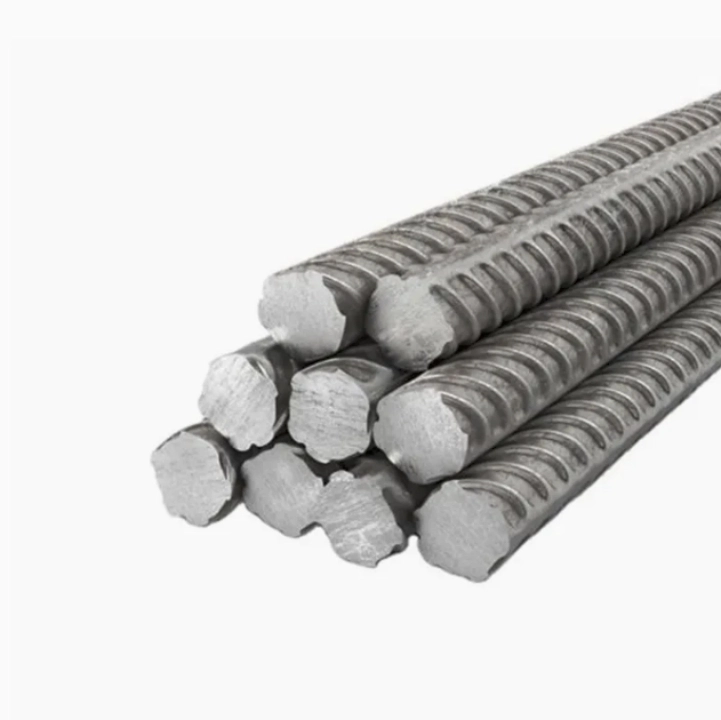
Most conventional steel rebar is made from carbon steel and has a ribbed or deformed surface. These raised features help the surrounding concrete to grip the bar and transfer forces between the two materials. Plain round bars are also available for certain applications, but deformed bars are commonly specified for structural reinforcement. Rebar is supplied in a variety of diameters, lengths, grades, and surface conditions, and the most suitable option is selected based on engineering design, local codes, exposure conditions, and project specifications.
The term ‘steel rebar’ describes a product category rather than a single, universal grade. In the United States, ASTM A615/A615M covers deformed and plain carbon steel bars for concrete reinforcement, while ASTM A706/A706M addresses deformed and plain low alloy steel bars, which have requirements suited to applications where controlled mechanical properties and weldability are important. Other regions use standards such as the European EN 10080 specification and country-specific standards. These standards are not automatically interchangeable, so the engineer and procurement team must verify which one the project requires.
How Does Steel Rebar Work in Concrete?
Reinforced concrete relies on the complementary behaviour of concrete and steel. Concrete carries most of the compressive stress, while the reinforcing bars resist tensile forces in areas where concrete alone would be inadequate. In a reinforced concrete beam, for instance, bending can put one side of the structure under compression and the other under tension. Properly positioned rebar helps to resist the tension, while the concrete cover protects the reinforcement and supports the composite section. The amount, diameter, spacing, and location of the reinforcement must be calculated based on the loads and conditions that the structure is expected to experience.
The bond between the rebar and the concrete is essential to this process. Surface deformations create a mechanical interlock that helps to transfer stress from the concrete into the bar over an appropriate development length. However, if the reinforcement is not embedded deeply enough, is incorrectly positioned, or lacks adequate anchorage, the intended force transfer may not occur. Designers therefore consider factors such as bar diameter, concrete strength, cover, spacing, confinement, lap splices and anchorage when specifying a reinforcement layout.
Rebar also helps to manage cracking caused by shrinkage, temperature variation and service loads. While it does not eliminate all cracks in concrete, properly designed reinforcement helps to distribute cracking and limit crack widths under relevant conditions. This is important because cracks can provide pathways for moisture and chloride ions to reach the steel. Good structural design must therefore combine appropriate reinforcement with suitable concrete quality, cover, placement and curing practices.
Common Types of Steel Rebar
Steel rebar can be classified by its material composition, surface treatment, mechanical properties, or intended use. Conventional carbon-steel rebar remains widely used because it is generally economical, available in standard sizes, and compatible with established reinforced-concrete construction practices. Other options, including epoxy-coated, galvanized, and stainless steel reinforcement, may be considered when corrosion exposure or project service-life requirements justify additional protection or a different material.
| Rebar type | Main characteristics | Typical applications | Key consideration |
| Black carbon-steel rebar | Conventional uncoated steel with a ribbed surface | Buildings, foundations, slabs, beams, columns | Economical and widely available; corrosion protection depends heavily on concrete quality and cover |
| Epoxy-coated rebar | Steel bar coated with an epoxy barrier | Bridge decks, parking structures, and selected chloride-exposed concrete | Coating damage during handling or installation must be controlled |
| Galvanized rebar | Steel bar protected with a zinc coating | Concrete exposed to moisture or selected corrosive environments | Suitability depends on exposure, coating specification, and project requirements |
| Stainless steel rebar | Corrosion-resistant alloy reinforcement | Marine structures, bridge decks, and critical long-life infrastructure | Higher initial material cost may be justified by lifecycle performance |
| Weldable low-alloy rebar | Composition and properties controlled under the applicable specification | Structures requiring defined mechanical properties or approved welding procedures | Verify grade requirements and welding procedures before fabrication |
| High-strength rebar | Reinforcement meeting a higher specified yield-strength grade | Structures where design may benefit from higher reinforcement strength | Higher strength does not automatically reduce every reinforcement or detailing requirement |
These categories should not be treated as equivalent performance ratings. For example, epoxy-coated and galvanized bars rely on protective coatings, while stainless steel derives corrosion resistance from its alloy composition. Their performance depends on the exposure environment, fabrication quality, installation practices, and concrete design. The Concrete Reinforcing Steel Institute identifies several corrosion-resistant reinforcement options and emphasizes that cost, availability, and the required level of corrosion resistance should be considered together.
Steel Rebar Grades and Standards
The grade of rebar indicates a defined level of mechanical performance under a particular standard. In ASTM specifications, grade designations typically relate to minimum yield strength, expressed in ksi or MPa; however, the full specification covers additional requirements. Depending on the standard and grade, these can include tensile strength, elongation, bending performance, dimensions, deformation patterns, chemical composition, and marking. While a higher grade can provide greater specified yield strength, it is not necessarily the best choice for every structure, as ductility, seismic detailing, development length, and code provisions also matter.
Two important North American specifications are ASTM A615/A615M and ASTM A706/A706M. ASTM A615/A615M covers deformed and plain carbon steel bars for concrete reinforcement and defines multiple yield strength grades. ASTM A706/A706M covers low-alloy reinforcing bars and includes material requirements relevant to applications where mechanical properties and weldability are important. For projects in other markets, the required specification may be based on national or regional standards instead. It is always best to confirm the current edition specified in the contract rather than relying on a supplier’s informal grade description.
| Specification or grade concept | What it tells the buyer | What must still be verified |
| ASTM A615/A615M | Requirements for plain and deformed carbon-steel reinforcing bars | Specified grade, bar size, test results, and project acceptance requirements |
| ASTM A706/A706M | Requirements for low-alloy reinforcing bars with controlled properties | Grade, chemical and mechanical limits, and any welding procedure requirements |
| Yield-strength grade | The minimum specified stress at which the bar begins to yield under the applicable test definition | Tensile strength, elongation, ductility, and structural-code compatibility |
| Regional standard, such as EN 10080 with applicable national requirements | Reinforcement requirements for a particular standards framework | National provisions, product class, certification, and project-specific acceptance |
| Corrosion-resistant reinforcement specification | Material or coating requirements intended to improve corrosion performance | Coating condition or alloy grade, exposure suitability, and handling requirements |
When reviewing a rebar certificate, buyers should match the reported values to the exact specification and grade named in the purchase order. A generic statement such as “high-strength steel bar” is insufficient for quality-critical construction because it does not establish compliance with the required standard. Traceability, heat identification, test reports, and proper product marking help the project team verify that the delivered material corresponds to the approved design.
What Are the Main Applications of Steel Rebar?
- Buildings and residential construction
Steel rebar is used in reinforced concrete foundations, footings, columns, beams, floor slabs, retaining walls, and staircases. In residential and commercial buildings, reinforcement is designed to resist the loads and structural actions specified by the engineer, including the effects of building use, wind, seismic forces where relevant, and foundation conditions. Rebar size and spacing vary by element; there is no single diameter or layout that is suitable for every building. Construction drawings and local building codes determine the required reinforcement and detailing.
- Roads, bridges, and transportation infrastructure
Highway pavements, bridge decks, abutments, piers, barriers, and other transport structures use rebar to carry tensile forces and control cracking. These structures may face repeated traffic loading, water exposure, deicing salts, or marine chloride environments, making corrosion management particularly important. The Federal Highway Administration has documented corrosion-related deterioration of reinforcing steel as a significant challenge for concrete bridge durability. For such projects, rebar selection must be considered alongside concrete mix design, cover depth, drainage, crack control, and maintenance planning.
- Industrial facilities and foundations
Industrial plants use steel rebar in equipment foundations, heavy-duty floors, storage areas, retaining structures, and reinforced concrete supports. These applications may be designed for concentrated equipment loads, vibration, impact, or exposure to chemicals and process water. The appropriate reinforcement depends on the structural design and operating conditions rather than the industrial label alone. Where chemical attack or severe corrosion is possible, engineers should assess both the concrete’s resistance and the reinforcement protection strategy.
- Marine and corrosion-exposed structures
Ports, seawalls, coastal bridges, offshore-related infrastructure, and other chloride-exposed structures may require more careful reinforcement selection than ordinary inland construction. Chlorides can penetrate concrete and disrupt the protective environment around carbon steel, leading to corrosion under suitable conditions. Corrosion products occupy more volume than the original metal, which can create internal pressure, cracking, delamination, and eventually loss of reinforcement section. Depending on the project, protective coatings, stainless steel reinforcement, improved concrete durability, increased cover, or a combination of measures may be considered. No single solution removes the need for sound structural and durability design.
How to Choose the Right Steel Rebar?
Selecting steel rebar involves more than matching the bar diameter to a drawing. The material must satisfy the design standard, provide the required mechanical performance, suit the exposure environment, and be available in a form that can be handled and installed correctly. A sound procurement process establishes these requirements before comparing supplier prices.
- Confirm the design specification. Identify the applicable standard, grade, diameter, bar shape, and required mechanical properties. Do not substitute a nominally similar grade without written approval from the responsible engineer.
- Assess the exposure environment. Consider whether the concrete will be exposed to deicing salts, marine spray, persistent moisture, industrial contaminants, or other sources of corrosion risk. The exposure assessment may affect the choice between conventional and corrosion-resistant reinforcement.
- Check dimensions and deformation requirements. Bar diameter, unit mass, length, rib geometry, bending dimensions, and permitted tolerances must comply with the applicable specification. These details affect both structural performance and compatibility with the reinforcement drawings.
- Review fabrication and weldability. Rebar may need to be cut, bent, connected with couplers, or welded under an approved procedure. Welding should not be assumed acceptable for every bar grade; the material specification and project requirements must be checked first.
- Verify documentation and traceability. Request the required mill test certificates, heat or batch identification, inspection records, and conformity documents. Make sure the documentation corresponds to the actual delivered bars rather than a generic product family.
- Consider lifecycle cost. Compare the purchase price with fabrication, installation, inspection, maintenance, and potential repair costs. In highly corrosive environments, a higher-cost reinforcement option may be worth evaluating if it can reduce long-term deterioration risk.
- Coordinate delivery with the construction schedule. Confirm required quantities, cut-and-bent bar schedules, delivery batches, storage arrangements, and unloading capabilities. Poor storage or handling can lead to misplaced bars, damaged coatings, unnecessary contamination, or installation delays.
What Affects Steel Rebar Prices?
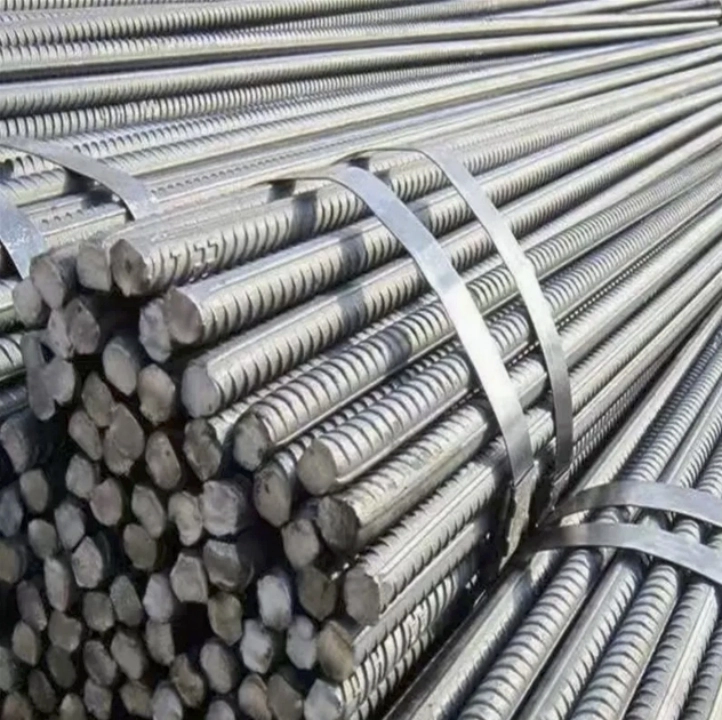
The price of steel rebar varies according to the steel market, grade, bar diameter, order volume, manufacturing route, processing requirements, and delivery location. Other factors that may affect the final quotation include freight, energy costs, regional supply conditions, and project-specific certification or inspection requirements. As prices can change over time, a quotation should clearly state its validity period, the basis of delivery, applicable taxes, and whether cutting, bending, bundling, or other services are included.
When comparing suppliers, ensure that the products meet the same specifications and are quoted on a comparable basis. A lower price may reflect differences in grade, compliance documentation, delivery terms or fabrication services, rather than offering a more efficient equivalent product. For larger projects, it is useful to evaluate not only the price per tonne, but also dimensional compliance, material traceability, delivery reliability and the cost of handling rejected or non-conforming bars. These checks help procurement teams to reduce avoidable risks without treating price as the sole measure of value.
Steel Rebar FAQs
- What is steel rebar used for?
Steel rebar reinforces concrete in foundations, beams, columns, slabs, bridges, roads, and other structures. It helps concrete resist tensile forces and controls cracking when designed and installed correctly.
- What is the difference between rebar and steel bars?
Rebar is steel manufactured and specified for reinforcing concrete, commonly with surface deformations that improve bond. General-purpose steel bars may have different dimensions, grades, surface finishes, and mechanical requirements and are not automatically suitable as structural reinforcement.
- Which grade of steel rebar is best?
The best grade is the one that meets the structural design, applicable code, exposure conditions, and project specification. ASTM A615 and ASTM A706 are common North American standards, but the required grade must be confirmed by the engineer.
- Does steel rebar rust inside concrete?
Rebar can corrode when conditions disrupt the protective environment normally provided by concrete, especially when chlorides penetrate or carbonation reduces alkalinity. Adequate concrete cover, suitable mix design, good placement, and appropriate corrosion protection help reduce the risk.
- Can steel rebar be welded?
Some reinforcing bars can be welded under suitable procedures, but weldability depends on the grade, chemical composition, and applicable specification. Confirm the material requirements and obtain engineering approval before welding reinforcement.
- How do I calculate the quantity of steel rebar needed?
Rebar quantities are generally calculated from approved structural drawings and bar-bending schedules, accounting for bar lengths, diameters, shapes, spacing, laps, anchorage, and permitted wastage. For structural work, use the engineer’s reinforcement schedule and project-specific quantity rules rather than relying on a generic estimate alone.
Conclusion
Steel rebar is a fundamental component of reinforced concrete, providing tensile reinforcement and supporting crack control. It works with the concrete to resist structural loads. Its performance depends on the correct combination of grade, diameter, deformation pattern, detailing, concrete cover, installation quality, and exposure protection. In North America, the widely used specifications are ASTM A615/A615M and ASTM A706/A706M, but the applicable standard must always match the governing code and contract requirements of the project.
The most reliable approach for contractors, engineers and steel buyers is to verify the compliance of materials, their mechanical properties, traceability, suitability for fabrication and delivery conditions before purchasing. Where corrosion is a major concern, the selection of reinforcement should form part of a broader durability strategy that considers concrete quality and structural detailing. Specifying a high-quality steel rebar product helps projects to meet their performance requirements and reduces avoidable construction and maintenance risks.