

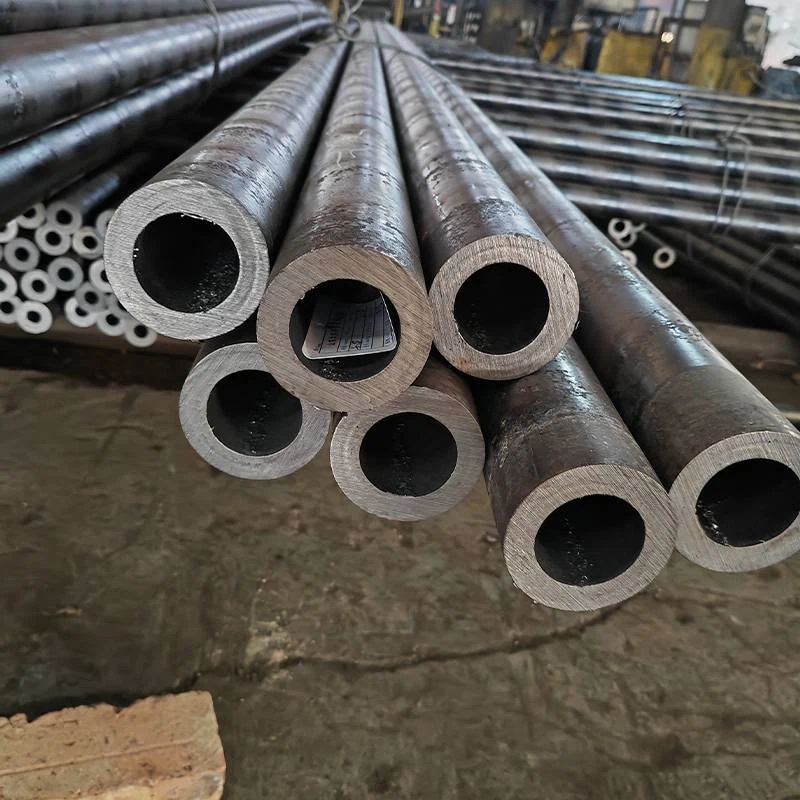
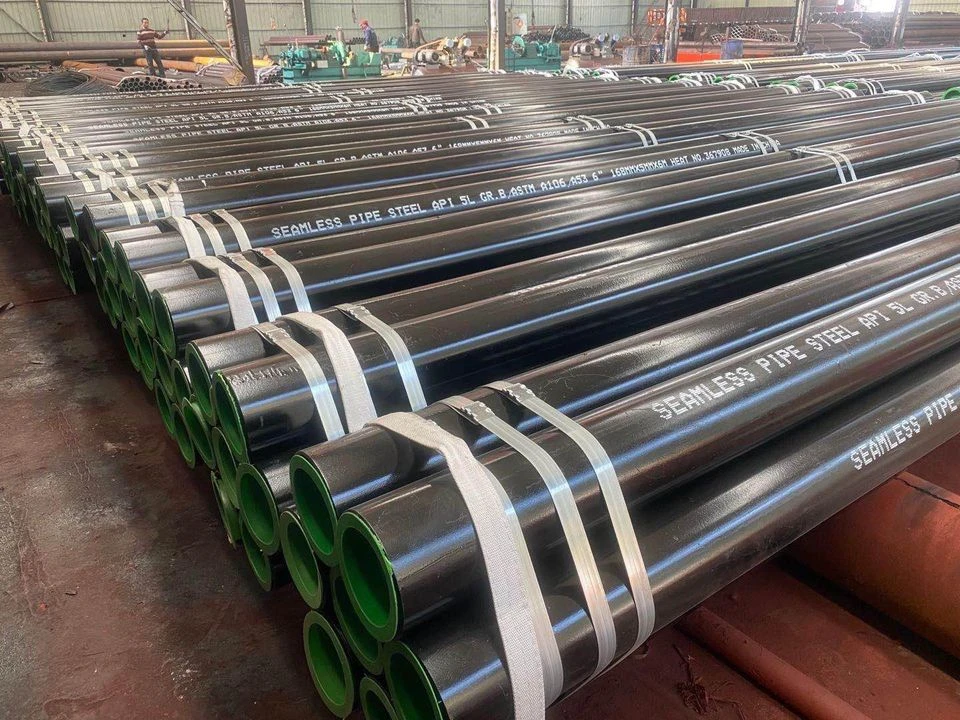
Quick Answer: ‘Cold-rolled steel’ and ‘carbon steel’ describe two different aspects of steel. ‘Cold rolling’ refers to a manufacturing process, while ‘carbon steel’ refers to a material classification based primarily on chemical composition. Carbon steel can be cold-rolled, hot-rolled, or processed using other methods, meaning the two terms are not mutually exclusive. The World Steel Association defines cold rolling as reducing hot-rolled steel below the softening temperature of the metal using rolls, while ASTM A109/A109M specifically covers cold-rolled carbon steel strip. This confirms that both descriptions can apply to the same product.
What Is Cold-Rolled Steel?
Cold-rolled steel is steel that has undergone further thickness reduction by rolling at a relatively low temperature, usually after hot rolling. The process usually begins with hot-rolled steel coil that has been pickled to remove surface scale. The material then passes through cold-reduction rolls, which reduce its thickness and improve dimensional control and surface quality. Depending on the requirements of the final product, subsequent processing may include annealing, temper rolling, slitting, cutting, or surface treatment.
Manufacturers use cold rolling primarily to produce steel with a smoother surface, tighter dimensional tolerances, and more consistent thickness than many standard hot-rolled products. Cold deformation also causes work hardening, which can increase strength and hardness while reducing ductility. However, the finished properties depend on the steel grade and processing route: annealing after cold rolling can restore ductility, making the material more suitable for bending, forming, and other downstream operations. Therefore, cold-rolled steel is not defined by one fixed strength level or one universal surface finish.
Cold-rolled products are widely used in automotive panels, electrical enclosures, office furniture, appliance housings, precision metal parts, and other applications where appearance, thickness consistency, and forming performance are important. The key benefit for manufacturers is process control rather than an automatic guarantee of superior performance in every category. A cold-rolled product may be the best choice for a precision sheet metal component, while a hot-rolled product may be more economical for a thick structural part that does not require a fine surface finish.
What Is Carbon Steel?
Carbon steel is a category of steel whose properties are primarily influenced by its carbon content, as well as the effects of manganese, residual elements, and manufacturing conditions. Steel is an iron-based alloy containing carbon and other elements. The World Steel Association broadly defines steel as an iron–carbon alloy containing less than 2% carbon, although specific grades and composition limits are defined in more detail by individual standards. Carbon steel is commonly distinguished from stainless steel and other alloy steel categories according to composition and applicable classification standards.
Carbon steel is generally grouped into three broad categories:
- Low-carbon steel: Commonly contains up to about 0.25% carbon. It is often selected for its formability, weldability, and suitability for general fabrication.
- Medium-carbon steel: Commonly contains approximately 0.25% to 0.60% carbon. It can offer higher strength and hardness than many low-carbon grades, particularly when heat-treated.
- High-carbon steel: Often contains approximately 0.60% to 1.0% carbon, although grade ranges vary. It can achieve high hardness and wear resistance but is typically less ductile and more demanding to weld.
These ranges are general industry guidelines and are not a substitute for a material specification. The appropriate grade of carbon steel depends on the required mechanical properties, product form, processing conditions, and intended use. For instance, a low-carbon steel sheet designed for deep drawing will have different performance requirements than a high-carbon steel strip intended for use in a hardened spring or wear-resistant component.
Importantly, the term ‘carbon steel’ does not indicate whether the product was cold-rolled or hot-rolled. Both processes can be used with suitable grades of carbon steel. Therefore, a supplier may offer hot-rolled carbon steel plate, cold-rolled low-carbon sheet, or cold-rolled high-carbon strip, each of which is intended for different manufacturing and end-use requirements.
Cold-Rolled Steel vs. Carbon Steel: Key Differences
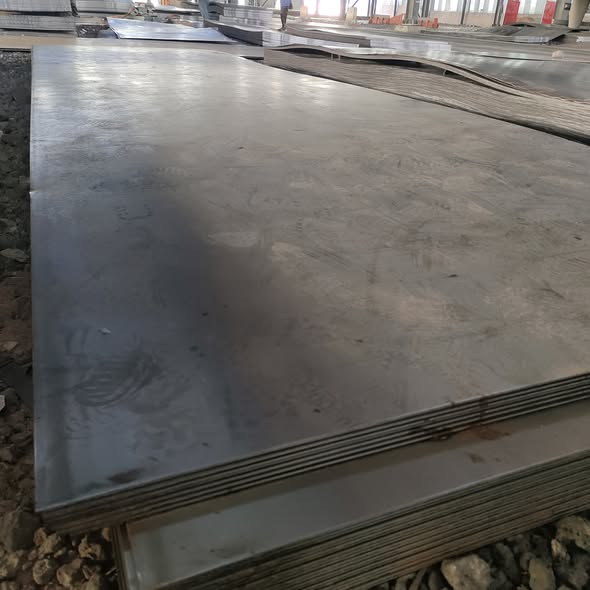
The clearest way to understand the difference is to compare what each term tells you about a steel product. “Cold-rolled” identifies how the steel has been mechanically processed, whereas “carbon steel” identifies its material family. One describes a production route; the other describes composition and classification. Because these terms answer different questions, they should not be treated as competing alternatives when requesting a quotation or specifying material for a project.
| Comparison factor | Cold-rolled steel | Carbon steel |
| Meaning | Steel processed through cold reduction rolling | Steel classified primarily by its carbon content and composition |
| Classification basis | Manufacturing process and resulting product condition | Chemical composition and material grade |
| Typical production route | Usually cold-rolled after hot rolling and often pickling | May be hot-rolled, cold-rolled, forged, or otherwise processed |
| Surface finish | Generally smoother and more uniform than standard hot-rolled steel | Depends on product form, processing route, and surface treatment |
| Dimensional accuracy | Often offers tighter thickness tolerances and dimensional control | Depends on the specific product and its manufacturing specification |
| Mechanical properties | Cold work may increase strength and hardness; annealing can restore ductility. | Properties vary with carbon content, grade, heat treatment, and processing |
| Corrosion resistance | Depends on composition and protective coatings, not cold rolling alone | Usually requires protection in corrosive environments unless specifically engineered otherwise |
| Common applications | Precision sheet metal, appliance panels, furniture, formed components | Structural products, pipes, machinery parts, sheet, plate, bars, and many other products |
| Typical purchasing description | Cold-rolled sheet or coil with specified grade, finish, and dimensions | Carbon-steel grade with specified composition, properties, and product form |
The table shows why it is inaccurate to ask which category is universally better. Cold-rolled carbon steel can combine the composition-related characteristics of a carbon-steel grade with the dimensional and surface characteristics associated with cold rolling. Its final suitability depends on the precise grade, delivery condition, and intended application, rather than on either label in isolation. ASTM’s specifications for cold-rolled carbon-steel strip illustrate this overlap directly.
Is Cold-Rolled Carbon Steel Stronger Than Hot-Rolled Carbon Steel?
Cold rolling can increase the strength and hardness of carbon steel by a process known as work hardening. As the material undergoes plastic deformation, its internal dislocation structure changes, making further deformation more challenging. While this improves strength, it usually reduces ductility in the as-rolled condition. Consequently, a cold-rolled carbon steel product may have a higher yield strength or hardness than a comparable hot-rolled product, but the actual difference depends on the initial grade, reduction ratio and subsequent processing.
However, cold rolling does not automatically make every steel product stronger than every hot-rolled product. Hot-rolled steels can be produced in high-strength grades, and cold-rolled products can be annealed to achieve the required ductility for forming. Tensile strength, yield strength, elongation, hardness, and impact performance are all distinct properties, and it is not possible to reliably infer all of them from the manufacturing label alone.
For procurement and engineering purposes, a more useful comparison is that of the certified properties of two specified products. If a part must withstand a defined load, the engineer should check the required yield and tensile strengths. If the part will undergo deep drawing or repeated bending, elongation, formability, and the condition of the material after processing may be equally important. A material certificate and the relevant product standard provide more reliable evidence than a general claim that cold-rolled steel is stronger.
Advantages and Limitations of Cold-Rolled Carbon Steel
Cold-rolled carbon steel is popular in precision manufacturing due to its combination of the practical advantages of carbon steel and the surface and dimensional control achieved through cold reduction. It is particularly useful when the finished component requires a consistent appearance, controlled sheet thickness, and predictable forming behaviour. Depending on the grade and finish, it can also minimise the need for surface preparation before certain fabrication or finishing operations.
Its principal advantages include:
- Improved surface quality: Cold rolling generally produces a smoother surface than standard hot rolling, making it suitable for visible components and products that require further finishing.
- Better dimensional control: The process can deliver tighter thickness tolerances, helping manufacturers control fit, assembly, and material usage.
- Potential strength increase: Work hardening can improve strength and hardness, depending on the reduction and final processing conditions.
- Good suitability for precision forming: Appropriately annealed low-carbon cold-rolled sheet can be used for bending, stamping, and other forming processes.
However, there are also limitations. Compared with a simple hot-rolled route, cold rolling requires additional processing, equipment, and energy, which can increase the price of the finished product. Cold work may reduce ductility, and some applications require annealing or other processing to achieve the necessary forming performance. Furthermore, cold rolling itself does not render carbon steel stainless or inherently corrosion-resistant. If the product will be exposed to moisture, salt, chemicals, or the outdoors, the buyer should consider coating, galvanising, painting, or another suitable corrosion control method.
These trade-offs mean that, while cold-rolled carbon steel is often ideal for precision parts, it is not necessarily the most economical option for thick structural components or applications where surface appearance and tight tolerances are not important. The most suitable option depends on how the steel will be manufactured, used, protected, and maintained throughout its service life.
Common Applications of Cold-Rolled Carbon Steel
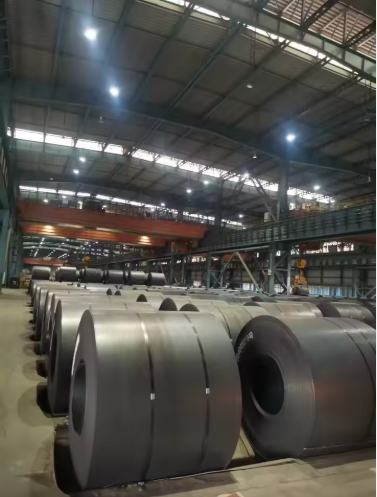
Cold-rolled carbon steel is widely used in sheet and strip products because manufacturers often require consistent thickness, surface quality, and formability. In the automotive industry, suitable grades are used for interior panels, brackets, reinforcement parts, and other formed components. Appliance and furniture producers use cold-rolled sheet steel for cabinets, housings, shelves and panels, as consistent dimensions and a relatively smooth surface simplify assembly and finishing processes.
In the manufacture of industrial equipment, cold-rolled carbon steel sheet is suitable for use in electrical enclosures, control cabinets, machine covers, storage units and fabricated components. The grade should be selected according to the forming operation and the required structural performance. For parts involving deep drawing or complex shapes, formability and elongation are particularly important, whereas for simple enclosures or brackets, dimensional accuracy, surface quality, weldability and cost may take priority.
As a broader material category, carbon steel has many additional uses, including structural sections, hot-rolled plate, pipes, shafts, and machine components. Not all of these products require cold rolling. Thick plates and structural products can be produced through hot rolling, while bars and other products may undergo different processing depending on their required dimensions and properties. Understanding the final application helps to ensure that buyers do not pay for cold-rolled surface quality and tolerances that are not actually required by the project.
How to Choose the Right Material for Your Project?
When comparing cold-rolled steel and carbon steel, buyers should first establish whether they are comparing a manufacturing process, a material grade, or two complete product specifications. For instance, if a manufacturer requires thin sheets for a precision enclosure, the relevant comparison might be between cold-rolled and hot-rolled low-carbon steels. However, if the requirement is for a high-strength shaft, the decision may instead involve factors such as carbon content, heat treatment, machinability, and load requirements.
Use the following checklist when selecting or purchasing steel:
- Define the product and application. Specify whether you need sheet, coil, strip, plate, bar, pipe, or another product form, and describe the manufacturing operations the material must withstand.
- Set mechanical-property requirements. Identify the required yield strength, tensile strength, elongation, hardness, or impact toughness. Do not assume that cold rolling or higher carbon content automatically provides the best combination of properties.
- Confirm dimensions and tolerances. For precision sheet-metal work, thickness consistency, flatness, width, and surface finish can directly affect production efficiency and finished-part quality.
- Assess corrosion and finishing needs. Determine whether the component will be painted, coated, galvanized, or used in a protected indoor environment. Cold rolling is not a corrosion-protection treatment.
- Check the applicable standard and documentation. Specify the grade, product standard, delivery condition, and inspection requirements. Where appropriate, request a material test certificate confirming chemical composition and mechanical properties.
- Compare total manufacturing cost. Consider material price, cutting losses, forming performance, welding, surface preparation, finishing, and potential rework. A lower-priced hot-rolled product may be sufficient for a structural part, while cold-rolled steel may be more economical overall when precision and finish reduce downstream processing.
The governing principle is to buy steel against a clearly defined specification, not simply by a broad product name. A well-matched material can improve production consistency, reduce scrap, and help ensure that the finished component meets its design requirements.
Frequently Asked Questions About Carbon Steel
- Is cold-rolled steel the same as carbon steel?
No. Cold-rolled steel is defined by its manufacturing process, while carbon steel is defined by its material classification and composition. Carbon steel can be cold-rolled, so one product can belong to both categories.
- Is cold-rolled steel always stronger than carbon steel?
No, because cold-rolled steel may itself be carbon steel, and strength depends on grade and processing conditions. Cold working can increase strength and hardness, but the exact properties must be confirmed through the product specification or test results.
- Is cold-rolled steel more expensive than hot-rolled carbon steel?
Cold-rolled products often cost more because they undergo additional processing to achieve improved surface quality and dimensional control. Whether that extra cost is worthwhile depends on the application’s tolerances, finish requirements, and downstream manufacturing needs.
- Does cold-rolled carbon steel rust?
Yes. Cold-rolled carbon steel can rust when exposed to moisture and oxygen because cold rolling does not provide inherent corrosion protection. Appropriate coatings, painting, galvanizing, or environmental controls may be needed to extend its service life.
- What is cold-rolled low-carbon steel used for?
Cold-rolled low-carbon steel is commonly used for appliance panels, furniture, electrical enclosures, automotive components, and precision sheet-metal parts. Its suitability depends on the grade, surface requirements, thickness, and whether the material needs to undergo bending, stamping, or deep drawing.
- How can I identify whether steel is cold-rolled carbon steel?
The most reliable method is to check the material designation, product standard, supplier documentation, and material test certificate. Appearance and surface smoothness may provide clues, but they cannot conclusively establish the steel’s composition or manufacturing history.
Conclusion
The difference between cold-rolled steel and carbon steel lies in their respective classifications: ‘cold rolling’ describes the processing method, while ‘carbon steel’ describes the type of steel. Cold rolling can improve the surface finish and control the thickness and strength of the steel through work hardening. Meanwhile, carbon content and other compositional factors influence the steel’s hardness, ductility, weldability, and heat-treatment response. These characteristics are complementary rather than mutually exclusive.
For industrial manufacturers and buyers requiring precision, surface quality, and suitable forming performance, cold-rolled carbon steel can be an excellent choice. Hot-rolled carbon steel may be more practical for applications where tight tolerances and a smooth finish are less important. The correct choice should be based on the specified grade, mechanical properties, product dimensions, manufacturing process, corrosion exposure, and total cost, rather than assuming that one type of steel is universally superior to another.