

Steel profiles are standardized structural sections produced from carbon steel and other alloys, serving as the skeletal framework of modern construction, manufacturing infrastructure, and heavy industry. Unlike flat plates or sheet steel, profiles are engineered with specific cross-sectional geometries — I-beams, H-beams, channels, angles, and hollow sections — each optimized to carry defined load types with maximum material efficiency.
For procurement teams, specifying the correct steel profile is not merely a dimensional exercise. It involves aligning material grade, manufacturing process, dimensional tolerance, and compliance certification with the structural demands of the end application. Errors in specification translate directly into cost overruns, structural risk, or project delays.
This guide provides a technically grounded overview of steel profile classifications, dimensional standards, international compliance frameworks, carbon steel grades, and sector-specific application logic. Whether sourcing for a structural steel framework, a conveyor system base, or modular industrial buildings, this resource equips procurement engineers and project managers with the specification knowledge needed to make defensible purchasing decisions.
Understanding Steel Profiles: Definition & Manufacturing Fundamentals
1. What Is a Steel Profile?
A steel profile is a length of steel with a defined, consistent cross-sectional shape produced to standardized dimensional specifications. In B2B and engineering contexts, “profile” refers specifically to long products — as opposed to flat products such as plates, sheets, or coils — where the cross-sectional geometry itself provides the structural function.
Carbon steel is the dominant base material for structural profiles, accounting for the vast majority of global production. Its combination of tensile strength, weldability, machinability, and cost efficiency makes it the default choice for load-bearing applications. While stainless and aluminum profiles serve niche roles, carbon steel profiles define the structural backbone of industrial and civil infrastructure worldwide.
Steel profiles differ from generic steel bars or rods in that their geometry is purpose-engineered: the flange-and-web configuration of an I-beam, for example, concentrates material at the points of maximum bending stress, achieving high load-bearing capacity at reduced weight versus a solid bar of equivalent cross-sectional area.
2. How Steel Profiles Are Manufactured
The three primary manufacturing routes for steel profiles are hot rolling, cold forming, and extrusion, each producing distinct mechanical and dimensional outcomes.
Hot rolling is the dominant process for structural profiles. Steel billets or blooms are heated above the recrystallization temperature (~1200°C) and passed through shaped rolling mills. Hot-rolled profiles exhibit uniform grain structure, good ductility, and are cost-effective at large cross-sections. Dimensional tolerances are governed by standards such as EN 10034 and ASTM A6.
Cold forming (cold rolling or press braking) works steel at ambient temperature, producing tighter dimensional tolerances and improved surface finish. Cold-formed sections — typically thin-walled channels, angles, and hollow sections — have higher yield strength due to work hardening but reduced ductility. They are common in light-gauge structural and architectural applications.
Extrusion is primarily used for aluminum profiles and is rarely applied to carbon steel at industrial scale due to the material’s high flow stress. For carbon steel, hot rolling and cold forming cover virtually all commercial profile production.
The manufacturing method directly impacts procurement decisions: hot-rolled sections are preferred for primary structural members requiring high load capacity; cold-formed sections suit secondary framing and precision assemblies where dimensional consistency is critical.
Types of Steel Profiles: Shapes, Sizes & Dimensional Specifications
1. Standard Steel Profile Shapes & Their Structural Roles
The structural performance of a steel profile is inseparable from its cross-sectional geometry. Each standard shape addresses a specific load transfer requirement:
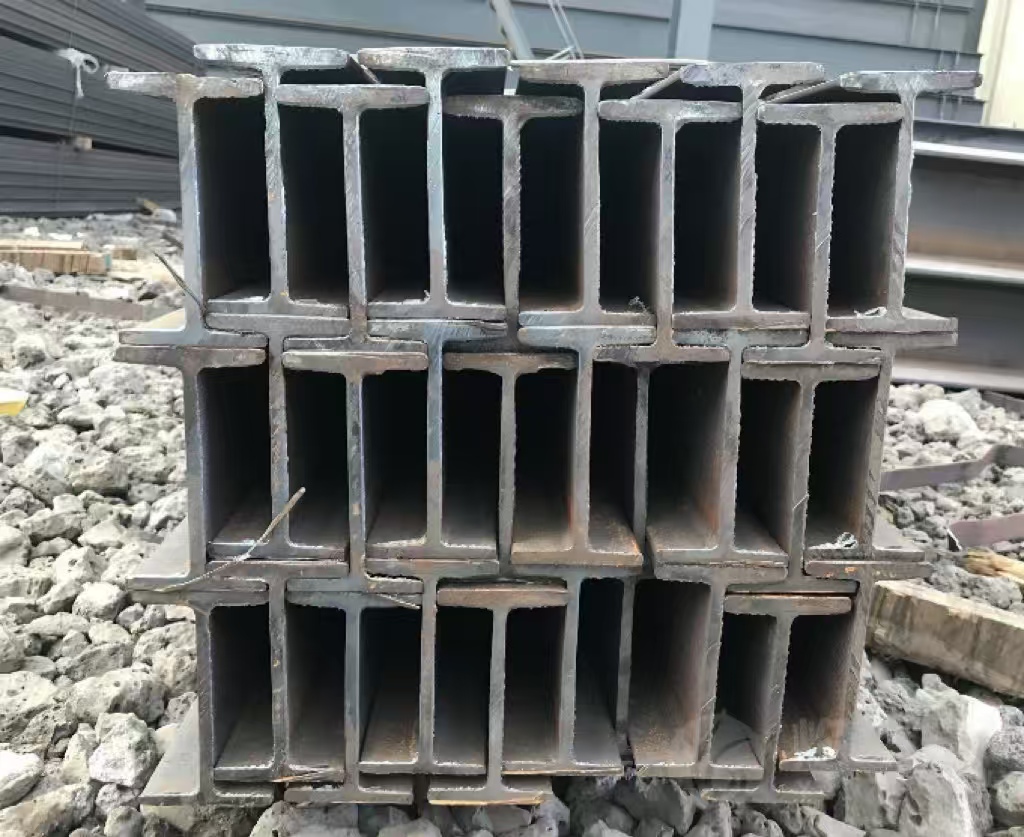
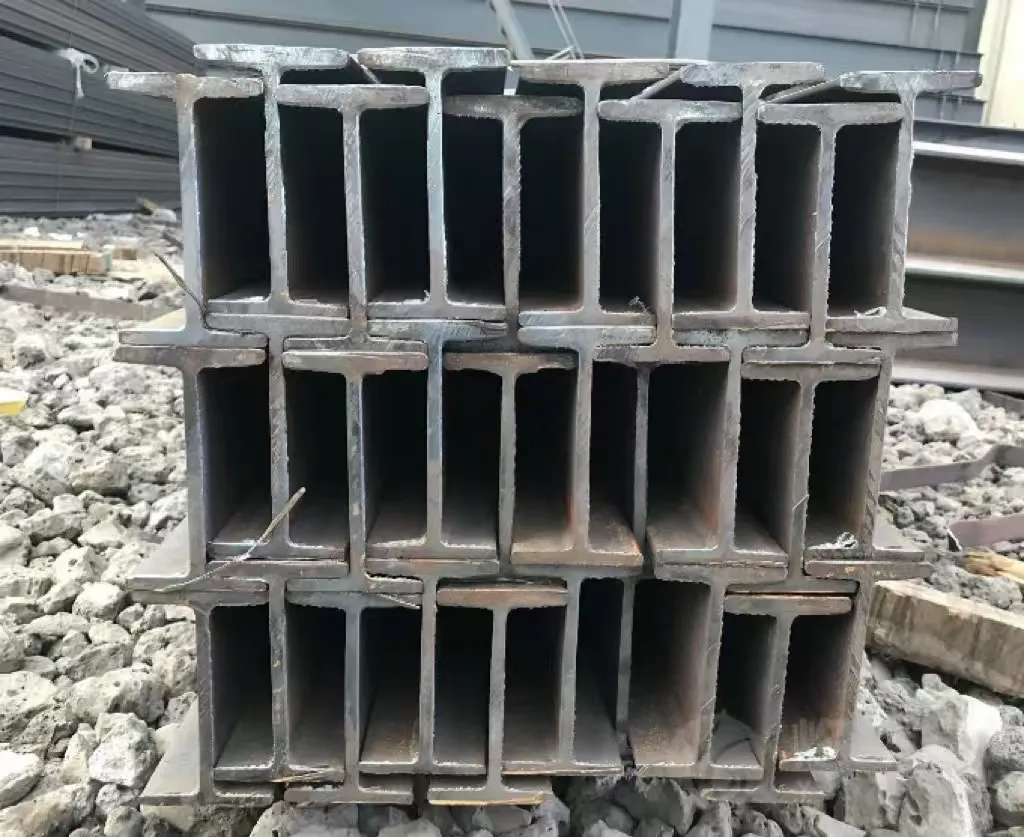
- I-Beam (IPE/IPN): Optimized for bending loads in one axis. The flanges resist bending moment; the web resists shear. Standard choice for floor beams and roof purlins.
- H-Beam (HEA/HEB/UC/UB): Wider flanges than I-beams provide greater resistance to buckling and biaxial bending. Preferred for columns and heavily loaded beams.
- Angle Bar (L-section): Equal and unequal leg variants. Used in trusses, bracing, connection gussets, and equipment frames.
- C-Channel / U-Channel: Open sections with good bending stiffness-to-weight ratio. Common in purlins, rails, and structural framing.
- T-Bar: Used in stiffener applications, machine bases, and fabricated assemblies where one flat face is required.
- Flat Bar: Versatile for bracing, strap connections, and fabricated components requiring simple rectangular sections.
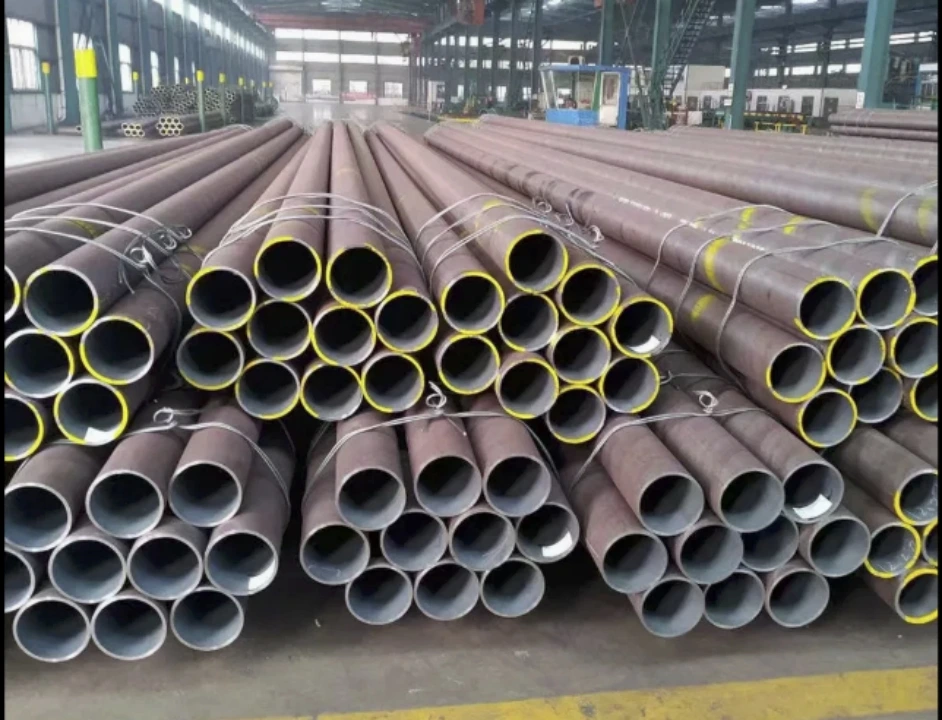
- Hollow Sections — RHS/SHS/CHS: Rectangular, square, and circular hollow sections offer excellent torsional stiffness and a clean aesthetic. Widely used in columns, trusses, and exposed architectural structures.
2. Steel Profile Sizes, Weight & Tolerance Standards
Key dimensional parameters include flange width, web height, wall thickness, and linear weight (kg/m). Tolerance compliance is verified against EN 10034 (I and H sections), EN 10056 (angles), EN 10219/10210 (hollow sections), ASTM A6 (general structural), and GB/T 706 (Chinese standard for hot-rolled sections).
| Profile Type | Common Size Range (mm) | Weight (kg/m) | Yield Strength (MPa) | Applicable Standard | Typical Application |
|---|---|---|---|---|---|
| I-Beam (IPE) | 80–600 height | 6.0–122 | 235–355 | EN 10025 / ASTM A36 | Floor beams, purlins |
| H-Beam (HEA/HEB) | 100–1000 height | 16.7–314 | 235–355 | EN 10025 / ASTM A572 | Columns, primary beams |
| Angle Bar | 20×20–200×200 | 0.6–60.0 | 235–355 | EN 10056 / GB/T 706 | Trusses, bracing |
| C-Channel | 50–400 height | 4.0–65.4 | 235–355 | EN 10279 / ASTM A36 | Purlins, rails |
| RHS | 50×25–500×300 | 2.9–180 | 235–355 | EN 10219 / ASTM A500 | Columns, trusses |
| SHS | 20×20–400×400 | 1.1–120 | 235–355 | EN 10219 / ASTM A500 | Exposed structures |
| T-Bar | 30×30–150×150 | 1.4–35.0 | 235–355 | EN 10055 | Stiffeners, frames |
| Flat Bar | 10×3–300×50 | 0.2–118 | 235–355 | EN 10058 / ASTM A36 | Bracing, fabrication |
Compliance Standards & Material Specifications for Carbon Steel Profiles
1. International Standards & Certifications
Structural steel profiles sold into regulated markets must comply with recognized material and dimensional standards. The four dominant frameworks are:
- EN 10025 (Europe): Covers hot-rolled structural steel products. Specifies mechanical properties for grades S235, S275, S355, and higher. CE marking under the EN 1090 execution standard is mandatory for structural components in EU construction projects.
- ASTM A36 / A572 (North America): A36 defines a minimum 250 MPa yield strength carbon steel; A572 Grade 50 specifies 345 MPa. Both are widely accepted in international project specifications outside Europe.
- JIS G3192 (Japan): Governs dimensions and mass of hot-rolled steel sections including I-beams, H-beams, channels, and angles.
- GB/T 706 (China): The national standard for hot-rolled steel sections, widely referenced for projects sourcing from Chinese mills.
For procurement, a Mill Test Certificate (MTC) per EN 10204 3.1 or 3.2 is the baseline documentation requirement. 3.1 certificates are issued by the manufacturer; 3.2 certificates require independent third-party inspection — the latter is typically mandated for critical structural applications or export projects.
2. Carbon Steel Grades Used in Steel Profiles
The most commercially significant carbon steel grades for structural profiles are:
- S235 / A36: Low carbon content (~0.17–0.25% C). Excellent weldability, suitable for general structural fabrication where yield strength requirements are moderate.
- S275: Intermediate grade bridging S235 and S355. Common in UK structural design to BS 5950 legacy specifications.
- S355 / A572 Gr.50: Higher carbon and manganese content delivers 355 MPa minimum yield strength. The preferred grade for heavily loaded structural members, offshore structures, and heavy machinery bases. Slightly reduced weldability versus S235 requires controlled preheat procedures for thick sections.
Higher carbon content increases hardness and tensile strength but reduces ductility and weldability. For most industrial structural applications, S355/A572 Gr.50 represents the optimal balance of strength, weldability, and commercial availability.
Industrial Applications & Commercial Value of Steel Profiles
1. Steel Profiles for Industrial & Construction Use
Carbon steel profiles are the primary load-bearing material across a broad range of industrial and construction sectors:
- Structural building frameworks: H-beams and I-beams form the primary columns and beams of steel-framed industrial buildings, warehouses, and multi-story commercial structures.
- Mezzanine floors and platforms: I-beams, C-channels, and RHS sections are combined to create elevated working platforms and storage mezzanines in logistics and manufacturing facilities.
- Conveyor and material handling systems: Angle bars, C-channels, and flat bars fabricate conveyor frames, support structures, and guide rails in mining, ports, and processing plants.
- Machinery bases and equipment frames: H-beams and flat bars provide rigid, vibration-resistant bases for heavy industrial machinery.
- Modular and prefabricated buildings: Cold-formed C-sections and RHS are extensively used in light-gauge steel framing (LGSF) systems for rapid-assembly modular structures.
Profile selection in each sector is driven by span-to-depth ratios, connection method (bolted vs. welded), surface treatment requirements, and code compliance jurisdiction.
2. Metal Profiles vs. Steel Profiles: Procurement Decision Guide
B2B buyers frequently evaluate carbon steel profiles against aluminum and stainless steel alternatives. The decision framework centers on four variables:
| Parameter | Carbon Steel | Aluminum | Stainless Steel |
|---|---|---|---|
| Cost (relative) | Low | Medium–High | High |
| Yield Strength | 235–355 MPa | 160–270 MPa | 205–310 MPa |
| Weight (density) | 7,850 kg/m³ | 2,700 kg/m³ | 7,900 kg/m³ |
| Corrosion Resistance | Low (requires coating) | Good | Excellent |
| Weldability | Excellent | Moderate | Good |
| Best Use Case | Structural, heavy industry | Aerospace, transport, corrosive environments | Food, chemical, marine |
For the majority of structural and heavy industrial applications, carbon steel profiles deliver the best strength-per-unit-cost performance. Corrosion protection via hot-dip galvanizing, epoxy coating, or intumescent paint resolves the primary limitation. Aluminum profiles are justified where weight reduction is a hard design constraint; stainless profiles where hygiene or chemical exposure eliminates carbon steel as an option.
Conclusion
Steel profiles are a precisely engineered product category where cross-sectional geometry, material grade, manufacturing process, and compliance certification must align with specific structural demands. The key procurement decisions — shape selection, grade specification, standard compliance, and supplier qualification — are interconnected: an H-beam specified in S355 to EN 10025 with a 3.1 MTC is a fundamentally different procurement item from an ungraded section from an uncertified source, even if the physical dimensions appear identical.
For B2B buyers, the practical takeaways are: match profile geometry to load type, specify S355/A572 Gr.50 for structural-grade applications, require EN 10204 3.1 minimum documentation, and factor in lead times for non-standard sizes. Carbon steel profiles remain the most cost-effective structural material for the majority of industrial and construction applications when properly specified and protected against corrosion.