

Article Summary: People primarily bevel the ends of carbon steel pipes to prepare them for butt welding. This creates a groove that gives the welding process better access to the joint root and sidewalls, while also supporting adequate penetration and fusion. The ASME B16.25 standard, “Butt-Welding Ends,” specifies requirements for welding-end preparation, including bevel geometry and internal or external shaping. Established pipe-welding guidance explains how bevel angle, root face, and root opening influence weld quality.
What Is Pipe Beveling?
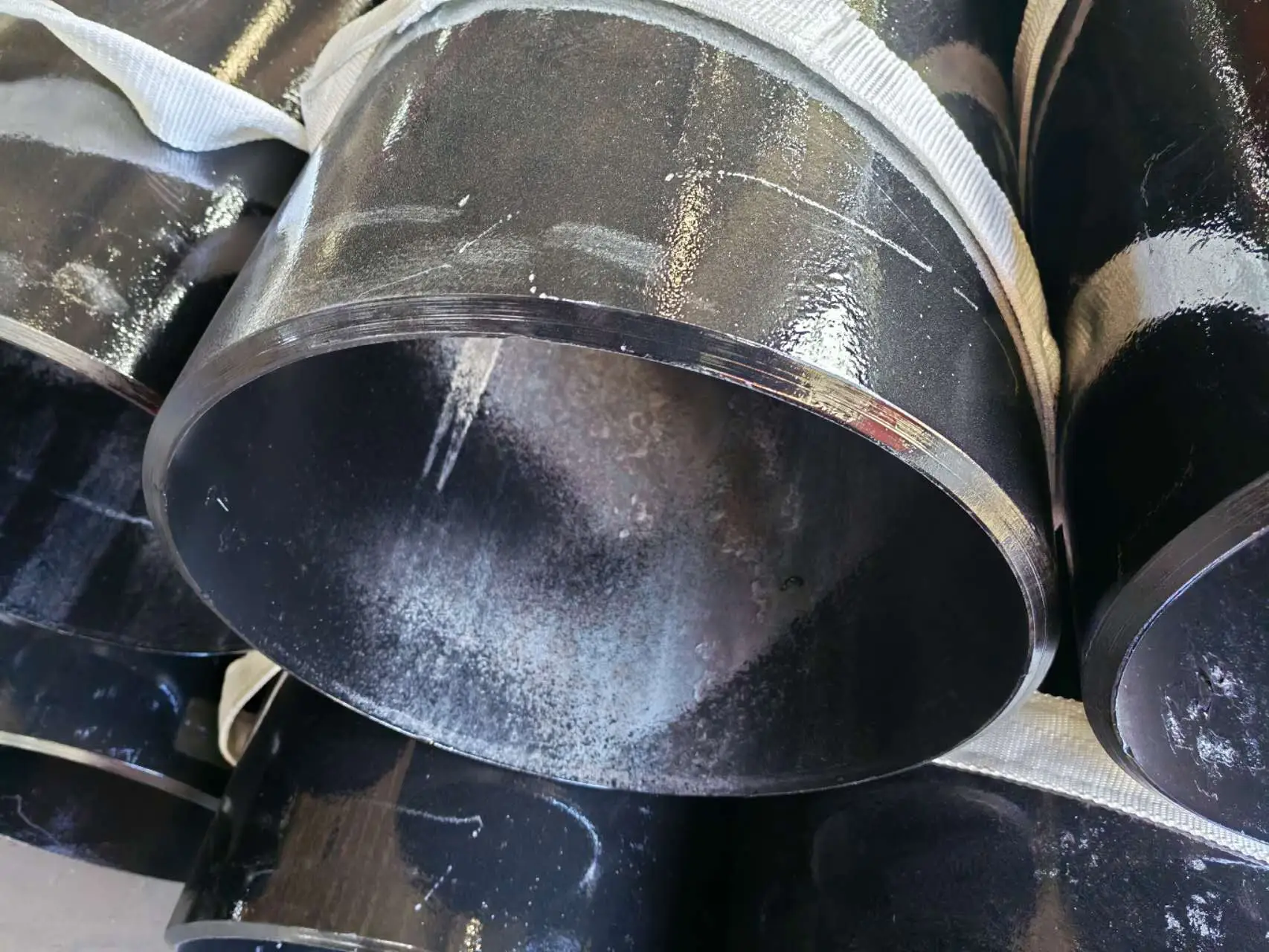
Pipe beveling involves cutting or machining the end of a pipe at a specified angle instead of leaving it completely square. The resulting angled surface is called a bevel and is typically used when joining two sections of carbon steel pipe by butt welding. When the beveled ends are brought together, they form a groove that allows the welding electrode or torch to access the joint and deposit weld metal.
Carbon steel pipe is widely used in industrial piping due to its strength, availability, weldability, and cost-effectiveness. It is used in oil and gas transportation, power generation, chemical processing, water supply, construction, and other applications. Many of these systems rely on welded connections to create continuous pipelines that can operate under specified pressure, temperature, and mechanical loads. Proper end preparation is therefore an important part of pipe fabrication, not simply a finishing operation.
The purpose of beveling is not to make every pipe end look the same. The required geometry depends on the pipe’s wall thickness, diameter, welding process, joint design, material specifications, and the approved welding procedure specification (WPS). For example, a thin-wall pipe may require only slight preparation or a square end, whereas a thick-wall carbon steel pipe often needs a more substantial groove to allow the weld to achieve the required penetration without excessive weld-metal deposition.
Why Do People Bevel Carbon Steel Pipe?
- To Achieve Full Weld Penetration
One of the most important reasons to bevel carbon steel pipes is to achieve the required weld penetration. In a butt joint, the two ends of the pipe are aligned and joined around their circumference. However, if the pipe walls are relatively thick, simply placing two square-cut ends together can leave insufficient access for the welding arc to reach and fuse the joint root. This can result in incomplete penetration, lack of fusion, or an unacceptable internal weld profile.
Beveling creates an opening between the joint faces, allowing the welding process to reach deeper into the connection. This is particularly important for full-penetration welds, where the weld must extend through the complete wall thickness according to applicable design and inspection requirements. A properly designed groove gives the welder access to the root and sidewalls while providing space for successive weld passes to build the required joint thickness.
However, a bevel alone does not guarantee full penetration. Root opening, root face, electrode or torch selection, heat input, welding position, and welder technique all influence the final result. The dimensions must be established by the qualified welding procedure and verified during fit-up before welding begins.
- To Improve Fusion Between the Pipe Ends
A sound welded joint requires that the deposited weld metal properly fuse with both pipe edges and previously deposited weld passes. If the joint geometry is too narrow or the pipe ends are not properly prepared, the welding arc may not effectively reach the groove sidewalls. This can result in a lack of sidewall fusion, which is one of the defects that can compromise the integrity of a welded pipeline.
The bevel angle determines how widely the groove opens toward the outside of the pipe. An appropriate angle provides enough space for the welder to direct the arc toward the root and groove faces. During multi-pass welding, it allows successive layers to be deposited and fused into the joint. Therefore, the correct groove geometry balances accessibility, weld quality, and the amount of filler metal required.
An excessively narrow bevel can make consistent fusion difficult, especially when using welding processes or electrode sizes that require greater access. Conversely, an unnecessarily wide bevel increases the volume of weld metal and may extend welding time. The objective is to use a groove design that provides reliable fusion without creating avoidable fabrication costs.
- To Reduce the Risk of Welding Defects
Proper bevel preparation reduces the likelihood of several common weld defects. Incomplete penetration and lack of fusion may result from the welding process not adequately reaching the root or sidewalls. Incorrect root-face dimensions or root gaps may contribute to burn-through, excessive root reinforcement, or an inconsistent weld profile. These problems become more difficult and expensive to correct after the joint is complete.
A well-prepared pipe end provides a controlled starting point for joint assembly. It enables fitters to establish the specified root opening, align the pipe bores, and tack the joint before welding begins. Clean bevel surfaces reduce the risk of contamination from rust, oil, paint, moisture, and loose scale. Depending on the welding process and material condition, these contaminants can contribute to porosity or interfere with fusion.
It is important to recognize that beveling is only one aspect of controlling weld quality. Other necessary steps may include correct alignment, surface cleaning, preheating where required, welding parameters, interpass temperature control, and post-weld inspection. Even a properly beveled pipe can produce a defective weld if the other fabrication and welding requirements are not met.
- To Accommodate Thick-Wall Carbon Steel Pipe
The need for beveling increases as the thickness of the pipe wall increases. For example, a square-cut joint between two thick-walled pipes may require a large amount of material to be fused through a narrow opening during the welding process. This can make achieving the required root penetration and sidewall fusion difficult, especially when the joint must be welded from the outside only.
Beveling removes part of the pipe-end material and creates a groove that can be filled progressively. Depending on the wall thickness and joint design, preparation may require a single-V, double-V, single-bevel, or compound configuration. For particularly thick sections, a compound bevel provides better access and reduces the total volume of weld metal compared to a simple wide groove.
The choice of preparation should consider welding access and fabrication economics. Removing too much material increases filler-metal consumption and welding time, while removing too little can make the joint difficult to weld. The correct solution is specified by the engineering design and qualified WPS, not a universal bevel angle applied to every carbon steel pipe.
- To Improve Joint Consistency and Fabrication Efficiency
Pipe beveling improves the consistency of repeated fabrication work. In projects involving hundreds or thousands of welded joints, using controlled end preparation standardizes fit-up conditions and reduces the need for repeated manual corrections. Consistent bevel angles, root faces, and pipe-end dimensions allow welders to work with more predictable joint geometry.
This is especially useful in prefabricated piping spools, industrial plants, offshore installations, and large pipeline projects. Machine beveling produces repeatable end profiles, helping fabrication teams maintain dimensional control and coordinate welding operations. Consistent preparation can also reduce rework caused by poor alignment or unsuitable groove dimensions.
Although beveling requires additional preparation time, it can improve project efficiency overall by reducing the need for weld repairs, cutting out defective joints, and repeating inspections. The economic benefit is not just faster welding; it is a more predictable fabrication process with fewer avoidable interruptions.
- To Support Reliable Performance in Pressure Piping
Many carbon steel piping systems transport fluids or gases under pressure, sometimes at elevated temperatures or in demanding operating environments. In these applications, the welded joint must meet the mechanical and quality requirements established by the piping design code and project specification. An inadequately prepared joint can contribute to defects that reduce the effective weld cross-section or create locations where stress concentrations develop.
A suitable bevel helps the welding procedure produce the required joint profile and penetration. This is especially important for pipelines used in oil and gas facilities, power plants, refineries, and process industries, where welds may be subject to visual examination and nondestructive testing (NDT), such as radiographic or ultrasonic testing. The acceptance criteria depend on the applicable construction code, service conditions, and inspection plan.
Beveling does not independently make a pipeline pressure-rated or guarantee leak-free service. The joint must also be welded using an approved procedure, inspected to the required level, and accepted against the relevant standards. Its role is to provide the geometry needed for a sound weld to be produced.
Common Types of Carbon Steel Pipe Bevels
Different joint configurations are used according to pipe dimensions, wall thickness, welding access, and the required joint design. The most common preparations include the following:
- Single-V bevel: Both pipe ends are beveled so that they form a V-shaped groove when aligned. It is widely used for circumferential butt welds because it provides access to the root and sidewalls, although the groove volume can become substantial on thick-wall pipe.
- Double-V bevel: Both ends are prepared with V-shaped grooves on the outside and inside, creating a double-V configuration. Where welding access from both sides is available, this arrangement can reduce weld-metal volume and help balance welding shrinkage compared with a single-V joint.
- Single-bevel preparation: One pipe end or component edge is beveled while the mating surface remains square. This configuration may be used where the joint design, component geometry, or access conditions make it suitable.
- Compound bevel: The pipe end is prepared with more than one bevel angle. It is often considered for thick-wall components to provide adequate welding access while limiting unnecessary removal of material.
The following table compares common preparations and their typical uses.
| Bevel type | Joint geometry | Typical application or consideration |
| Single-V | Both ends beveled to form one V-shaped groove | Common circumferential butt welds |
| Double-V | V-shaped grooves prepared on both sides | Thick sections where access to both sides is available |
| Single bevel | One component has an angled edge; the other is square | Specific joint designs and restricted access |
| Compound bevel | Two or more bevel angles on the same end | Thick-wall pipe and specialized welding procedures |
| Square end | No significant bevel; ends remain square | Thin-wall pipe or joint designs that permit it |
The table is a general comparison, not a fabrication specification. The selected preparation must be compatible with the approved joint design and welding procedure. ASME B16.25 addresses butt-welding-end preparation, including bevels and the shaping of heavy-wall components, but the standard should be read alongside the applicable piping code, material requirements, and project documents.
What Is the Standard Bevel Angle for Carbon Steel Pipe?
A frequently discussed bevel angle for pipe butt welding is 37.5 degrees on each end of the pipe, producing an included groove angle of 75 degrees when two matching ends are assembled. However, this configuration is not a universal requirement for all carbon steel pipes. The correct bevel angle depends on the applicable standard, the pipe’s wall thickness, the welding process, the joint design, the backing arrangement, and the qualified WPS.
Three dimensions are particularly important when preparing a beveled pipe end:
- Bevel angle: The angle machined or cut on the pipe end. It determines the opening available for the welding electrode or torch to access the joint.
- Root face (land): The small flat section left at the end of the bevel. It helps control root penetration and reduces the risk of burn-through.
- Root opening (gap): The distance between the root faces after the two pipe ends are aligned. It provides space for the root pass to penetrate and fuse the joint.
These dimensions work together. A bevel that is too narrow can limit access to the root and sidewalls. Conversely, an excessively wide bevel increases the amount of weld metal required. Similarly, a thick root face combined with an insufficient opening can make penetration difficult, and a small root face or wide gap can increase the risk of burn-through. The welding procedure determines the appropriate combination for a given application.
ASME B16.25 is a key reference for preparing butt-welding ends, including bevels and the internal and external shaping of heavy-wall components, as well as dimensional requirements. The 2022 edition is listed as the current edition in the ANSI Webstore. It is important to distinguish this end-preparation standard from a complete welding procedure. B16.25 defines relevant preparation requirements, but it does not replace the WPS or prescribe every welding parameter for a particular project.
How Is Carbon Steel Pipe Beveled?
The method used to bevel carbon steel pipe depends on pipe diameter, wall thickness, production volume, site conditions, and required dimensional accuracy. Common methods include mechanical machining, portable pipe beveling, oxy-fuel cutting, and grinding. Each has advantages, but the finished edge must meet the specified geometry and be suitable for welding.
- Mechanical Beveling
Mechanical beveling uses a cutting tool or machining equipment to remove material from the pipe end and create the required angle. It can provide accurate, repeatable geometry and a controlled root face, making it useful for workshop fabrication and applications with strict dimensional requirements. Portable beveling machines can also be used on site, depending on pipe size and access.
- Thermal Cutting
Oxy-fuel cutting is commonly used for carbon steel because the material is suitable for this cutting process. It can be an efficient option for large-diameter or thick-wall pipes, especially during field fabrication. However, the cut edge may contain oxide, slag, irregularities, or a heat-affected surface that needs to be removed or corrected before welding.
- Grinding and Finishing
Grinding is used to refine a bevel, remove cutting irregularities, eliminate surface contamination, and achieve the required root-face dimensions. It is also useful for local corrections and repair work, although relying entirely on manual grinding can make it harder to maintain consistent geometry across large production batches.
Regardless of the method, inspection should confirm the bevel angle, root face, pipe-end squareness, surface condition, and dimensional compatibility with the mating pipe. The prepared ends should be free from unacceptable rust, oil, paint, moisture, and loose scale in the weld area.
What Happens If Carbon Steel Pipe Is Not Properly Beveled?
Incorrect or inadequate bevel preparation can create problems during fit-up, welding, and final inspection. The severity depends on the joint design and service requirements, but common consequences include:
- Incomplete penetration: The welding arc may not reach the root adequately, leaving part of the joint unfused through the wall thickness.
- Lack of sidewall fusion: An unsuitable groove angle can restrict access to the bevel faces, preventing proper fusion between the weld metal and base metal.
- Excessive weld reinforcement: Poor root-gap or root-face control can produce an uneven internal weld profile, potentially affecting flow or inspection results.
- Burn-through: An excessively wide root opening or insufficient root face can make the joint difficult to control, especially during the root pass.
- Increased welding costs: Poor fit-up and inconsistent preparation can lead to additional grinding, repair welding, inspection, and production delays.
These problems are not caused by bevel angle alone. Pipe misalignment, ovality, incorrect welding parameters, contamination, inadequate preheating where required, and unsuitable welding technique can also contribute to defective joints. A reliable fabrication process therefore treats beveling, fit-up, welding, and inspection as connected quality-control stages.
Key Factors to Consider Before Beveling Carbon Steel Pipe
Before selecting a beveling method or preparing pipe ends, manufacturers and fabricators should review the technical requirements of the project. The following factors help ensure that the finished joint is suitable for its intended service.
- Pipe wall thickness: Thick-wall pipe generally needs more extensive preparation to provide welding access and control weld-metal volume. Thin-wall pipe may use a different joint design.
- Pipe diameter: Diameter affects machine selection, clamping arrangements, handling, and the ability to maintain a consistent bevel around the circumference.
- Welding process: SMAW, GTAW, GMAW, and other processes have different requirements for electrode or torch access, root preparation, and weld-pass sequence.
- Joint design and backing arrangement: A joint with a backing ring or consumable insert may require a different end preparation from one welded without backing.
- Applicable standards and WPS: The project specification, construction code, approved welding procedure, and relevant end-preparation standard should determine the required geometry.
- Inspection requirements: Where radiographic or ultrasonic testing is required, joint preparation and fit-up should support the specified weld quality and inspection acceptance criteria.
For buyers sourcing carbon steel pipe, it is also useful to clarify whether the pipe is required with plain ends, beveled ends, or another specified end finish. Providing the pipe standard, grade, outside diameter, wall thickness, bevel dimensions, and applicable project specification helps suppliers prepare the correct product and reduces misunderstandings during fabrication.
Frequently Asked Questions About Carbon Steel Pipe Beveling
- Why do carbon steel pipes need to be beveled before welding?
Carbon steel pipes are beveled to create a groove that allows the welding process to reach the joint root and sidewalls. This helps achieve the required weld penetration and fusion, particularly on thicker pipe walls.
- What is the standard bevel angle for carbon steel pipe?
An angle of approximately 37.5 degrees per pipe end is commonly used for certain butt-weld preparations, producing an included angle of about 75 degrees. The actual angle must follow the applicable standard, joint design, and approved welding procedure.
- Does every carbon steel pipe need a beveled end?
No, thin-wall pipes and some specific joint designs may use square-cut ends or other preparations. Beveling requirements depend on pipe thickness, welding method, and project specifications.
- What is the difference between a beveled end and a plain end carbon steel pipe?
A plain-end pipe has a square-cut end without a prepared welding bevel, while a beveled-end pipe has an angled surface designed for a specified weld joint. Beveled ends are commonly used for butt welding, whereas plain ends may be suitable for other connection methods or subsequent site preparation.
- Which standards cover carbon steel pipe beveling?
ASME B16.25 covers the preparation of butt-welding ends, including bevel geometry and the shaping of heavy-wall components. The final preparation must also comply with the applicable piping code, project specification, and qualified welding procedure.
- How is a carbon steel pipe bevel made?
Carbon steel pipe bevels can be produced using mechanical beveling machines, machining equipment, oxy-fuel cutting, and grinding. The selected method should provide the specified angle, root face, dimensional accuracy, and surface condition for welding.
Conclusion
People bevel carbon steel pipes mainly to prepare them for butt welding. The angled edges create a groove that improves access to the root and sidewalls during the welding process, supports the necessary penetration and fusion, and helps produce a consistent welded joint. Proper beveling is especially important for thick-walled pipes and industrial piping systems, where weld integrity is critical.
However, not every carbon steel pipe needs to be beveled. The correct end preparation depends on the pipe’s wall thickness, dimensions, welding process, joint design, and applicable standards. Fabricators can reduce avoidable weld defects and improve the reliability of carbon steel piping connections by following ASME B16.25 where relevant, using a qualified welding procedure, and controlling bevel geometry and fit-up.