

This guide covers everything procurement professionals and structural engineers need to know about high-strength steel rebar — from grade classification and mechanical specifications to compliance standards and project-specific selection criteria. Whether sourcing for commercial construction, infrastructure, or industrial applications, this resource provides a structured framework for confident purchasing decisions.
Selecting the correct rebar grade is not merely a technical formality — it directly determines structural performance, long-term durability, and total project cost. Errors in grade specification or sourcing from non-certified suppliers can result in failed inspections, structural liability, and costly remediation. This guide is designed to eliminate ambiguity at every stage of the procurement process, from initial specification to final delivery acceptance.
Understanding Steel Rebar: Grades, Types & Material Standards
1. Rebar Grade Classification & Mechanical Properties
Steel rebar is classified primarily by yield strength, which determines the load a bar can sustain before permanent deformation occurs. Under the widely adopted ASTM system, four principal grades are recognized:
- Grade 40 (280 MPa): Minimum yield strength of 40,000 psi. Suited for light-duty residential slabs and non-critical masonry reinforcement. Lower ductility compared to higher grades.
- Grade 60 (420 MPa): The most commonly specified grade globally. Minimum yield strength of 60,000 psi with a tensile-to-yield ratio ≥1.25. Appropriate for the majority of commercial and infrastructure applications.
- Grade 75 (520 MPa): High-strength applications including transfer beams, deep foundations, and post-tensioned systems. Requires careful weldability assessment.
- Grade 80 (550 MPa): Premium-tier rebar for seismic-resistant structures, heavy industrial foundations, and long-span bridge components. Tensile-to-yield ratio requirements are strictly enforced to ensure ductile failure modes.
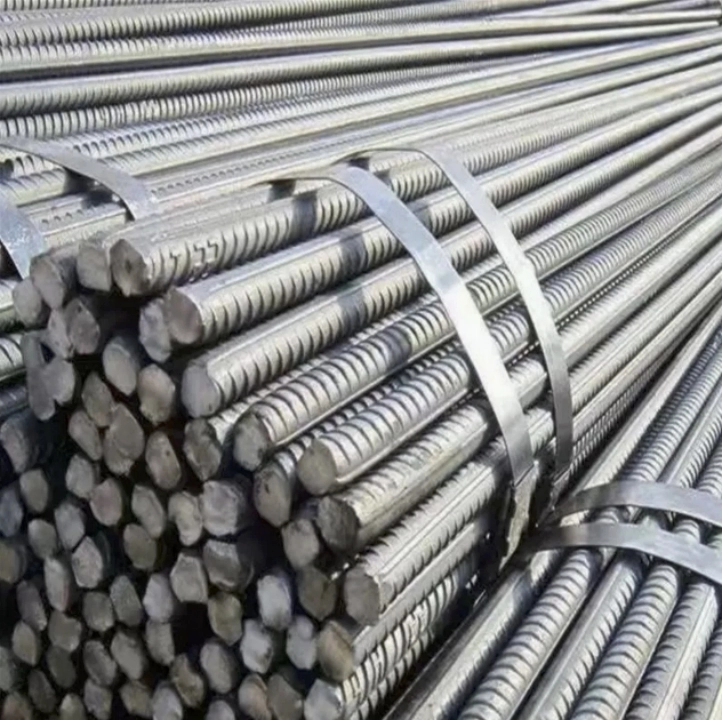
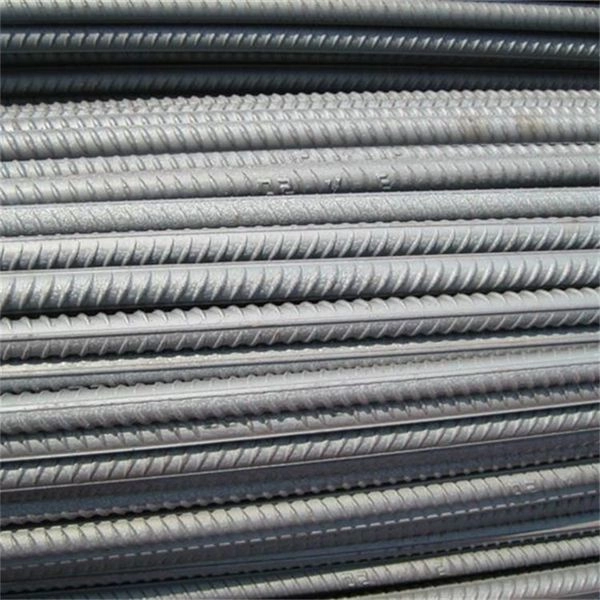
Deformation patterns — the transverse ribs and longitudinal lines rolled into the bar surface — are not cosmetic. They are mechanically engineered to achieve minimum relative rib area (fR) values that directly govern bond stress between rebar and concrete matrix. Higher-grade bars typically carry more aggressive rib geometry to compensate for reduced cross-sectional area in optimized designs.
2. Key International Standards & Compliance Frameworks
Procurement specifications must reference the applicable standard for the project’s jurisdiction:
| Standard | Region | Key Scope |
|---|---|---|
| ASTM A615 | Americas, Middle East | Carbon steel deformed/plain bars, Grades 40/60/75/80 |
| ASTM A706 | Americas (seismic zones) | Low-alloy steel, controlled chemistry for weldability and ductility |
| BS 4449 | UK, Commonwealth nations | B500B/B500C grades, ductility class requirements |
| ISO 6935-2 | International reference | Metric deformed bars, harmonized with EN 10080 |
Mill Test Reports (MTRs) are the primary compliance document. A valid MTR must include heat number, chemical composition (C, Mn, P, S, Si percentages), mechanical test results (yield, tensile, elongation), and the certifying mill’s accreditation reference. For cross-border procurement, third-party inspection by SGS, Bureau Veritas, or equivalent bodies provides an additional verification layer before shipment release.
Steel Rebar Specifications: Dimensions, Tolerances & Surface Geometry
1. Bar Sizing Systems & Dimensional Tolerances
Two parallel sizing systems are in active global use. The imperial system designates bars from #3 through #18, where the number approximates the bar diameter in eighths of an inch (e.g., #8 = 1 inch nominal diameter). The metric system uses the nominal diameter in millimeters directly (e.g., 25M or D25).
| Bar Size | Nominal Diameter (mm) | Cross-Sectional Area (mm²) | Unit Weight (kg/m) | Yield Strength (MPa) | Applicable Standard |
|---|---|---|---|---|---|
| #3 / D10 | 9.5 | 71 | 0.560 | 280–420 | ASTM A615 Gr.40/60 |
| #5 / D16 | 15.9 | 199 | 1.570 | 420 | ASTM A615 Gr.60 |
| #8 / D25 | 25.4 | 510 | 3.973 | 420–550 | ASTM A615/A706 |
| #10 / D32 | 32.3 | 819 | 6.404 | 420–550 | ASTM A615/A706 |
| #14 / D43 | 43.0 | 1452 | 11.380 | 520 | ASTM A615 Gr.75 |
ASTM tolerances permit ±3.5% variation on unit weight for bars #3–#11, tightening to ±2.5% for larger sections. Dimensional non-conformance at delivery should trigger immediate MTR cross-reference and potential rejection.
2. Deformed vs. Plain Rebar — Structural Bonding Implications
Deformed rebar achieves mechanical interlock with concrete through its rib geometry, generating bond strengths 40–80% higher than plain round bars of equivalent diameter. Plain rebar (smooth surface) is now restricted to specific applications: spirals, dowels, and prestressed concrete elements where controlled slip is intentional.
Surface treatment variants address environment-specific durability requirements:
- Epoxy-coated rebar (ECR): Fusion-bonded epoxy reduces chloride-induced corrosion in bridge decks and parking structures. Bond strength penalty of approximately 20% must be factored into lap splice design.
- Stainless steel rebar (316L/2205 duplex): Superior corrosion resistance for marine splash zones, chemical plants, and tunnel linings. Premium cost justified by 75–100-year service life projections.
- Galvanized rebar: Intermediate corrosion protection at lower cost than stainless; suitable for moderate exposure categories per ACI 318.
Application Scenarios & Grade Selection Guide
1. Structural Applications: Civil Infrastructure vs. Commercial Buildings
Grade selection is fundamentally driven by design load demands and the consequences of structural failure:
Civil infrastructure — bridge decks, highway overpasses, retaining walls, and dam structures — typically mandates Grade 60 minimum, with Grade 75 or 80 increasingly specified for long-span or heavily loaded elements. Bridge deck applications in chloride-exposed environments almost universally require epoxy-coated or stainless rebar regardless of grade.
High-rise commercial construction relies on Grade 60 for standard floor slabs and shear walls, while transfer plates and mat foundations supporting tower loads frequently specify Grade 75 or Grade 80 to reduce congestion and improve concrete placement quality. Reducing bar count through higher-grade specification directly lowers labor costs for placement and tying.
Industrial facilities — power plants, petrochemical processing, and heavy manufacturing — introduce additional load cases: dynamic equipment loads, thermal cycling, and chemical exposure. These environments often combine high-grade rebar with stainless or epoxy-coated surface treatments.
2. Seismic & Special-Condition Environments
ASTM A706 is the mandatory standard for seismic force-resisting systems in high-seismic zones (SDC D, E, F per ASCE 7). Its controlled carbon equivalent (CE ≤ 0.55%) ensures field weldability without preheat, and its capped yield strength (actual yield ≤ 540 MPa for Grade 60) prevents over-strength failures that could shift damage to non-ductile elements.
Marine and coastal environments demand a layered corrosion strategy: minimum 75mm concrete cover, low water-cement ratio concrete, and either epoxy-coated, galvanized, or stainless rebar depending on splash zone proximity and design service life.
High-temperature industrial settings — furnace foundations, kiln supports — require assessment of rebar performance above 300°C, where yield strength begins declining. Specialized alloy rebar or protective concrete encasement thickness becomes a design parameter.
Procurement Considerations & Commercial Value Assessment
1. Sourcing Criteria: Mill Certifications, Lead Time & MOQ
A rigorous supplier qualification process protects project schedules and structural integrity:
Supplier qualification checklist:
- Valid ISO 9001 quality management certification
- Mill-specific product certification to ASTM, BS, or ISO standards
- Heat number traceability from melt to finished bar
- Third-party inspection capability (SGS, BV, TÜV)
- Reference list for comparable project volumes
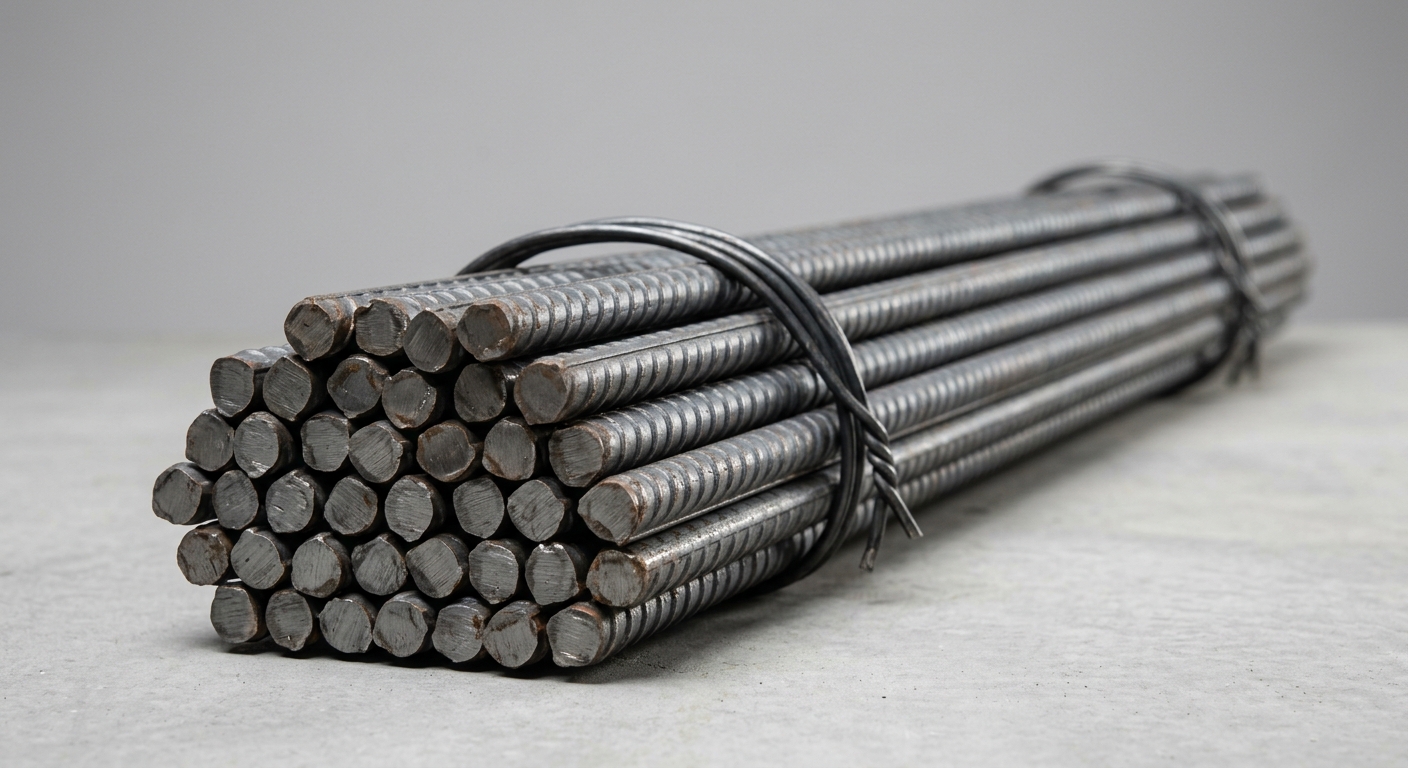
Commercial logistics parameters vary significantly by order profile. Mill-direct procurement typically carries MOQs of 20–50 metric tons per grade/size combination, with lead times of 4–8 weeks from order confirmation for standard grades. Specialty grades (A706, stainless) extend to 8–14 weeks. Rebar is delivered in bundles (typically 2–5 MT per bundle) or coil format for smaller diameters (#3–#5), with coil offering labor savings in automated bending operations.
Requesting split heat numbers across large orders provides redundancy for MTR documentation and simplifies traceability if field testing is required post-delivery.
2. Total Cost of Ownership vs. Unit Price Benchmarking
Unit price per metric ton is a poor standalone metric for rebar value assessment. True procurement economics must account for:
- Cutting waste factor: Standard straight lengths (6m, 9m, 12m) generate 3–8% cutting loss depending on design geometry. Custom cut-to-length orders eliminate waste at a modest premium.
- On-site fabrication cost: Labor for cutting, bending, and tying typically equals 40–60% of material cost. Higher-grade bars reduce total bar count, directly compressing fabrication labor.
- Inspection and rejection risk: Non-certified or substandard rebar discovered post-placement triggers removal costs that can exceed the original material value by 5–10×.
- Lifecycle durability: Grade 60 epoxy-coated rebar at a 15% material premium over plain Grade 60 can extend bridge deck service life from 30 to 75+ years, fundamentally altering lifecycle cost models.
Procurement teams should model total installed cost — material + freight + fabrication + inspection — rather than optimizing on mill gate price alone.
Conclusion
Steel rebar procurement is a high-stakes technical and commercial decision. Grade selection must align precisely with structural load demands, ductility requirements, and environmental exposure conditions — there is no universal specification that fits all project types. Dimensional accuracy and surface geometry directly affect structural bond performance, making dimensional tolerance verification at delivery a non-negotiable quality step.
Compliance verification through MTRs, heat number traceability, and third-party inspection is not administrative overhead — it is the primary defense against structural liability and project delays. Sourcing from certified mills with documented quality management systems ensures that the rebar placed in your structure performs exactly as designed, for the full intended service life.
When evaluated on total installed cost and lifecycle durability rather than unit price alone, investment in the correct grade from a qualified supplier consistently delivers superior project economics. The marginal premium for certified, high-grade rebar is negligible compared to the cost of structural remediation or accelerated corrosion-driven maintenance cycles.