

Quick Answer
Carbon steel pipe contains 0.06%–0.35% carbon by weight, depending on grade and specification. ASTM A53, A106, and API 5L each impose distinct carbon limits that directly govern weldability, tensile strength, low-temperature toughness, and corrosion resistance in sour service.
Carbon Content Limits by Grade: The Definitive Reference Table
Understanding carbon wt% boundaries across major specifications is the foundation of any material selection decision.
ASTM A53 Carbon Limits
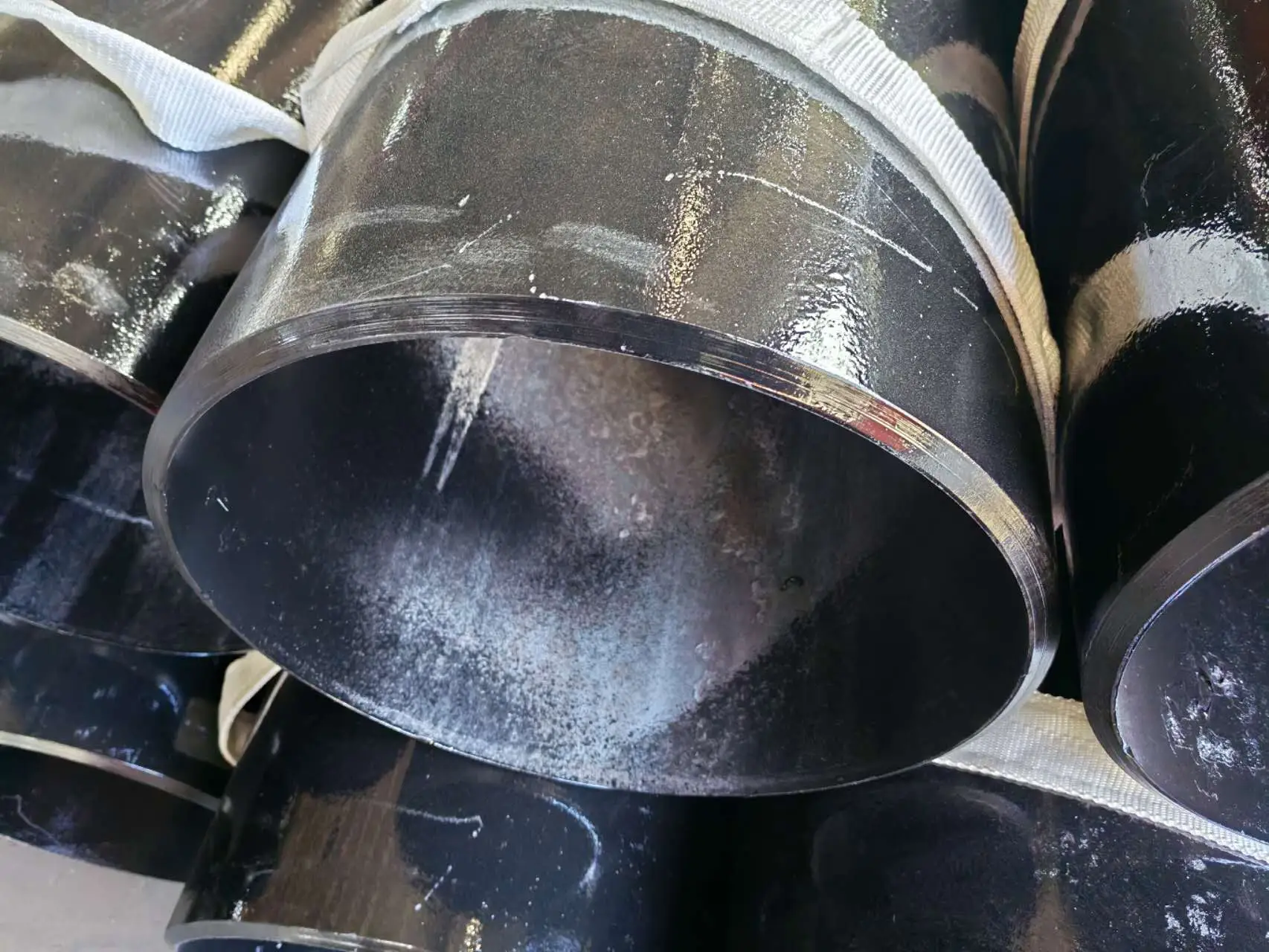
ASTM A53 covers seamless and welded black and hot-dip galvanized steel pipe for general structural and low-pressure conveying applications.
- Grade A: Maximum carbon = 0.25 wt%
- Grade B: Maximum carbon = 0.30 wt%
- Manganese ceiling: 0.95% (Gr. A), 1.20% (Gr. B)
- No minimum carbon specified; actual mill heat chemistry typically runs 0.18–0.26%
Grade B’s higher carbon ceiling delivers marginally greater tensile strength but narrows the welding process window compared to Grade A.
ASTM A106 Carbon Limits
A106 is the dominant specification for seamless pipe in high-temperature service (steam lines, refineries, power generation).
- Grade A: Max carbon = 0.25 wt%
- Grade B: Max carbon = 0.30 wt%
- Grade C: Max carbon = 0.35 wt%
Grade C represents the highest carbon ceiling among common carbon steel pipe specifications. Its use is restricted to applications where elevated tensile strength outweighs weldability concerns.
API 5L Carbon Limits
API 5L governs line pipe for oil and gas transmission. Carbon limits tighten progressively as yield strength grade increases.
| Grade | Max C (PSL1) | Max C (PSL2) | Typical UTS (MPa) |
|---|---|---|---|
| X42 | 0.28% | 0.22% | 415–655 |
| X52 | 0.28% | 0.22% | 460–760 |
| X60 | 0.28% | 0.22% | 520–760 |
| X65 | 0.28% | 0.22% | 535–760 |
| X70 | 0.28% | 0.22% | 570–760 |
| X80 | 0.28% | 0.22% | 625–825 |
Key insight: PSL2 imposes a stricter 0.22% carbon cap across all grades because pipeline operators require enhanced toughness, weldability, and sour-service resistance that PSL1 does not mandate.
Consolidated Grade Comparison Table
| Specification | Grade | Max Carbon (wt%) | Primary Service |
|---|---|---|---|
| ASTM A53 | A | 0.25% | General/structural |
| ASTM A53 | B | 0.30% | General/pressure |
| ASTM A106 | A | 0.25% | High-temp service |
| ASTM A106 | B | 0.30% | High-temp service |
| ASTM A106 | C | 0.35% | High-temp/high-strength |
| API 5L | X42–X80 (PSL1) | 0.28% | Onshore transmission |
| API 5L | X42–X80 (PSL2) | 0.22% | Sour/offshore service |
Carbon Content and Weldability: The Carbon Equivalent Formula
Carbon percentage is the primary driver of weldability in carbon steel pipe. The industry standard metric is the Carbon Equivalent (CE), defined by the International Institute of Welding (IIW):
CE = C + Mn/6 + (Cr+Mo+V)/5 + (Ni+Cu)/15
Threshold Benchmarks
- CE ≤ 0.35: No preheat required under most conditions
- CE 0.36–0.45: Preheat to 100–150°C recommended
- CE > 0.45: Mandatory preheat; post-weld heat treatment (PWHT) typically required
PWHT Requirements by Carbon Level
| Carbon Content | CE Range | Preheat | PWHT |
|---|---|---|---|
| ≤ 0.25% | < 0.40 | Optional | Rarely required |
| 0.26–0.30% | 0.40–0.45 | 100°C min | Project-dependent |
| 0.31–0.35% | > 0.45 | 150°C min | Frequently required |
A106 Grade C pipe at 0.35% carbon routinely triggers PWHT requirements in ASME B31.3 process piping systems, adding cost and schedule impact that procurement teams must factor into total installed cost calculations.
- Hydrogen-induced cracking (HIC) risk increases sharply above CE 0.43
- AWS D1.1 and ASME Section IX both reference CE thresholds for procedure qualification
- Higher carbon grades demand low-hydrogen electrodes (E7018, E8018) to suppress cold cracking
Low-Temperature Toughness: How Carbon Degrades Impact Resistance
Elevated carbon content directly suppresses Charpy V-notch (CVN) impact energy, the primary measure of fracture toughness at sub-zero temperatures.
Mechanism
- Carbon stabilizes pearlite colonies, which serve as crack initiation sites
- Higher carbon → coarser pearlite banding → lower absorbed energy in CVN tests
- The ductile-to-brittle transition temperature (DBTT) shifts upward approximately 5–10°C per 0.05 wt% carbon increase
Toughness Implications by Application
- Arctic pipelines (–46°C design): API 5L PSL2 X65 or X70 with carbon ≤ 0.22% and mandatory CVN testing at –20°C or lower
- Cryogenic service (–100°C+): Carbon steel pipe is disqualified; austenitic stainless or 9% nickel steel required
- Moderate cold service (–20°C to 0°C): A106 Grade B at 0.30% max carbon requires supplementary CVN testing per ASME B31.3 para. 323.2.2
PSL2 grades mandate minimum CVN absorbed energy of 27 J (transverse) at the specified test temperature, a requirement PSL1 does not impose.
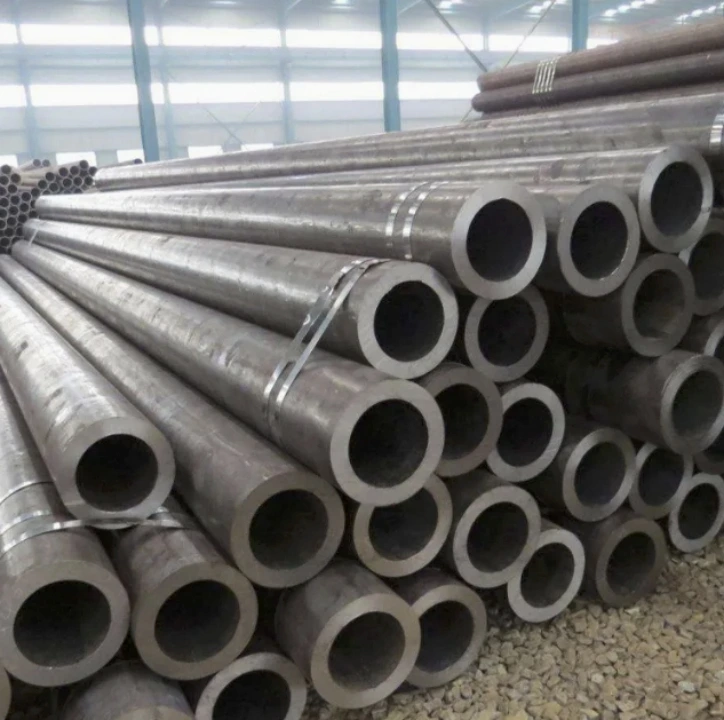
Carbon Content and Tensile Strength Across API 5L Grades
A common misconception: higher carbon does not exclusively explain strength increases across API 5L grades.
Microalloying Replaces Carbon as the Strength Lever
Modern high-strength line pipe (X65–X80) achieves elevated yield strength through:
- Niobium (Nb): 0.02–0.05% — grain refinement and precipitation hardening
- Vanadium (V): 0.03–0.08% — precipitation strengthening
- Titanium (Ti): 0.01–0.02% — austenite grain boundary pinning
This is why API 5L X70 (min YS: 483 MPa) and X80 (min YS: 552 MPa) both cap carbon at 0.22% (PSL2), yet deliver significantly higher strength than X42 (min YS: 290 MPa).
Strength vs. Carbon: API 5L PSL2 Data
| Grade | Max C (PSL2) | Min Yield (MPa) | Nb+V+Ti Max |
|---|---|---|---|
| X42 | 0.22% | 290 | 0.15% |
| X52 | 0.22% | 359 | 0.15% |
| X60 | 0.22% | 414 | 0.15% |
| X70 | 0.22% | 483 | 0.15% |
| X80 | 0.22% | 552 | 0.15% |
Strength increases are achieved by thermomechanical controlled processing (TMCP) and microalloying, not by raising carbon. This allows simultaneous improvement of strength and toughness — a trade-off impossible with carbon-only chemistry adjustments.
Carbon Content and Corrosion in Sour Gas Service
High carbon content accelerates degradation mechanisms specific to H₂S-bearing environments, governed by NACE MR0175 / ISO 15156.
Sulfide Stress Cracking (SSC) Mechanism
- H₂S dissociates at the steel surface, releasing atomic hydrogen
- Atomic hydrogen diffuses into the lattice and accumulates at pearlite-ferrite interfaces
- Higher carbon → more pearlite → more hydrogen trap sites → elevated SSC susceptibility
Carbon Thresholds for Sour Service
- Carbon ≤ 0.22% (API 5L PSL2): Baseline acceptance for sour service with hardness ≤ HRC 22
- Carbon > 0.26%: Requires additional qualification testing per NACE TM0177
- HIC resistance: Requires low carbon, low sulfur (≤ 0.002%), and calcium treatment of the melt
NACE MR0175 / ISO 15156 does not set a standalone carbon limit but mandates that the combined effect of chemistry, hardness (≤ HRC 22 / ≤ 248 HV), and heat treatment meet SSC resistance criteria. In practice, operators specify PSL2 with supplementary HIC testing per NACE TM0284 for sour pipelines.
Real-World Application Scenarios
Scenario 1: Refinery Steam Distribution (ASTM A106 Grade B)
- Service: 450°C steam, 100 bar
- Carbon selection: 0.30% max (Grade B) balances strength and weldability
- PWHT applied per ASME B31.3 for wall thickness > 19 mm
- Grade C avoided due to PWHT cost escalation on complex piping networks
Scenario 2: Offshore Sour Gas Trunkline (API 5L X65 PSL2)
- Service: H₂S partial pressure > 0.0003 MPa, subsea, –10°C ambient
- Carbon selection: ≤ 0.22% (PSL2), supplementary HIC and SSC testing
- CVN testing at –20°C, minimum 40 J average (operator specification)
- NACE MR0175 compliance mandatory; Grade A53/A106 disqualified by hardness and carbon limits
Scenario 3: Structural and Fire Protection Systems (ASTM A53 Grade B)
- Service: Ambient temperature, low-pressure water/fire suppression
- Carbon selection: ≤ 0.30% (Grade B), galvanized or black finish
- Weldability acceptable; no PWHT required at standard wall thicknesses
- Cost-optimized choice where high-temperature or sour-service properties are irrelevant
FAQ: Carbon Content in Carbon Steel Pipe
Q1: What is the maximum carbon content in ASTM A106 Grade B pipe?
0.30 wt% maximum per ASTM A106/A106M standard.
Q2: Does API 5L PSL2 have a lower carbon limit than PSL1?
Yes — PSL2 caps carbon at 0.22%; PSL1 allows up to 0.28%.
Q3: At what carbon level does PWHT become mandatory?
Generally above CE 0.45, corresponding to approximately 0.30–0.35% carbon.
Q4: Can A106 Grade C pipe be used in sour gas service?
No — it’s 0.35% carbon and resulting hardness typically exceeds NACE MR0175 limits.
Q5: Why does X80 pipe have the same carbon limit as X42 in PSL2?
Strength in X80 comes from microalloying and TMCP, not carbon addition.
Q6: How does carbon content affect the DBTT of carbon steel pipe?
Each 0.05% carbon increase raises DBTT approximately 5–10°C, reducing cold-service fitness.
Q7: What carbon equivalent value triggers mandatory preheat?
CE > 0.45 (IIW formula) typically mandates preheat of 150°C minimum.
Q8: Which grade has the highest carbon content among standard pipe specifications?
ASTM A106 Grade C at 0.35 wt% maximum.
Conclusion and Material Selection Guidance
Carbon content in carbon steel pipe ranges from 0.25% to 0.35% across ASTM A53 and A106 grades, and from 0.22% to 0.28% across API 5L PSL2 and PSL1 grades, respectively. The choice of carbon level is never arbitrary — it cascades directly into weldability thresholds, PWHT obligations, low-temperature toughness ratings, and sour-service qualification.
Decision framework for procurement and engineering teams:
- High-temperature process service: Select A106 Grade B (0.30% max) as the default; reserve Grade C only when tensile requirements cannot be met otherwise
- Oil and gas transmission: Specify API 5L PSL2 at the appropriate X-grade; carbon is capped at 0.22% regardless of strength class
- Sour or H₂S-containing service: Mandate PSL2 with supplementary HIC/SSC testing; reject any grade with carbon > 0.22% without full NACE qualification
- General structural or low-pressure systems: A53 Grade B (0.30% max) provides cost-effective performance with no special welding requirements at standard wall thicknesses
When carbon content alone cannot deliver required mechanical properties, microalloyed PSL2 grades achieve superior strength-toughness combinations without the weldability penalties associated with elevated carbon.
References and Standards
- ASTM A53/A53M-22 — Standard Specification for Pipe, Steel, Black and Hot-Dipped, Zinc-Coated, Welded and Seamless
- ASTM A106/A106M-19a — Standard Specification for Seamless Carbon Steel Pipe for High-Temperature Service
- API Specification 5L, 46th Edition (2018) — Specification for Line Pipe
- ASME B31.3-2022 — Process Piping Code
- NACE MR0175 / ISO 15156-2:2020 — Petroleum and Natural Gas Industries — Materials for Use in H₂S-Containing Environments
- NACE TM0284-2016 — Evaluation of Pipeline and Pressure Vessel Steels for Resistance to Hydrogen-Induced Cracking
- NACE TM0177-2016 — Laboratory Testing of Metals for Resistance to Sulfide Stress Cracking
- IIW Document IIS/IIW-447-74 — Carbon Equivalent Formula for Weldability Assessment
- ASME Boiler and Pressure Vessel Code, Section IX — Welding, Brazing, and Fusing Qualifications