

Carbon steel is one of the most widely used industrial materials globally, yet its exact composition generates persistent confusion among engineers, procurement managers, and technical buyers. A common misconception frames “steel” as a single, pure substance — when in reality, all commercially produced steel is an alloy.
This guide addresses a fundamental question: Is carbon steel 100% steel? The short answer is no — not in the elemental sense. Carbon steel is an iron-carbon alloy with controlled trace elements that collectively define its mechanical performance, weldability, and application suitability. Understanding this distinction is not merely academic. For B2B buyers, specifying the wrong carbon grade can result in weld failures, premature wear, or costly material substitutions mid-project.
This article covers carbon steel’s exact composition, AISI/SAE classification thresholds, key mechanical properties, applicable international standards, and commercial value across industrial applications. Whether you are sourcing structural plate, automotive components, or high-carbon tooling stock, this guide provides the technical framework to make confident procurement decisions.
What Is Carbon Steel? Composition & Classification
1. Steel Composition Breakdown: Is It Pure Steel?
Carbon steel is not pure iron, nor is it a single-element material. By definition, it is an iron-carbon alloy — predominantly iron (Fe) at approximately 98–99.5% by weight, with carbon (C) as the primary alloying element, typically ranging from 0.05% to 1.50%. Additional trace elements are present in controlled amounts:
- Manganese (Mn): Up to 1.65% — improves strength and hardness
- Silicon (Si): Up to 0.60% — acts as a deoxidizer
- Phosphorus (P): ≤0.04% — controlled to prevent brittleness
- Sulfur (S): ≤0.05% — controlled to maintain ductility
These trace elements are not incidental contamination — they are intentional components that influence the steel’s final properties. What distinguishes carbon steel from alloy steel is the absence of significant quantities of other alloying elements such as chromium, nickel, molybdenum, or vanadium. When those elements are deliberately added in meaningful proportions, the material transitions into the alloy steel category.
So why is it called “steel” rather than “iron alloy”? Steel is defined by its carbon content relative to cast iron (which exceeds 2% carbon) and wrought iron (which contains almost no carbon). Carbon steel occupies the practical middle ground — enough carbon to enhance hardness and strength, not so much that it becomes brittle and unworkable. It is classified as steel because it meets the structural and mechanical performance benchmarks that define the steel product family.
2. Carbon Content Classifications: Low, Medium & High Carbon Steel
The AISI/SAE grading system classifies carbon steel into three primary categories based on carbon percentage, each delivering a distinct performance profile:
| Classification | Carbon Range | Characteristics |
|---|---|---|
| Low Carbon Steel | 0.05% – 0.30% | High ductility, excellent weldability, lower strength |
| Medium Carbon Steel | 0.31% – 0.60% | Balanced strength and ductility, moderate weldability |
| High Carbon Steel | 0.61% – 1.50% | Maximum hardness, reduced ductility, limited weldability |
As carbon content increases, hardness and tensile strength rise while ductility and weldability decrease. This inverse relationship is the central design parameter that procurement and engineering teams must navigate when specifying carbon steel grades. A structural beam demands low-carbon ductility; a cutting tool demands high-carbon hardness. Selecting outside this logic introduces either performance failure or unnecessary material cost.
Key Mechanical & Physical Properties of Carbon Steel
1. Core Performance Properties
Carbon steel’s mechanical properties vary significantly across grades, making grade-specific specification essential for reliable performance.
| Carbon Steel Type | Carbon Content (%) | Tensile Strength (MPa) | Hardness (HB) | Typical Application | Weldability Rating |
|---|---|---|---|---|---|
| Low Carbon (Mild) | 0.05 – 0.30 | 400 – 550 | 110 – 160 | Structural beams, pipes, sheet metal | Excellent |
| Medium Carbon | 0.31 – 0.60 | 550 – 850 | 160 – 250 | Gears, axles, railway rails | Good – Fair |
| High Carbon | 0.61 – 1.50 | 850 – 1200+ | 250 – 400+ | Cutting tools, springs, wire | Poor – Not recommended |
Tensile and yield strength scale predictably with carbon content. Low-carbon ASTM A36 steel, for example, delivers a minimum yield strength of 250 MPa — sufficient for most structural applications. Medium-carbon grades such as SAE 1045 achieve yield strengths of 530–620 MPa after heat treatment, making them ideal for dynamic load-bearing components. High-carbon grades exceed 850 MPa tensile strength but require careful thermal management during processing.
Weldability is a critical procurement consideration. Low-carbon steels weld cleanly without preheating in most conditions. As carbon content rises above 0.30%, preheat requirements increase and post-weld heat treatment (PWHT) may be mandatory to prevent hydrogen-induced cracking. Specifying a high-carbon grade for a welded fabrication without accounting for these requirements is a common and costly error.
Machinability peaks in the low-to-medium carbon range. Free-machining grades (e.g., SAE 1215) incorporate controlled sulfur additions to improve chip formation, reducing tooling costs in high-volume machining operations.
2. Limitations vs. Alloy Steel & Pure Iron
Carbon steel’s primary commercial limitation is corrosion resistance. Unlike stainless steel (which contains ≥10.5% chromium to form a passive oxide layer), carbon steel oxidizes readily in humid or chemically active environments. Surface treatments — galvanizing, epoxy coating, phosphating, or paint — are standard mitigation strategies, adding cost and process complexity to the supply chain.
At high carbon levels, brittleness becomes a structural liability. High-carbon steels are susceptible to brittle fracture under impact loading, particularly at low temperatures. This limits their use in structural or dynamic applications without specific heat treatment protocols (quench and temper).
Thermal performance is another boundary condition. Carbon steel begins to lose strength at sustained temperatures above 400–450°C, making it unsuitable for high-temperature pressure vessels or furnace components without upgrading to alloy or stainless grades.
Pure iron, by contrast, offers superior corrosion resistance in certain environments but lacks the hardness and strength that carbon additions provide. It has limited commercial application outside of specialized electromagnetic and powder metallurgy uses.
Industry Standards, Compliance & Certifications
1. Applicable International Standards
Procurement teams must align carbon steel specifications to the correct standard framework for their application and jurisdiction:
- ASTM A36: The benchmark low-carbon structural steel standard in North America. Minimum yield strength of 250 MPa, widely available in plate, bar, and structural shapes.
- ASTM A516: Pressure vessel plate steel, available in four grades (55, 60, 65, 70) mapped to tensile strength ranges. Critical for boiler and tank fabrication.
- SAE/AISI 10XX Series: The primary designation system for carbon steel bar and rod products. The last two digits indicate nominal carbon content (e.g., SAE 1045 = ~0.45% C).
- EN 10025: The European structural steel standard (e.g., S235, S275, S355), where the number indicates minimum yield strength in MPa.
When sourcing internationally, confirming standard equivalency is essential. ASTM A36 and EN S235 are frequently cited as equivalents, but their chemical composition limits and testing protocols differ — a distinction that matters in precision or safety-critical applications.
2. Quality Certifications & Mill Test Reports (MTR)
For any B2B carbon steel order, a Mill Test Report (MTR) — also called a Material Test Certificate (MTC) — is the primary quality document. It must include:
- Chemical composition (heat and product analysis)
- Mechanical test results (tensile, yield, elongation, hardness where applicable)
- Heat/lot number for full traceability
- Standard compliance statement (ASTM, EN, or equivalent)
Third-party inspection (TPI) by agencies such as SGS, Bureau Veritas, or Intertek is increasingly required for large-volume or safety-critical procurement. Buyers should specify inspection hold points — incoming material verification, dimensional checks, and surface condition assessment — in purchase contracts. Accepting carbon steel without MTR documentation creates unquantifiable material risk and complicates downstream quality assurance.
Industrial Applications & Commercial Value
1. Primary Application Scenarios by Carbon Grade
Carbon steel’s versatility across three distinct performance tiers makes it the dominant material choice across multiple industries:
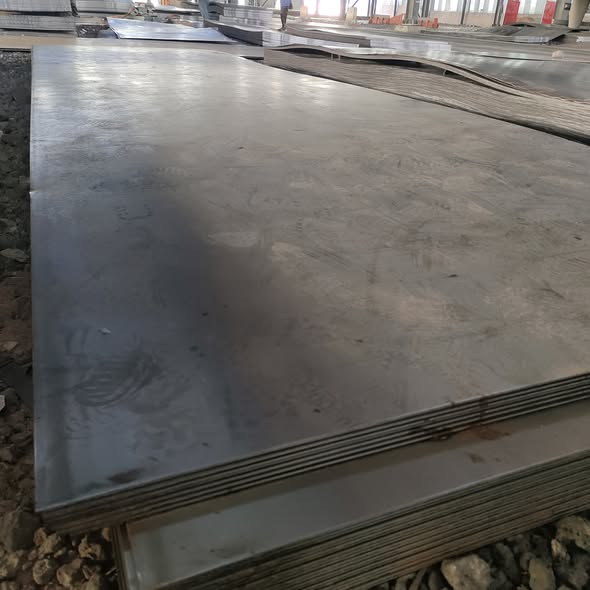
Low Carbon Steel (Structural & Fabrication): Used in construction beams, pipelines, automotive body panels, shipbuilding, and general fabrication. Its excellent formability and weldability make it the default choice where strength requirements are moderate and ease of processing is a priority.
Medium Carbon Steel (Mechanical Components): Preferred for gears, crankshafts, axles, coupling components, and railway infrastructure. Heat treatment (quench and temper) unlocks its full strength potential, enabling components that endure high cyclic loads without fatigue failure.
High Carbon Steel (Tooling & Wear Applications): Essential for cutting tools, drill bits, springs, high-strength wire, and wear-resistant surfaces. The hardness achieved after heat treatment is unmatched within the carbon steel family, though the trade-off in toughness must be engineered around.
2. Total Cost of Ownership: Carbon Steel vs. Alternative Materials
Carbon steel’s primary commercial advantage is its price-to-performance ratio. Compared to stainless steel (typically 4–6× higher material cost) and engineered alloy steels (2–3× higher), carbon steel delivers adequate mechanical performance for the majority of structural and mechanical applications at the lowest raw material cost.
Key procurement cost drivers include:
- Grade and specification: Higher carbon grades command modest premiums; heat-treated or certified grades add processing cost
- Form factor: Plate, bar, tube, and structural sections carry different processing margins
- Surface treatment: Galvanizing or coating adds 15–40% to unit cost but is often mandatory for service life
- Compliance requirements: Third-party certification and MTR documentation add procurement overhead but reduce downstream risk
For applications where corrosion resistance is critical, the total cost of ownership calculation must include maintenance and replacement cycles — contexts where stainless or coated alternatives may ultimately be more cost-effective despite higher upfront material cost.
FAQ
1. Does carbon steel contain any metals other than iron and carbon?
Yes. Carbon steel contains controlled trace amounts of manganese, silicon, phosphorus, and sulfur. These are not contaminants — they are intentional compositional elements that influence mechanical properties. What distinguishes carbon steel from alloy steel is the absence of significant additions of chromium, nickel, molybdenum, or other alloying metals.
2. What carbon steel grade should I specify for structural vs. tooling applications?
For structural applications, specify low-carbon grades such as ASTM A36 or EN S275/S355. For mechanical components subject to dynamic loads, medium-carbon grades (SAE 1040–1060) with heat treatment are appropriate. For tooling, cutting edges, and wear surfaces, specify high-carbon grades (SAE 1080–1095) with confirmed heat treatment protocols.
3. How do I verify the carbon content and compliance of a carbon steel shipment before acceptance?
Request the Mill Test Report (MTR) before or at delivery and cross-reference the chemical composition and mechanical test values against your purchase specification. For high-stakes orders, commission third-party inspection including portable XRF (X-ray fluorescence) analysis for on-site chemical verification and hardness testing to confirm heat treatment outcomes.
Conclusion
Carbon steel is not “100% pure steel” in any elemental sense — it is a precisely engineered iron-carbon alloy whose performance is defined by its composition range, carbon classification, and applicable processing. The distinction between low, medium, and high carbon grades is not a marketing taxonomy; it is a functional engineering boundary that determines weldability, strength, hardness, and application suitability.
For procurement and engineering teams, the actionable takeaway is straightforward: match carbon grade to mechanical requirement, align specification to the correct international standard, and demand MTR documentation on every order. Carbon steel’s unmatched price-to-performance ratio makes it the default industrial material choice — but only when the correct grade is specified and verified.