

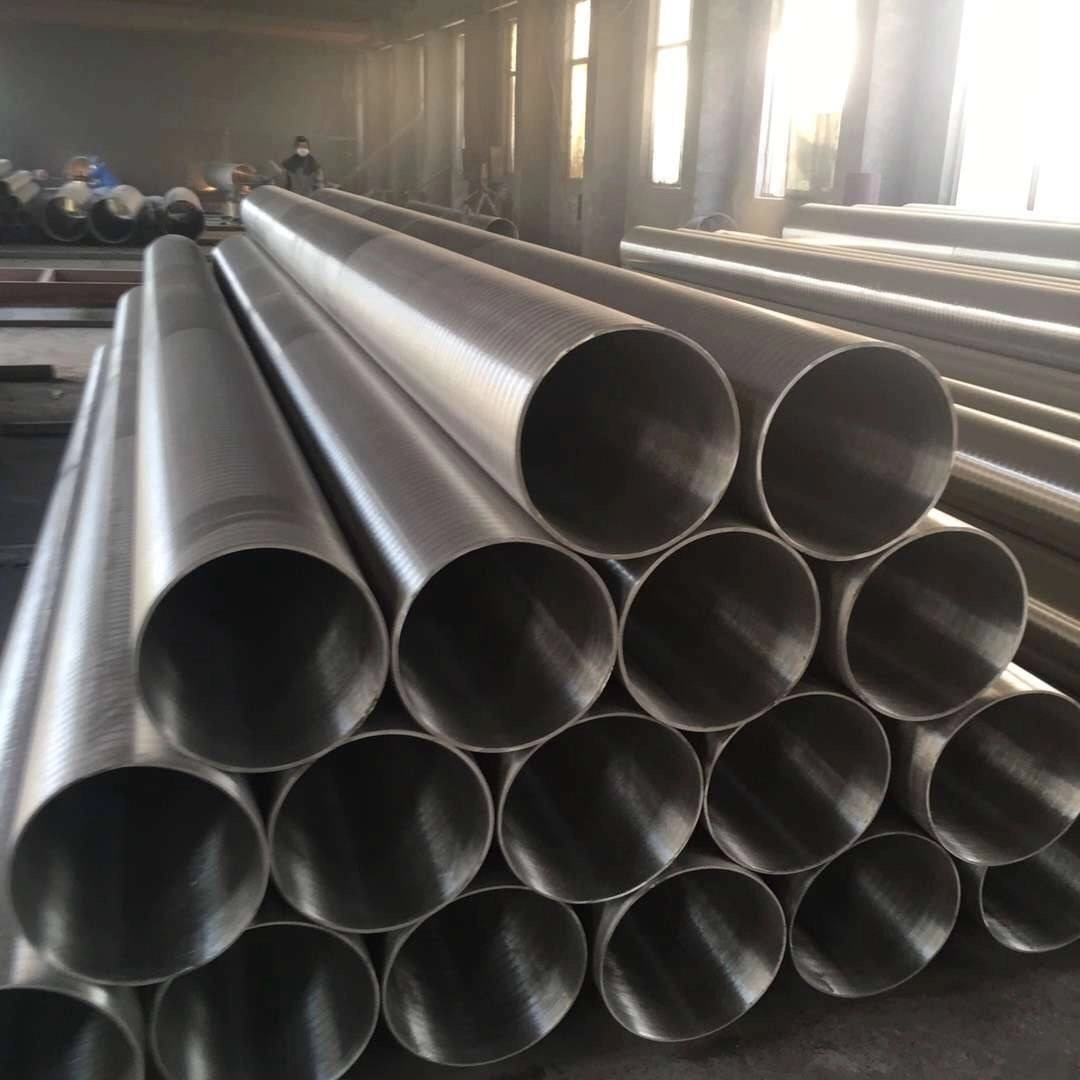
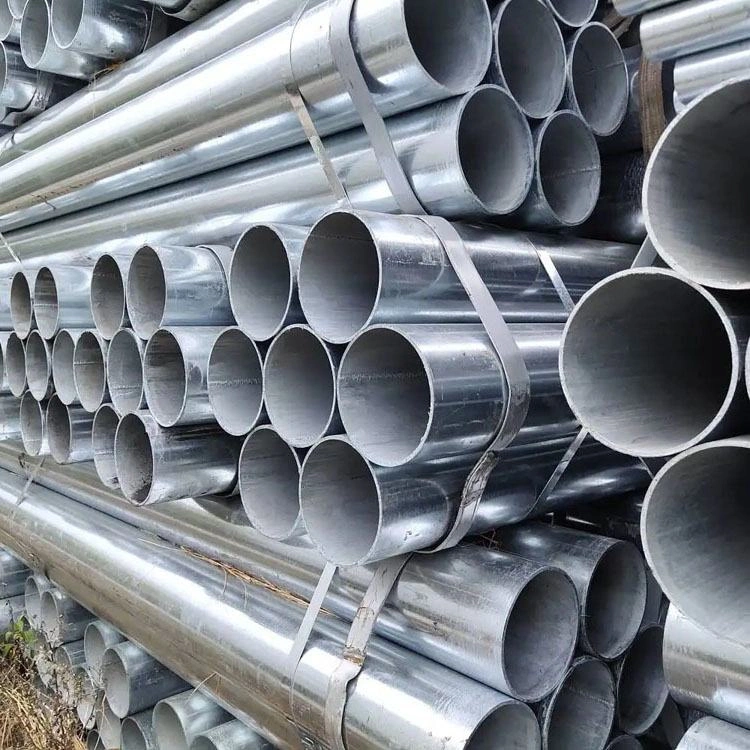
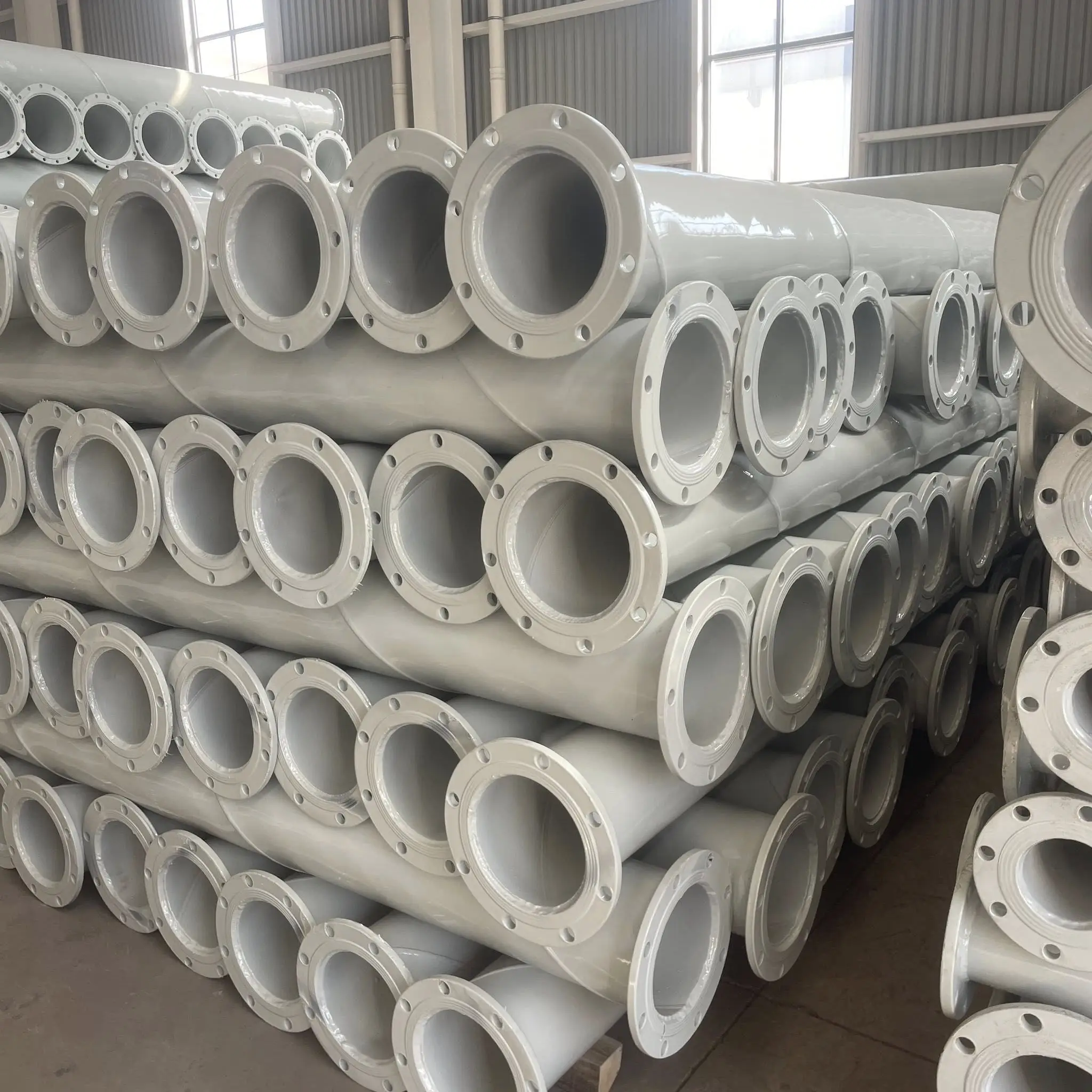
Quick Answer: Galvanized steel round pipe is a carbon steel tube with a zinc coating applied via hot-dip or electro-galvanizing processes, delivering corrosion resistance across structural, plumbing, and industrial applications. Coating weight, wall tolerance, and base metal grade are the three primary procurement variables.
Definition, Composition, and Core Standards
1. Material Definition
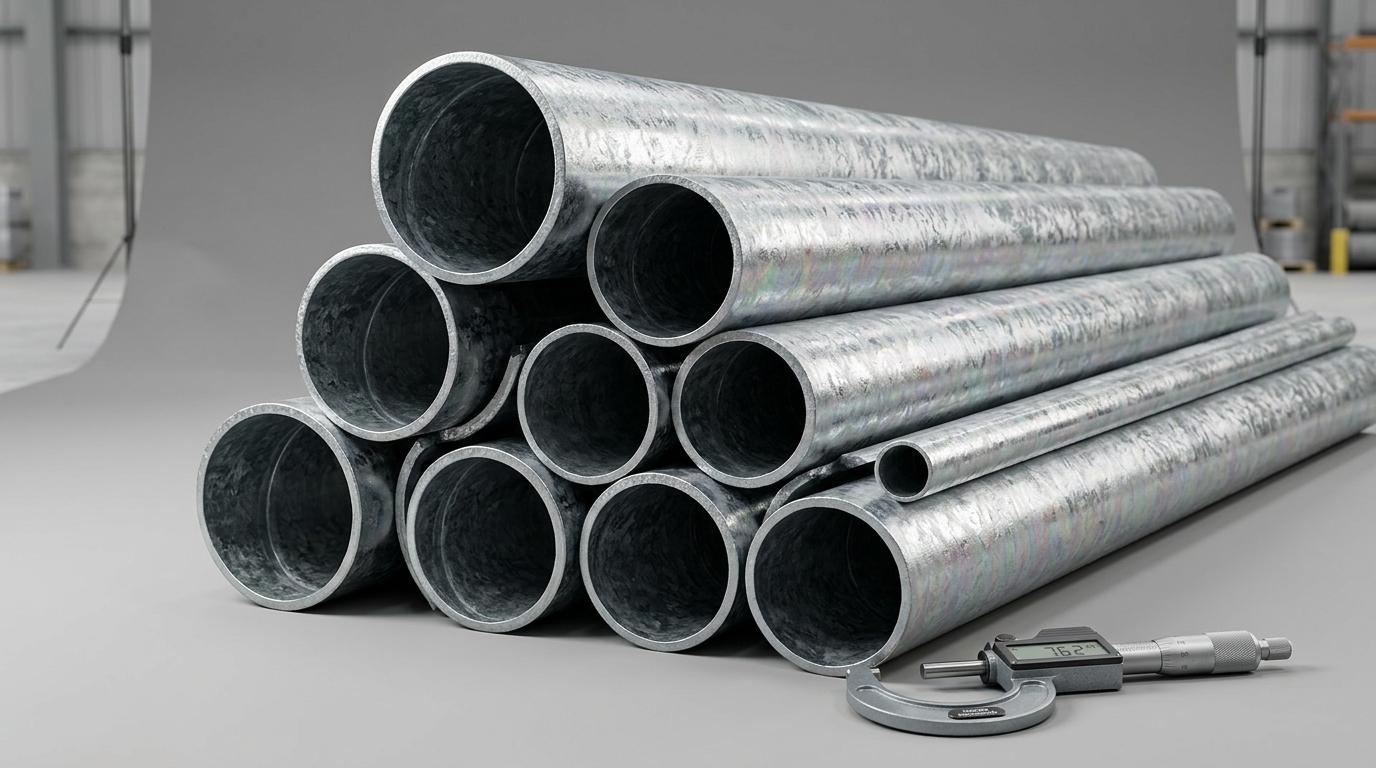
- Base metal: Low-carbon steel (C ≤ 0.25%), conforming to ASTM A53, GB/T 3091, EN 10255, or BS 1387
- Coating method: Hot-dip galvanizing (HDG) or electro-galvanizing (EG)
- Zinc layer: HDG delivers 45–85 µm; EG delivers 5–25 µm
- Pipe form: Seamless or ERW (electric resistance welded)
2. Applicable Standards Comparison
| Standard | Region | Min. Zinc Coating (g/m²) | Wall Tolerance |
|---|---|---|---|
| ASTM A53 Grade B | USA | 610 (Class 1) | ±12.5% |
| GB/T 3091 | China | 500 (regular) | ±10% |
| EN 10255 | Europe | 400 (medium series) | ±10% |
| BS 1387 Heavy | UK | 460 | ±8% |
- Key distinction: ASTM A53 specifies zinc weight by mass per unit area; GB/T 3091 uses average coating thickness measurement per pipe end.
- Seamless vs. ERW: Seamless pipe has no weld seam, preferred for pressure service; ERW dominates structural and fluid-conveyance applications due to lower cost.
3. Dimensional Range
- OD range: 15 mm – 508 mm (standard commercial)
- Wall thickness: 1.8 mm – 12.7 mm
- Length: 6 m or 12 m random mill lengths; fixed lengths by order
Zinc Coating Weight and Corrosion Resistance Lifespan
1. Coating Weight vs. Service Life Data
Hot-dip galvanizing zinc coating weight is the single most predictive variable for corrosion resistance lifespan under industrial atmospheric exposure.
| Zinc Coating Weight (g/m²) | Equivalent Thickness (µm) | Estimated Service Life — Industrial Atmosphere (ISO 9223 Category C3) |
|---|---|---|
| 400 | ~56 µm | 20–30 years |
| 500 | ~70 µm | 30–45 years |
| 610 | ~85 µm | 45–60 years |
| 850 | ~120 µm | 60–80 years |
Source: ISO 14713-1:2017; Galvanizers Association corrosion rate tables.
2. Mechanism
- Zinc acts as a sacrificial anode: it oxidizes preferentially, protecting the steel substrate.
- In C3 industrial atmospheres (SO₂ + humidity), zinc consumption rate averages 0.7–2.1 µm/year (ISO 9223).
- HDG coatings form a Zeta–Delta–Gamma intermetallic layer below the pure zinc surface, adding mechanical adhesion beyond simple barrier protection.
3. Practical Procurement Implication
- For coastal or chemical-plant environments (C4–C5 categories), specify ≥610 g/m² or request duplex coating (zinc + epoxy topcoat).
- Electro-galvanized pipe (≤25 µm) is unsuitable for outdoor structural exposure exceeding 5 years without supplementary coating.
Manufacturing Process Variables: Wall Thickness Tolerance Conformance
1. ERW Production Variables Affecting Tolerance
China galvanized steel round pipe factories producing to GB/T 3091 and ASTM A53 must control these critical process parameters:
- Strip steel incoming thickness variance: ±0.05 mm strip tolerance propagates directly to finished wall tolerance.
- Forming roll calibration interval: Misaligned forming rolls introduce ovality, which skews ultrasonic wall measurement.
- Weld bead scarfing depth: Excessive scarfing reduces wall thickness at the seam zone, causing localized under-tolerance.
- Galvanizing bath temperature: Maintained at 445–455°C; deviation causes uneven zinc pickup and dimensional distortion on thin-wall pipe (≤2.5 mm).
2. Tolerance Conformance Protocol
| Inspection Stage | Method | Acceptance Criterion (ASTM A53) |
|---|---|---|
| Incoming strip | Micrometer sampling | ±0.05 mm |
| Formed tube (pre-weld) | Laser OD gauge | OD ±0.5% |
| Finished pipe wall | Ultrasonic (UT) | ±12.5% of nominal |
| Post-galvanizing OD | Caliper (3-point) | ±1% of nominal |
- GB/T 3091 tightens wall tolerance to ±10% for pipes OD ≤ 114.3 mm when ordered to “precision” grade.
- Third-party inspection (SGS, BV, TÜV) at mill gate is the standard procurement safeguard for import orders.
Mechanical Properties: Grade A vs. Grade B vs. S235
1. Yield and Tensile Strength Benchmarks
| Grade | Standard | Min. Yield Strength (MPa) | Min. Tensile Strength (MPa) | Elongation (%) |
|---|---|---|---|---|
| Grade A | ASTM A53 | 207 | 331 | 35 |
| Grade B | ASTM A53 | 241 | 414 | 30 |
| S235 | EN 10025 | 235 | 360–510 | 26 |
| Q235B | GB/T 700 | 235 | 370–500 | 26 |
2. Structural Load Application Guidance
- Grade B is the default specification for pressure piping, fire suppression systems, and structural hollow sections.
- S235 / Q235B are functionally interchangeable in non-pressure structural framing; S235 carries CE marking for European construction compliance.
- Grade A is limited to low-pressure fluid conveyance; not specified for structural columns or load-bearing frames.
- Under cyclic loading, HDG pipe shows no statistically significant fatigue strength reduction vs. bare pipe at coating thicknesses ≤85 µm (per ECCS Technical Report No. 89).
FOB Pricing Determinants and MOQ Thresholds (2024)
1. Price Structure from Chinese Mills
Wholesale galvanized steel round pipe quotes from certified Chinese mills are governed by five verifiable cost drivers:
- Hot-rolled coil (HRC) feedstock price — Tracks Shanghai Futures Exchange (SHFE) steel rebar index; accounts for 55–65% of ex-works cost.
- Zinc ingot price — LME zinc spot; HDG adds $35–$75/MT to bare pipe cost at standard 500 g/m² coating weight.
- Wall thickness and OD — Heavier wall and larger OD increase per-meter weight, directly scaling material cost.
- Surface finish specification — Plain-end vs. threaded-and-coupled (T&C) adds $8–$22/MT for threading and coupling labor.
- Certification scope — Mill test reports (MTR) to ASTM A53 with third-party verification add $15–$40/MT versus GB/T 3091 self-certification.
2. MOQ and FOB Benchmark (2024 Reference)
| Order Type | Typical MOQ | FOB Tianjin / Shanghai Price Range (USD/MT) |
|---|---|---|
| Standard GB/T 3091 | 5 MT | $620 – $720 |
| ASTM A53 Grade B certified | 20 MT | $680 – $800 |
| Custom OD / wall (non-standard) | 25 MT | $750 – $950 |
| Full container load (FCL, 20′) | ~18–22 MT | Best rate bracket |
Prices reflect Q1–Q3 2024 market conditions; subject to HRC and zinc index fluctuation.
Surface Preparation: Acid Pickling vs. Mechanical Descaling
1. Process Comparison
Pre-galvanizing surface preparation directly determines interlayer adhesion and zinc coating uniformity — a critical quality variable that china galvanized steel round pipe manufacturers must control before hot-dip immersion.
| Parameter | Acid Pickling (HCl/H₂SO₄) | Mechanical Descaling (Shot Blast) |
|---|---|---|
| Scale removal efficiency | 98–100% | 90–96% |
| Surface roughness (Ra) | 1.5–3.0 µm | 3.0–6.5 µm |
| Zinc adhesion (pull-off) | Good | Excellent |
| Hydrogen embrittlement risk | Present (high-strength steel) | None |
| Process waste | Acid effluent (regulated) | Steel grit (recyclable) |
| Cost index | Low | Medium–High |
2. Impact on Coating Uniformity
- Acid pickling produces a chemically clean, low-roughness surface; zinc wets uniformly but coating thickness variance is ±5–8 µm.
- Shot blasting creates a micro-anchor profile; zinc mechanical interlocking reduces delamination risk by 30–40% in bend/flare testing (per ISO 1461 annex data).
- Hybrid process (pickle + light blast) is used by premium china galvanized steel round pipe factory operations targeting EN 10240 internal coating compliance.
Real-World Application Scenarios
Scenario 1 — Greenhouse Structural Frame (Agricultural)
- Spec: OD 48.3 mm × 2.5 mm wall, GB/T 3091, 500 g/m² HDG
- Driver: 25-year service life in humid, fertilizer-laden atmosphere without repainting
- Source: China galvanized steel round pipe factory, MOQ 10 MT, FOB ~$650/MT
Scenario 2 — Fire Sprinkler System (Commercial Building)
- Spec: ASTM A53 Grade B, Schedule 40, T&C ends, 610 g/m² HDG
- Driver: NFPA 13 compliance; pressure rating 300 PSI working pressure
- Source: Certified mill with UL/FM listing, MOQ 20 MT
Scenario 3 — Offshore Platform Handrail (Marine)
- Spec: OD 60.3 mm × 3.2 mm, EN 10255 heavy series, duplex coating (zinc + polyurethane)
- Driver: C5-M corrosivity category; 40-year design life per ISO 12944
- Source: Specialty china galvanized steel round pipe manufacturers with NACE-certified QC
FAQ: Galvanized Steel Round Pipe
Q1: What is the standard zinc coating weight for galvanized steel round pipe?
500–610 g/m² per ASTM A53 / GB/T 3091.
Q2: Can galvanized steel round pipe be welded after galvanizing?
Yes, but zinc fumes require ventilation; post-weld zinc repair per ASTM A780 is mandatory.
Q3: What is the minimum MOQ for wholesale galvanized steel round pipe from China?
5 MT for standard GB/T 3091; 20 MT for ASTM A53-certified product.
Q4: How do I verify a China galvanized steel round pipe factory’s certification?
Request mill test reports + third-party inspection (SGS/BV) referencing heat number traceability.
Q5: Is Grade A or Grade B galvanized pipe stronger?
Grade B: 241 MPa yield vs. Grade A’s 207 MPa.
Q6: What causes coating peel-off in galvanized round pipe?
Insufficient surface preparation or bath temperature deviation above ±5°C.
Q7: What is the price difference between GB/T 3091 and ASTM A53 galvanized pipe?
ASTM A53 commands $60–$80/MT premium due to certification and inspection costs.
Q8: How does wall thickness affect FOB pricing in wholesale quotes?
Every 1 mm increase in wall adds approximately $40–$60/MT to FOB price.
Conclusion and Procurement Guidance
Galvanized steel round pipe performance is determined by three quantifiable variables: zinc coating weight (corrosion life), wall thickness tolerance (structural reliability), and base metal grade (load capacity). Buyers sourcing from China galvanized steel round pipe manufacturers should:
- Specify coating weight in g/m², not just “galvanized,” to avoid ambiguity between HDG and EG products.
- Require third-party mill inspection for ASTM A53 orders exceeding 20 MT.
- Benchmark 2024 FOB prices against SHFE HRC and LME zinc indices before accepting quotes.
- Evaluate surface preparation method (acid pickle vs. shot blast) when ordering pipe for high-humidity or cyclic-load environments.
Engaging directly with a verified China galvanized steel round pipe factory — one holding ISO 9001, API, or UL certifications — reduces specification risk and ensures MTR traceability from heat to shipment.
References and Standards
- ASTM A53/A53M-22: Standard Specification for Pipe, Steel, Black and Hot-Dipped, Zinc-Coated, Welded and Seamless
- GB/T 3091-2015: Welded Steel Pipes for Low Pressure Fluid Service
- ISO 1461:2009: Hot Dip Galvanized Coatings on Fabricated Iron and Steel Articles
- ISO 9223:2012: Corrosion of Metals and Alloys — Corrosivity of Atmospheres
- ISO 14713-1:2017: Zinc Coatings — Guidelines for Protection Against Corrosion
- EN 10255:2004: Non-alloy Steel Tubes Suitable for Welding and Threading
- ECCS Technical Report No. 89: Fatigue Design of Steel Structures
- LME Zinc Cash Settlement Price Data, 2024
- Shanghai Futures Exchange (SHFE) Steel Rebar Index, Q1–Q3 2024