

Stainless coil is one of the most commercially significant product forms in the global steel supply chain, serving as a foundational input material for industries ranging from food processing and chemical engineering to automotive manufacturing and architectural cladding. Yet procurement decisions are frequently made with incomplete performance data — leading to grade mismatches, tolerance failures, and avoidable lifecycle costs.
This guide delivers a structured, data-driven overview of stainless coil performance. It covers mechanical properties including tensile strength, yield strength, and hardness; physical characteristics such as corrosion resistance and thermal behavior; dimensional specifications and rolling tolerances; and compliance standards governing major global markets. Whether you are evaluating a new supplier, qualifying a material for a stamping line, or comparing grade economics, this article provides the technical benchmarks and sourcing logic required to make informed decisions.
What is Stainless Coil?
1. Definition & Manufacturing Process
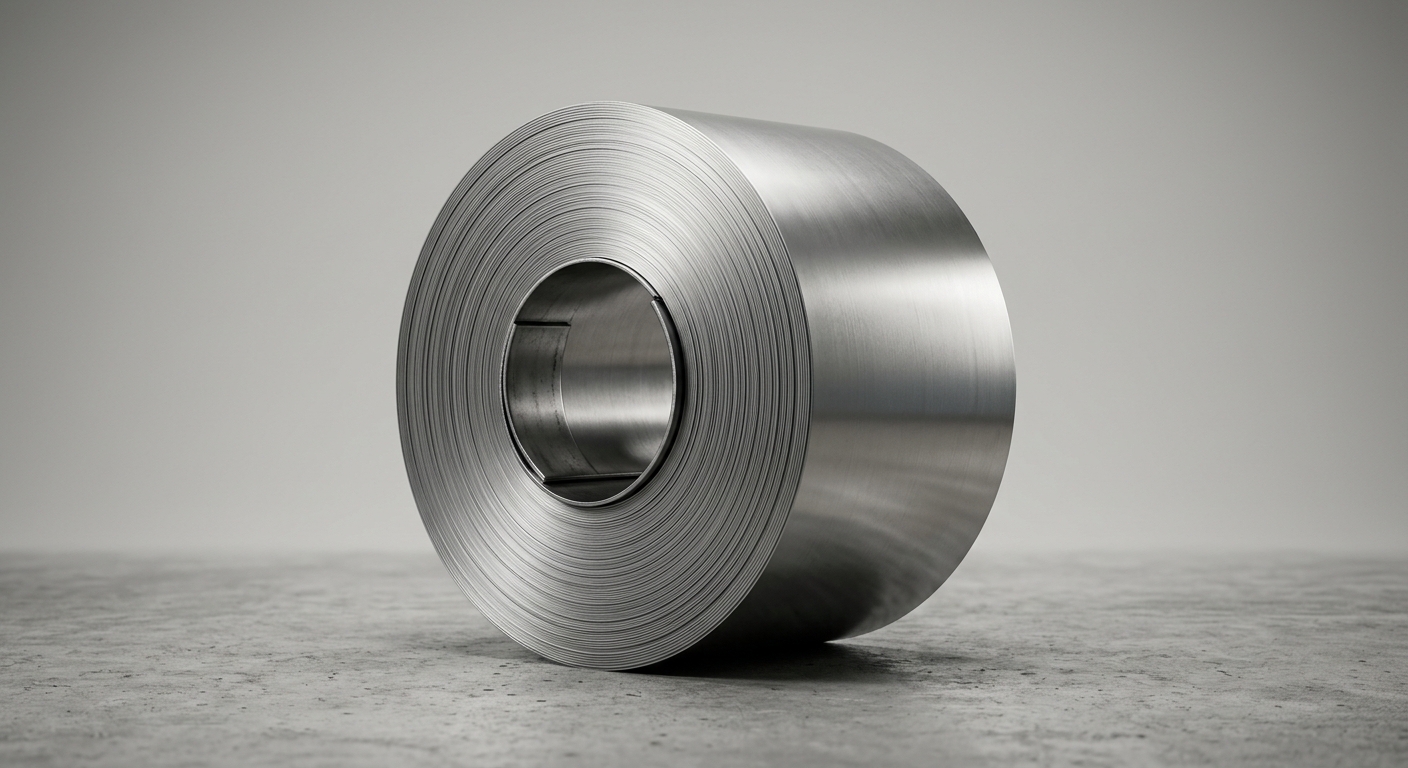
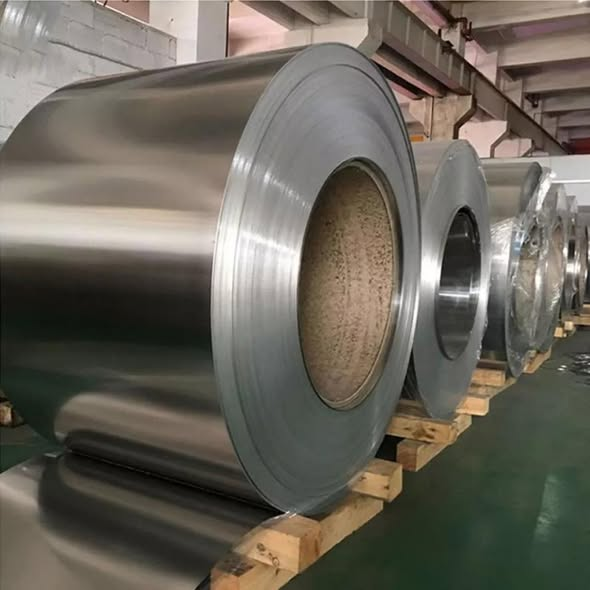
Stainless coil refers to stainless steel strip that has been rolled into a continuous coil form, enabling efficient handling, storage, and downstream processing. It is produced via two primary manufacturing routes.
Hot-rolled (HR) coil is processed at temperatures above the material’s recrystallization point (typically above 1,000°C), producing a scaled surface with a rougher finish (No.1 surface). HR coil is typically used where surface aesthetics are secondary to structural performance, such as in heavy fabrication or as an intermediate product for further cold rolling.
Cold-rolled (CR) coil is produced by further reducing hot-rolled coil at room temperature, yielding tighter dimensional tolerances, improved surface quality, and enhanced mechanical properties through work hardening. Cold-rolled stainless coil is available in several standard surface finishes:
- 2B: The most common finish — smooth, matte, achieved by final light rolling through polished rolls. Suitable for most industrial and food-grade applications.
- BA (Bright Annealed): Highly reflective, mirror-like finish produced in a controlled-atmosphere furnace. Preferred for decorative and pharmaceutical applications.
- No.1: Hot-rolled, annealed, and pickled. Dull, rough surface used in heat-resistant applications.
Coil dimensions are defined by thickness, width, inner diameter (ID), outer diameter (OD), and coil weight — all of which are specified at the time of order and governed by applicable rolling standards.
2. Common Grades & Material Composition
Four grades dominate global stainless coil procurement:
- Grade 304 (18% Cr / 8% Ni): The industry workhorse. Excellent corrosion resistance, good formability, and broad availability make it the default choice for food equipment, kitchenware, and general fabrication.
- Grade 316L (16% Cr / 10% Ni / 2% Mo): Molybdenum addition provides superior resistance to chloride-induced pitting and crevice corrosion. Specified for marine, pharmaceutical, and chemical processing environments.
- Grade 430 (17% Cr, no Ni): Ferritic grade with moderate corrosion resistance. Cost-effective alternative where nickel-free composition is required — common in appliance panels and automotive trim.
- Grade 201 (16% Cr / 4.5% Ni / 6.5% Mn): A lower-nickel austenitic grade using manganese as a partial nickel substitute. Offers reduced raw material cost while maintaining acceptable formability for light-gauge applications.
The chromium content in all grades is the primary driver of corrosion resistance, forming a self-repairing passive oxide layer (Cr₂O₃) on the surface. Nickel stabilizes the austenitic microstructure, improving ductility and low-temperature toughness. Molybdenum (in 316L) extends pitting resistance into aggressive halide environments.
Core Performance of Stainless Coil
1. Mechanical Properties: Tensile Strength, Yield Strength & Hardness
Mechanical performance is the primary basis for grade selection in structural and forming applications. The following table provides procurement-ready benchmark data across the four most commonly specified grades:
| Grade | Tensile Strength (MPa) | Yield Strength (MPa) | Elongation (%) | Hardness (HRB) | Typical Thickness Range (mm) |
|---|---|---|---|---|---|
| 201 | 655 – 760 | 310 – 380 | 40 – 45 | 90 – 95 | 0.3 – 4.0 |
| 304 | 515 – 720 | 205 – 310 | 40 – 50 | 80 – 90 | 0.1 – 6.0 |
| 316L | 485 – 690 | 170 – 290 | 40 – 50 | 79 – 88 | 0.1 – 6.0 |
| 430 | 450 – 600 | 205 – 310 | 22 – 30 | 75 – 85 | 0.3 – 4.0 |
Data based on annealed condition per ASTM A240 / EN 10088-2.
Key observations for procurement engineers:
- Grade 201 exhibits the highest tensile strength among standard austenitic grades in this group, making it commercially attractive for applications where forming depth is moderate and cost pressure is significant.
- Grade 304 and 316L offer superior elongation (≥40%), which directly translates to deep-drawing and complex-stamping capability without cracking.
- Grade 430 has lower elongation (22–30%), limiting its use to shallow-form applications. However, its ferritic structure provides better resistance to stress corrosion cracking in certain chloride environments than austenitic grades.
- Hardness values (HRB 75–95 in annealed condition) increase significantly in temper-rolled or skin-passed conditions, which must be specified when ordering for precision forming lines.
2. Physical & Corrosion Resistance Properties
Beyond mechanical metrics, three physical performance parameters govern stainless coil suitability in service environments:
Corrosion Resistance: The passive chromium oxide layer (minimum 10.5% Cr by weight, per standard definition) provides inherent corrosion protection. Grade 316L’s molybdenum content raises the Pitting Resistance Equivalent Number (PREN = %Cr + 3.3×%Mo + 16×%N) to approximately 24–26, versus 18–20 for Grade 304. In chloride-rich environments (seawater, acidic cleaning agents), this difference is operationally critical.
Heat Resistance: Grade 304 maintains structural integrity up to approximately 870°C in intermittent service; Grade 316L is rated to 925°C. For continuous high-temperature applications above these thresholds, heat-resistant grades (e.g., 309S, 310S) should be specified instead.
Magnetic Permeability: Austenitic grades (201, 304, 316L) are nominally non-magnetic in the annealed condition, though cold working can induce slight ferromagnetism — a factor relevant to MRI-adjacent or electromagnetic-sensitive installations. Grade 430 is fully ferritic and therefore magnetic, which is a functional advantage in applications requiring magnetic clamping or sensor detection.
Specifications, Tolerances & Compliance Standards
1. Key Dimensional Specifications & Rolling Tolerances
Standard stainless coil dimensions vary by production mill and end-use requirement, but the following ranges represent commercial availability across major suppliers:
- Thickness: 0.1 mm – 6.0 mm (cold-rolled); up to 14 mm (hot-rolled)
- Width: 600 mm – 2,000 mm (slit coil widths available from 10 mm)
- Coil Inner Diameter (ID): 508 mm or 610 mm (standard mandrel sizes)
- Coil Outer Diameter (OD): Up to 2,000 mm
- Coil Weight: 3 – 25 metric tons per coil
Thickness tolerance is a critical procurement parameter for stamping and roll-forming operations. Under ASTM A480, permissible thickness deviation for 304 cold-rolled coil at 1.0 mm nominal thickness and 1,000 mm width is ±0.08 mm. EN 10259 specifies similar tolerances for European supply chains, with Class A (tighter) tolerances available by agreement for precision applications.
Width tolerances for slit coil are typically +0.0 / -0.5 mm for standard orders, with tighter tolerances (+0.0 / -0.2 mm) available at a premium for high-speed roll-forming lines where edge tracking is critical.
2. International Standards & Certifications
Compliance requirements vary by destination market and end-use application:
| Standard | Scope | Primary Markets |
|---|---|---|
| ASTM A240 / A480 | Chemical composition, mechanical properties, tolerances | USA, Canada, global OEM |
| EN 10088-2 / EN 10259 | Composition, mechanical properties, strip/coil tolerances | EU, UK, Middle East |
| JIS G4305 | Cold-rolled stainless plate/sheet/strip | Japan, Southeast Asia |
| GB/T 3280 | Cold-rolled stainless sheet and strip | China domestic market |
Mill Test Certificates (MTC) issued under EN 10204 Type 3.1 (third-party verified) are the procurement standard for regulated industries including food, pharmaceutical, and pressure vessel fabrication. Buyers should specify MTC requirements explicitly in purchase orders to avoid receiving Type 2.2 certificates, which are mill self-declarations without independent verification.
Industrial Applications & Commercial Value
1. Key Application Scenarios by Industry
Grade-to-application alignment is the most direct path to avoiding over-specification (cost waste) or under-specification (premature failure):
- Food Processing & Beverage: Grade 304 (2B finish) is the regulatory baseline for contact surfaces. Grade 316L is required where CIP (clean-in-place) chemicals contain chlorides above 200 ppm, or for prolonged brine contact.
- Chemical & Pharmaceutical Equipment: Grade 316L is the minimum specification for reactor vessels, heat exchanger plates, and piping coil stock. PREN >25 is often contractually required.
- Architectural Cladding & Facades: Grade 304 or 316L in BA or No.4 finish, with attention to atmospheric chloride levels in coastal installations (favor 316L within 5 km of coastline).
- Automotive Components: Grade 430 and 201 are widely used for exhaust trim, door sills, and decorative strips where cost efficiency outweighs maximum corrosion resistance.
- Appliances & Consumer Electronics: Grade 430 (magnetic, cost-effective) for oven panels and washing machine drums; Grade 304 for premium product lines.
2. Sourcing Considerations & Total Cost of Ownership
Stainless coil pricing is driven by three primary variables: base price (linked to hot-rolled coil indices), nickel surcharge (LME nickel price × Ni content factor), and extras for surface finish, tight tolerances, and small order quantities.
Key sourcing considerations:
- MOQ: Mill direct orders typically require 5–20 MT minimum per grade/dimension combination. Service center purchases allow smaller quantities at a 5–15% premium.
- Surface Finish Premium: BA finish commands a 10–20% premium over 2B; precision-slit narrow coil adds 8–15% over standard mill-edge pricing.
- Total Cost of Ownership vs. Carbon Steel: Stainless coil carries a 4–6× higher unit price than equivalent carbon steel coil, but eliminates coating costs, extends service life by 15–30 years in corrosive environments, and reduces maintenance downtime — delivering a lower TCO in most wet or chemical process applications.
- Lead Time: Standard grades (304, 430) from domestic service centers: 1–2 weeks. Mill direct, non-standard dimensions: 6–12 weeks. Factor lead time into inventory planning for just-in-time production environments.
FAQ
Q1: What tensile strength should I specify for stainless coil used in food-grade processing equipment?
For food-grade equipment fabricated by stamping or roll-forming, Grade 304 in the annealed condition (tensile strength 515–720 MPa, elongation ≥40%) is the standard specification. If deep-drawing is involved, request material with elongation ≥45% and confirm the n-value (strain hardening exponent) with your supplier. Avoid temper-rolled material unless specifically required for structural stiffness.
Q2: What is the difference in corrosion performance between 304 and 316L stainless coil in marine or chemical environments?
Grade 316L’s 2–3% molybdenum addition raises its PREN to 24–26 versus 18–20 for Grade 304. In practice, this means 316L resists pitting and crevice corrosion at chloride concentrations up to 1,000 ppm, while 304 begins to show pitting above 200 ppm in stagnant conditions. For coastal or chemical service, 316L is not a premium — it is a reliability requirement.
Q3: How do rolling tolerances in stainless coil affect downstream stamping or forming operations?
Thickness variation beyond ±0.05 mm in precision stamping dies causes inconsistent material flow, leading to thinning defects, springback variation, and increased tool wear. Specify ASTM A480 or EN 10259 Class A tolerances for high-volume stamping lines, and request coil camber specifications (typically ≤2 mm per 2,000 mm length) to prevent tracking issues on automated feed lines.
Conclusion
Stainless coil performance is defined by a matrix of mechanical properties, physical characteristics, dimensional precision, and compliance certifications — each of which carries direct commercial consequences in downstream manufacturing. Grade 304 remains the optimal balance of performance and cost for the majority of industrial applications, while Grade 316L is the non-negotiable choice wherever chloride exposure or chemical aggression is present. Ferritic grades (430) and economy austenitic grades (201) serve cost-sensitive applications where their specific limitations are engineered around.
For B2B procurement, the key actions are: specify grade and condition (annealed vs. temper-rolled), define surface finish and tolerance class in the purchase order, require EN 10204 Type 3.1 Mill Test Certificates, and evaluate total cost of ownership rather than unit price alone.
Ready to evaluate stainless coil suppliers? Request material certifications, mill test reports, and dimensional tolerance confirmations before committing to volume orders. A qualified supplier will provide full traceability from melt heat to finished coil — protecting your production quality and regulatory compliance simultaneously.