

Quick Answer: Seamless steel pipe is manufactured without a weld seam through mandrel piercing or extrusion, delivering superior pressure ratings and mechanical uniformity. Normal (welded) pipe uses formed steel strip joined by ERW or SAW processes, offering lower cost but reduced performance under extreme service conditions.
1. Manufacturing Process: Where the Fundamental Difference Begins
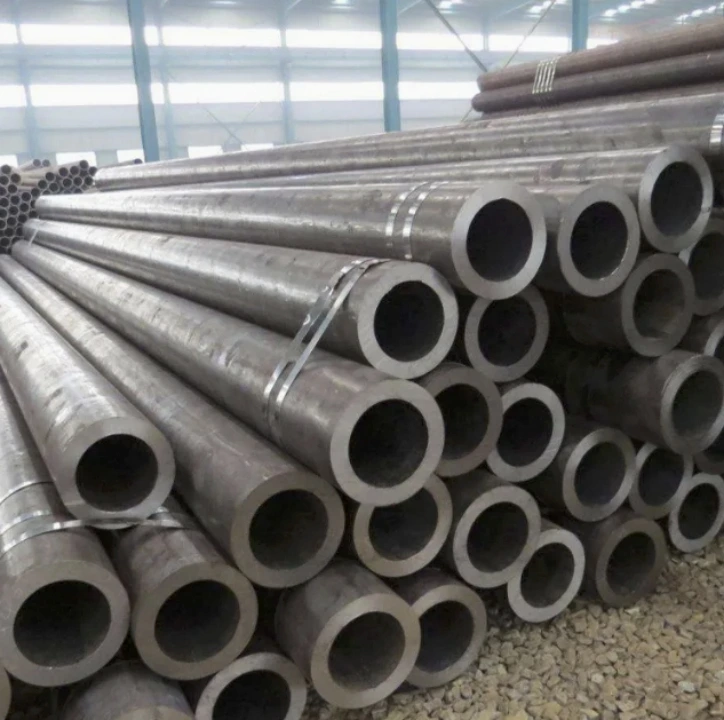
The distinction between seamless and normal pipe originates entirely in how each is produced. Seamless steel pipe begins as a solid cylindrical steel billet, heated to approximately 1,200–1,280°C, then pierced by a mandrel through the center to form a hollow shell. This shell is subsequently elongated and sized through a series of rolling mills — a process governed by ASTM A106 and ASTM A53 standards for carbon steel service.
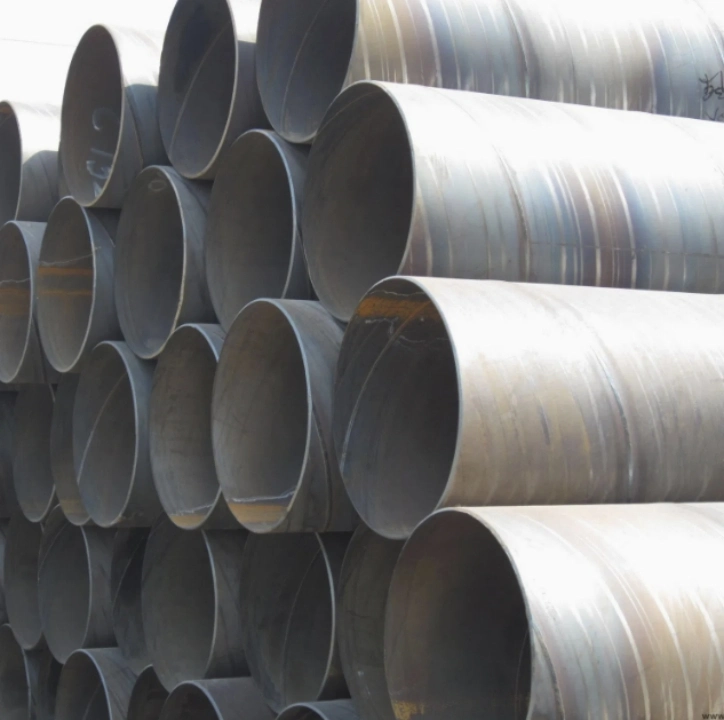
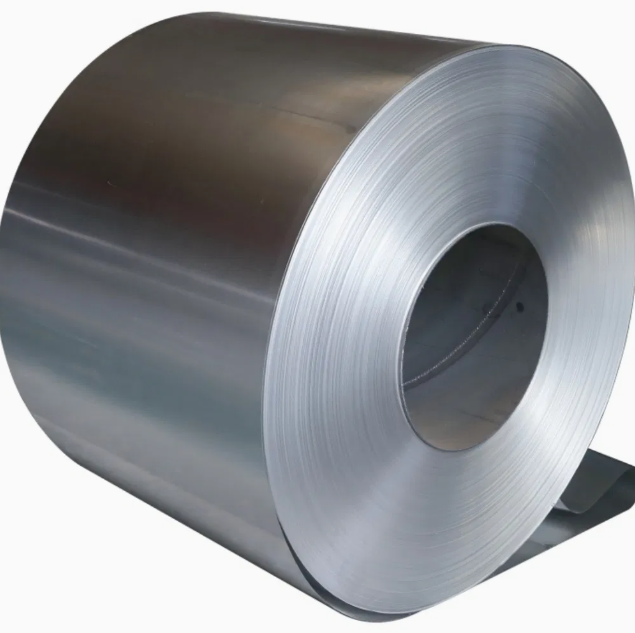
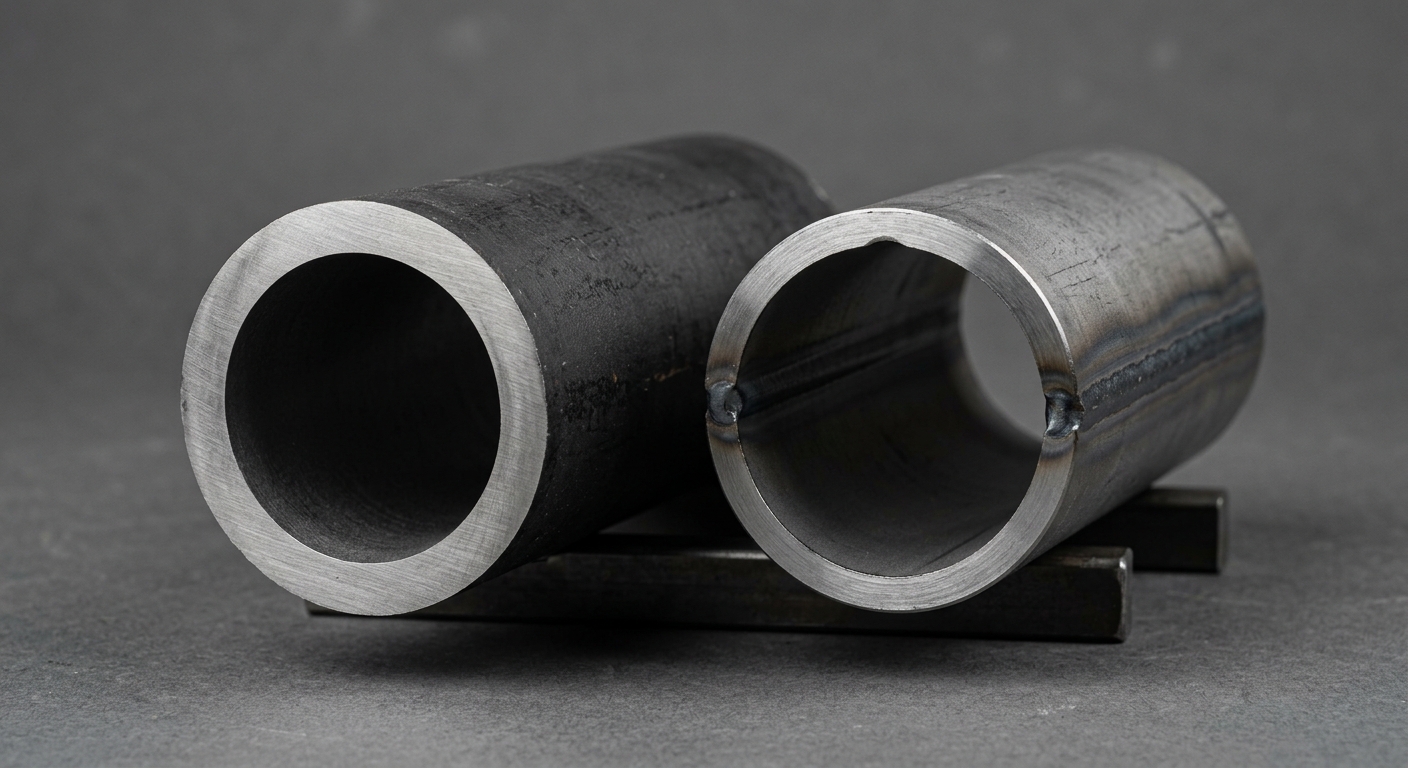
Normal pipe — most commonly Electric Resistance Welded (ERW) or Submerged Arc Welded (SAW) pipe — is formed by rolling flat steel strip or plate into a cylindrical shape, then fusing the longitudinal edges using electrical resistance heat or a submerged arc. The resulting structure contains an inherent longitudinal weld seam that runs the full pipe length.
This manufacturing divergence has cascading consequences across wall thickness tolerance, mechanical properties, pressure performance, and corrosion resistance — all of which directly affect material selection decisions in oil and gas, petrochemical, and power generation projects.
Key manufacturing distinctions:
- Seamless: billet → piercing → elongation → sizing → no weld seam
- ERW: coil/strip → forming → resistance welding → seam annealing → sizing
- SAW: plate → forming → submerged arc welding → hydrostatic testing
2. Wall Thickness Tolerance and Dimensional Precision Under ASTM Standards
Seamless Pipe Wall Thickness Tolerance (ASTM A106 / A53)
Under ASTM A106 Grade B, seamless pipe carries a wall thickness tolerance of +/- 12.5% of the specified nominal wall. This tolerance results directly from the rotary piercing process — the mandrel cannot apply perfectly uniform radial force throughout the billet length, introducing minor eccentricity. In practical terms, a pipe specified at 9.53 mm wall may measure between 8.34 mm and 10.72 mm at any cross-section.
Despite this tolerance band, seamless pipe maintains circumferential homogeneity — the material structure is continuous, without localized heat-affected zones. This makes it the preferred choice where internal pressure uniformity is critical.
ERW Pipe Wall Thickness Tolerance (ASTM A53)
ASTM A53 Type E (ERW) pipe carries the same nominal +/- 12.5% wall tolerance, but dimensional variation is more controlled because the starting material is mill-rolled strip with tighter thickness consistency. However, the weld seam zone introduces a localized area of altered microstructure — the heat-affected zone (HAZ) — which can exhibit different hardness and ductility compared to the parent metal.
| Parameter | Seamless (ASTM A106 Gr.B) | ERW (ASTM A53 Type E) |
|---|---|---|
| Wall Thickness Tolerance | ±12.5% | ±12.5% |
| OD Tolerance (NPS ≤ 1.5″) | ±0.4 mm | ±0.4 mm |
| Weld Seam Present | No | Yes |
| Heat-Affected Zone | None | Present at seam |
| Hydrostatic Test Required | Yes | Yes |
| Max Size Available | Up to 24″ OD (standard) | Up to 100″+ OD |
The critical takeaway: both products share similar dimensional tolerances on paper, but seamless pipe eliminates the structural discontinuity introduced by welding — a factor that becomes decisive under high-pressure cyclic loading.
3. Burst Pressure Rating and Fatigue Life Under Cyclic High-Pressure Service
The absence of a longitudinal weld seam in seamless steel pipe is not merely a manufacturing footnote — it has quantifiable impact on burst pressure capacity and long-term fatigue performance. Burst pressure is calculated using the Barlow formula: P = 2St/D, where S is the allowable stress, t is wall thickness, and D is outside diameter. Because seamless pipe has no seam efficiency factor deduction, it uses E = 1.0 in pressure design calculations per ASME B31.3.
ERW pipe, by contrast, applies a longitudinal joint efficiency factor of E = 0.85 under ASME B31.1 for elevated temperature service above 510°C — meaning the allowable pressure is reduced by 15% at the weld seam location. For a pipeline operating at 10 MPa design pressure, this translates directly to a thicker wall requirement or a derated operating pressure for welded alternatives.
Fatigue life under cyclic pressure loading shows even sharper differentiation. Research published in the International Journal of Pressure Vessels and Piping demonstrates that longitudinal weld seams act as stress concentration sites under cyclic loading. The weld toe geometry creates a notch effect with stress concentration factors (Kt) ranging from 1.2 to 2.5 depending on weld profile. In high-cycle fatigue testing (>10⁶ cycles), seamless pipe specimens consistently outlast ERW specimens by a factor of 1.5–3× at equivalent nominal stress amplitudes.
For applications such as hydraulic systems, reciprocating compressor discharge lines, and steam injection headers — where pressure fluctuates continuously — seamless steel pipe provides measurably longer service life and lower risk of seam-initiated fatigue cracking.
4. Mechanical Properties: API 5L Grade B Yield and Tensile Benchmarks
Specified Minimum Values
Per API 5L Grade B (44th Edition), both seamless and welded pipe products must meet identical minimum mechanical property requirements at the base metal level:
| Property | API 5L Gr.B Seamless | API 5L Gr.B Welded (ERW/SAW) |
|---|---|---|
| Yield Strength (SMYS) | 245 MPa (35,500 psi) | 245 MPa (35,500 psi) |
| Tensile Strength (SMTS) | 415 MPa (60,200 psi) | 415 MPa (60,200 psi) |
| Elongation (min.) | 21% | 21% |
| CVN Impact (weld seam) | N/A | Required per Table 8 |
| Hardness (weld seam HAZ) | N/A | ≤ 22 HRC (sour service) |
Real-World Performance Divergence
The specified minimums appear identical, but actual mill test reports consistently show seamless pipe achieving 10–15% higher average yield strength than the specified minimum, while ERW pipe weld zones may exhibit localized softening in the HAZ — particularly in Grade X52 and above. For sour service applications under NACE MR0175/ISO 15156, the HAZ hardness restriction of 22 HRC becomes a critical qualification criterion that seamless pipe is inherently exempt from at the seam location.
5. Corrosion Resistance and Stress Corrosion Cracking in Sour Service Environments
Sour Service Susceptibility
In hydrogen sulfide (H₂S)-containing environments — classified as sour service per NACE MR0175 — the longitudinal weld seam of ERW or SAW pipe represents a preferential site for Sulfide Stress Cracking (SSC) and Hydrogen-Induced Cracking (HIC). The weld seam HAZ exhibits elevated hardness, residual tensile stress, and microstructural heterogeneity — all of which accelerate hydrogen embrittlement mechanisms.
Seamless steel pipe, with its homogeneous microstructure and absence of residual weld stress concentrations, demonstrates significantly lower SSC susceptibility. Laboratory testing per NACE TM0177 Method A (constant load tensile testing in saturated H₂S solution) consistently shows seamless specimens sustaining higher threshold stress levels before cracking initiation compared to ERW equivalents in the same steel grade.
General Corrosion Behavior
For general corrosion in CO₂-containing environments (sweet service), the difference between seamless and welded pipe is less pronounced — both rely on the base metal chemistry and internal coating/inhibitor systems. However, pitting corrosion studies in chloride-rich environments indicate that weld seam areas are 15–30% more susceptible to pit initiation due to galvanic potential differences between the weld metal, HAZ, and parent metal.
| Corrosion Mechanism | Seamless Pipe Risk | ERW/SAW Pipe Risk |
|---|---|---|
| Sulfide Stress Cracking (SSC) | Low | Moderate–High at seam |
| Hydrogen-Induced Cracking (HIC) | Low | Elevated at HAZ |
| CO₂ Sweet Corrosion | Equivalent | Equivalent |
| Pitting (Cl⁻ environments) | Baseline | 15–30% higher at seam |
| Galvanic Corrosion (seam vs. base) | None | Present |
6. Cost Differentials, Size Range, and Procurement Considerations
Production Cost and Price Premium
Seamless steel pipe commands a 20–45% price premium over equivalent-grade ERW pipe in most global markets, driven by higher energy consumption in the billet heating and piercing process, lower production throughput per hour, and higher tooling wear rates on piercing mandrels and rolling mills. For a large-scale pipeline project requiring 50,000 meters of 6-inch Schedule 40 carbon steel pipe, this premium can represent $300,000–$600,000 USD in additional material cost.
Size Range Limitations
This is a critical procurement constraint: seamless manufacturing is practically limited to OD sizes up to approximately 24 inches (610 mm) through conventional rotary piercing. Larger diameters require extrusion or press piercing methods, which are commercially limited to specialty applications. Welded pipe — particularly SAW (LSAW and SSAW) — is available in diameters exceeding 100 inches (2,540 mm), making it the only viable option for large-diameter transmission pipelines.
Procurement decision framework:
- Choose seamless when: operating pressure > 10 MPa, service temperature > 300°C, sour/H₂S environment, cyclic pressure duty, OD ≤ 24 inches
- Choose welded (ERW/SAW) when: OD > 24 inches required, low-to-medium pressure service, cost optimization is primary driver, non-corrosive or inhibited service fluid
7. Real-World Application Scenarios
Scenario 1 — Offshore Oil and Gas Wellhead Flowlines: A subsea wellhead producing at 15,000 psi WHFP with H₂S content of 50 ppm requires seamless carbon steel pipe to ASTM A106 Grade B or API 5L Grade X52 PSL2 with full NACE MR0175 compliance. ERW pipe is disqualified by seam efficiency limitations and SSC risk.
Scenario 2 — High-Pressure Steam Power Generation: A supercritical steam boiler operating at 25 MPa and 600°C uses seamless alloy steel pipe to ASTM A335 Grade P91 for main steam headers. The ASME B31.1 seam efficiency factor E = 1.0 for seamless allows thinner wall design compared to any welded alternative, reducing thermal mass and improving startup response.
Scenario 3 — Municipal Water Distribution Infrastructure: A 48-inch diameter water transmission main operates at 1.2 MPa with no corrosive service conditions. LSAW (longitudinally submerged arc welded) pipe to API 5L Grade B is selected — the large diameter requirement eliminates seamless as an option, and the benign service environment makes the seam efficiency derating commercially acceptable.
FAQ: Seamless Steel Pipe vs Normal Pipe
Q1: Does seamless pipe always have better wall thickness uniformity than ERW pipe?
Not always — both carry ±12.5% tolerance under ASTM A53/A106; ERW strip consistency can be tighter.
Q2: Can ERW pipe be used in sour H₂S service?
Yes, with NACE MR0175 qualification, but seam HAZ hardness must be ≤ 22 HRC.
Q3: What is the maximum size available for seamless steel pipe?
Standard rotary piercing produces up to 24-inch OD; larger sizes require specialty extrusion.
Q4: Is seamless pipe always stronger than welded pipe per API 5L Grade B?
Specified minimums are identical; seamless typically achieves higher actual yield in mill tests.
Q5: Why does seamless pipe cost more than ERW pipe?
Higher energy input, lower throughput, and mandrel tooling costs drive a 20–45% premium.
Q6: Does the weld seam in ERW pipe affect burst pressure calculations?
Yes — ASME B31.1 applies E = 0.85 joint efficiency above 510°C, reducing allowable pressure by 15%.
Q7: Which pipe type is preferred for hydraulic cylinder tubing?
Seamless DOM (Drawn Over Mandrel) tubing is standard due to surface finish and dimensional precision.
Q8: Are seamless and welded pipes interchangeable in low-pressure plumbing?
For Schedule 40 water service below 2 MPa, ERW pipe per ASTM A53 is fully code-compliant and cost-effective.
Conclusion
The difference between seamless steel pipe and normal (welded) pipe is not simply a matter of manufacturing method — it is a performance, safety, and lifecycle cost decision. Seamless pipe eliminates the structural vulnerability of the longitudinal weld seam, delivering superior burst pressure ratings under ASME joint efficiency rules, lower susceptibility to sulfide stress cracking in sour service environments, and longer fatigue life under cyclic high-pressure conditions. These advantages come at a 20–45% cost premium and a practical size ceiling of 24-inch OD.
Welded pipe — ERW for small-to-medium diameters and SAW for large-diameter applications — remains the correct engineering choice where service conditions are moderate, diameters exceed seamless manufacturing limits, or project economics demand cost optimization. The API 5L Grade B mechanical minimums are identical for both products, but real-world performance under extreme conditions consistently favors seamless construction.
Professional recommendation: Always specify pipe type based on service pressure, temperature, fluid chemistry, and cyclic duty — not on cost alone. For sour service, high-pressure, or high-cycle applications, the lifecycle cost advantage of seamless steel pipe consistently outweighs its procurement premium.
References and Standards
- ASTM A106/A106M — Standard Specification for Seamless Carbon Steel Pipe for High-Temperature Service
- ASTM A53/A53M — Standard Specification for Pipe, Steel, Black and Hot-Dipped, Zinc-Coated, Welded and Seamless
- API 5L (44th Edition) — Specification for Line Pipe
- ASME B31.1 — Power Piping Code
- ASME B31.3 — Process Piping Code
- NACE MR0175/ISO 15156 — Petroleum and Natural Gas Industries — Materials for Use in H₂S-Containing Environments
- NACE TM0177 — Laboratory Testing of Metals for Resistance to Sulfide Stress Cracking
- International Journal of Pressure Vessels and Piping, Vol. 189 (2021) — Fatigue behavior of longitudinally welded steel pipes under cyclic internal pressure