

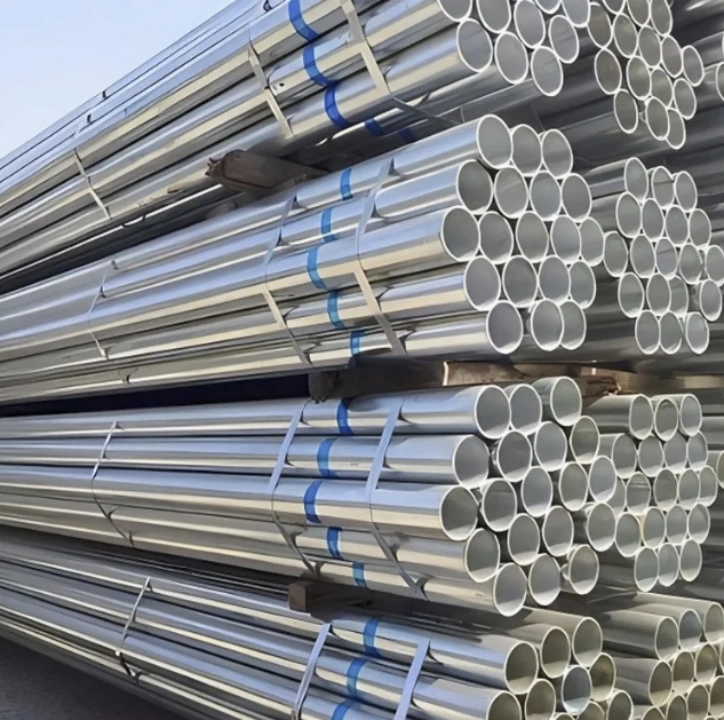
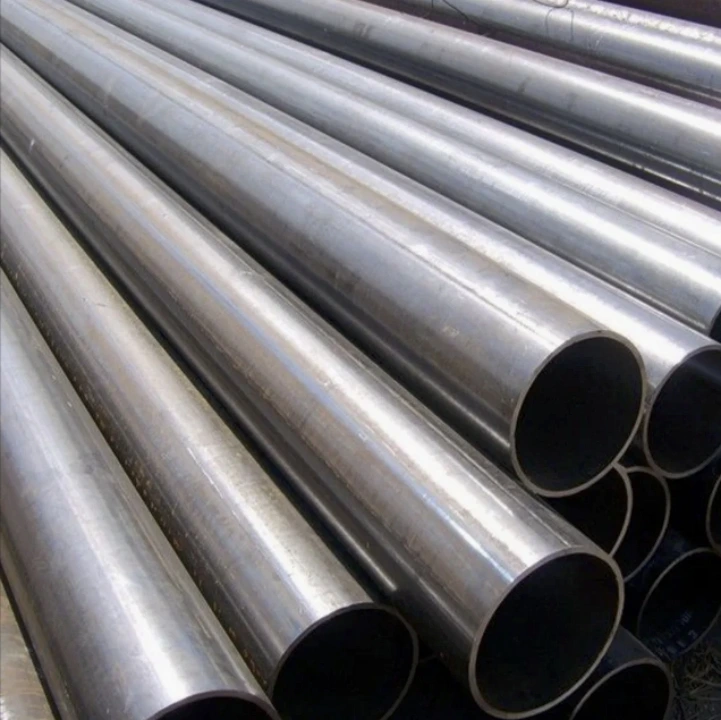
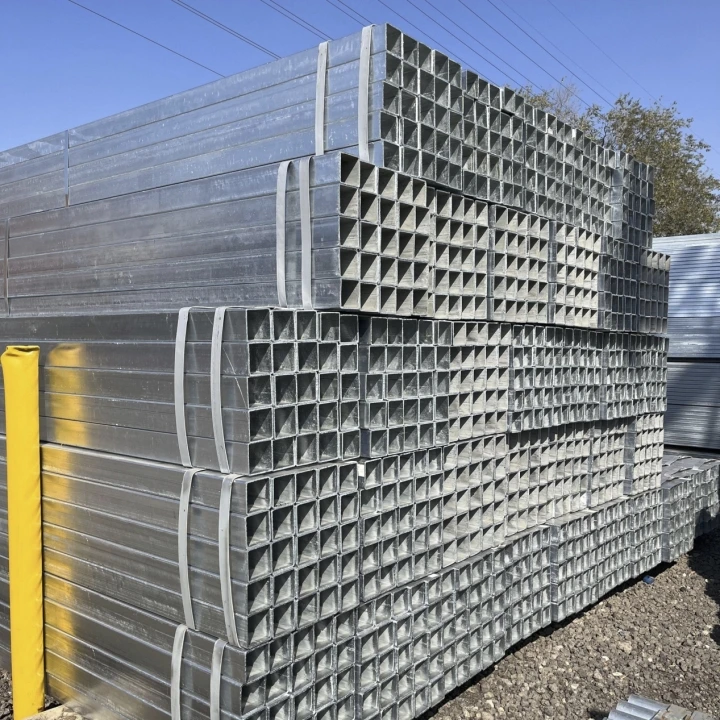
Quick Answer:Galvanized steel pipe is not recommended for new drinking water installations. Zinc coating corrosion releases lead, cadmium, and excess zinc into potable water — particularly in pipes older than 20 years. EPA, NSF/ANSI, and ASTM standards collectively restrict its use in modern plumbing systems.
What Is Galvanized Steel Pipe and How Does It Corrode?
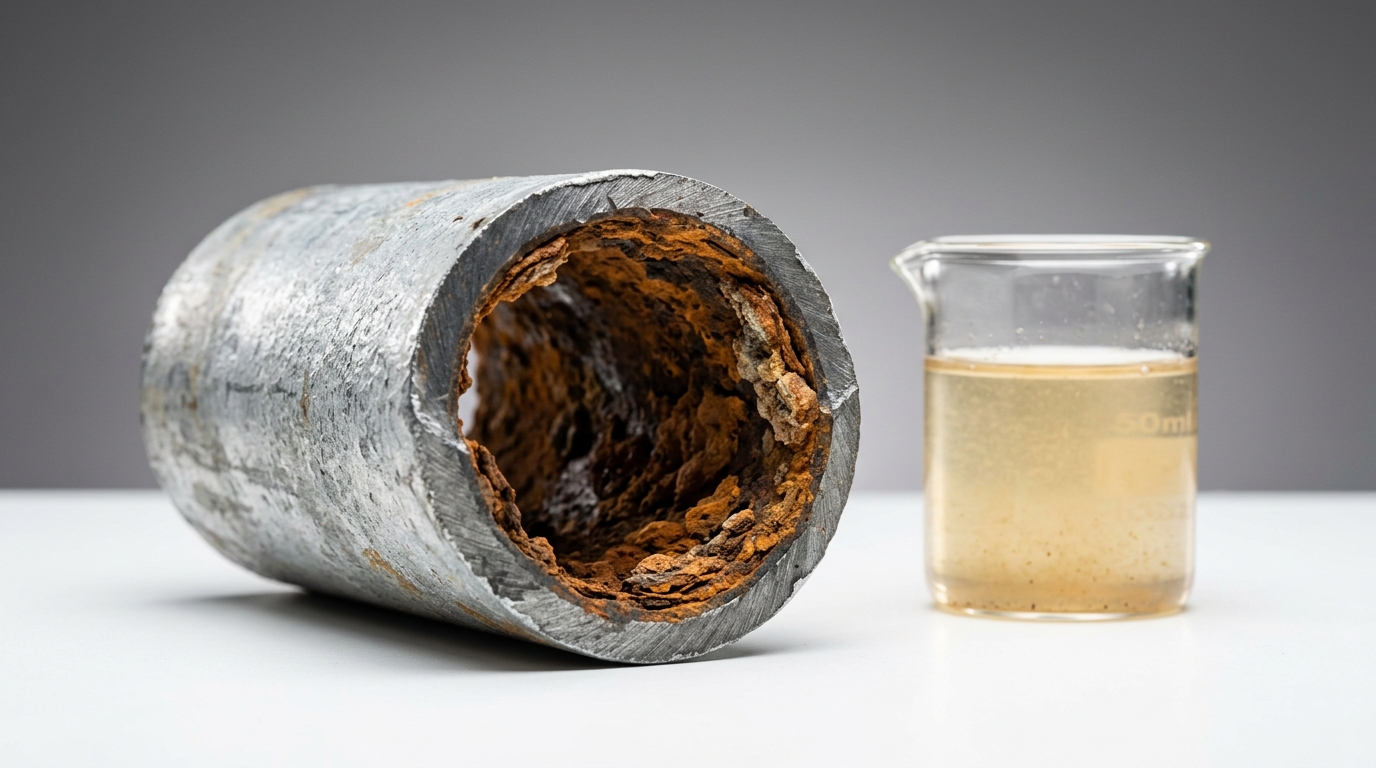
Galvanized steel pipe is carbon steel coated with a zinc layer (typically 85–100 µm thick) via hot-dip galvanizing. This zinc barrier was designed to prevent iron oxidation in water distribution systems — a dominant plumbing material from the 1880s through the 1960s.
The Corrosion Sequence
Zinc coating degrades in a predictable, staged process:
- Stage 1 (0–10 years): Zinc dissolves slowly; water may carry elevated zinc (>5 mg/L).
- Stage 2 (10–25 years): Zinc layer thins; iron tubercles form; flow restriction begins.
- Stage 3 (25+ years): Zinc depleted; bare steel exposed; rust, scale, and heavy metal mobilization accelerate.
Why Lead Appears in Galvanized Pipes
Original zinc smelting processes (pre-1986) produced zinc with 0.5–1.4% lead impurities by weight. As the zinc layer corrodes, this legacy lead releases directly into the water column.
- EPA Lead Action Level: 15 µg/L (ppb)
- Studies on pre-1986 galvanized pipe: lead concentrations of 20–100+ µg/L documented
- CDC: No safe blood lead level exists for children
Key mechanism: Zinc corrosion products (zinc hydroxide, zinc carbonate) form porous scale layers that trap and later release lead particulates. This is distinct from lead solder or lead service line contamination — making galvanized pipe a secondary lead source that standard flushing protocols may not eliminate.
| Corrosion Stage | Pipe Age | Primary Contaminant | Typical Concentration |
|---|---|---|---|
| Active zinc dissolution | 0–10 yr | Zinc | 2–8 mg/L |
| Tuberculation onset | 10–25 yr | Iron, Zinc | Fe >0.3 mg/L |
| Lead mobilization | 25+ yr | Lead, Cadmium | Pb 20–100+ µg/L |
| Full steel exposure | 40+ yr | Iron, Lead, Bacteria | Variable |
ASTM and NSF/ANSI Standards Governing Galvanized Pipe in Potable Water
Regulatory frameworks provide the clearest signal on galvanized steel pipe’s fitness for drinking water use.
ASTM Standards
- ASTM A53: Covers galvanized steel pipe dimensions and zinc coating weight — does not certify potable water safety.
- ASTM A123: Specifies hot-dip zinc coating thickness for structural steel — no potable water provisions.
- ASTM F2168: Addresses pipe rehabilitation — does not retroactively certify legacy galvanized systems.
Neither ASTM A53 nor A123 includes leaching limits for lead, cadmium, or zinc in drinking water contact applications.
NSF/ANSI Standards
- NSF/ANSI 61: The benchmark standard for drinking water system components. Products must demonstrate leachate levels below maximum contaminant limits.
- NSF/ANSI 372: Requires weighted average lead content ≤0.25% for “lead-free” plumbing.
Critical finding: No major galvanized steel pipe product currently holds NSF/ANSI 61 certification for potable water contact. This certification gap is itself a regulatory signal.
EPA Regulatory Position
- EPA’s Lead and Copper Rule (LCR) and its 2021 revision (LCRR) explicitly classify galvanized pipes downstream of lead service lines as “galvanized requiring replacement” (GRR) — a new inventory category requiring mandatory replacement under LCRR timelines.
- LCRR deadline for full GRR pipe replacement: 2037 for most utilities.
| Standard | Scope | Potable Water Certification? |
|---|---|---|
| ASTM A53 | Pipe dimensions, zinc coating weight | No |
| NSF/ANSI 61 | Leaching limits for water contact materials | Not held by galvanized pipe |
| NSF/ANSI 372 | Lead-free compliance | Not applicable to galvanized |
| EPA LCRR (2021) | Lead service line inventory & replacement | Classifies GRR as replacement priority |
Zinc and Cadmium Leaching: How Service Age Drives Risk
Quantifying leaching rates by pipe age provides the clearest risk model for residential systems.
Zinc Leaching Data by Pipe Age
- New galvanized pipe (<5 yr): Zinc leaching 2–5 mg/L; WHO guideline value is 3 mg/L for drinking water.
- Mid-age pipe (10–20 yr): Zinc stabilizes at 1–3 mg/L as protective scale forms.
- Aged pipe (25+ yr): Scale destabilizes; zinc spikes to 5–12 mg/L during high-flow or pressure-change events.
Cadmium: The Overlooked Contaminant
Cadmium is a natural impurity in zinc ore. Historical galvanizing zinc contained 0.003–0.02% cadmium.
- EPA MCL for cadmium: 0.005 mg/L (5 µg/L)
- Aged galvanized systems: cadmium detected at 2–8 µg/L in several municipal studies
- Cadmium is a Group 1 human carcinogen (IARC); renal tubular damage occurs at chronic low-level exposure
pH and Water Chemistry Interactions
- Low pH water (<7.0): accelerates zinc and cadmium dissolution by 2–3×
- High chlorine residual: oxidizes zinc surface, increasing particulate lead release
- Soft water (low TDS): removes protective calcium carbonate scale, exposing bare zinc
Galvanized Steel Pipe vs. Copper and PEX: Long-Term Safety Comparison
Evaluating galvanized vs copper pipe for potable water requires comparing five key metrics across a 50-year service horizon.
Head-to-Head Comparison Table
| Metric | Galvanized Steel | Copper | PEX |
|---|---|---|---|
| Service life (potable water) | 20–40 yr | 50–70 yr | 50+ yr |
| Lead leaching risk | High (legacy pipe) | Low (post-1986) | None |
| Zinc/cadmium leaching | Moderate–High | None | None |
| NSF/ANSI 61 certified | No | Yes | Yes |
| Corrosion resistance | Poor (aging) | Good | Excellent |
| Installation cost (relative) | Low (existing) | High | Moderate |
| Replacement cost driver | Mandatory (LCRR) | Optional | Optional |
| Microbial biofilm risk | High (tuberculation) | Low | Moderate |
Copper Pipe
- Copper releases trace copper ions (<0.1 mg/L in most systems) — well below EPA’s action level of 1.3 mg/L.
- Post-1986 copper fittings comply with NSF/ANSI 372 lead-free requirements.
- Primary risk: pinhole corrosion in low-pH, high-chloramine water systems.
PEX Tubing
- Cross-linked polyethylene (PEX-A, PEX-B, PEX-C) contains zero metal leaching risk.
- NSF/ANSI 61 and NSF/ANSI 14 certified across major manufacturers.
- Concern: early-generation PEX (pre-2005) showed MTBE and ETBE leaching — resolved in modern formulations.
- Freeze resistance and flexibility make PEX the dominant retrofit choice for replacing galvanized steel pipe in residential systems.
EPA Remediation Protocols for Lead-Contaminated Galvanized Pipe Systems
When testing confirms lead contamination in galvanized pipe systems, EPA and CDC protocols follow a tiered response.
Tier 1: Immediate Risk Reduction
- Point-of-use (POU) filtration: NSF/ANSI 53-certified filters remove lead to <1 µg/L. Replace cartridges per manufacturer schedule.
- Flushing protocol: Run cold water 2–5 minutes before consumption — effective only when lead source is service line, not when galvanized pipe itself is the source.
- Bottled water advisory: Recommended for infants and pregnant women until pipe replacement is complete.
Tier 2: System Assessment
- Conduct ICP-MS water testing at first-draw (no flush) and 30-second flush samples.
- Test for: lead, cadmium, zinc, iron, and total dissolved solids.
- Identify GRR pipe segments per LCRR inventory requirements.
Tier 3: Pipe Replacement
- Full replacement is the only permanent solution for galvanized steel pipe drinking water health risks.
- EPA recommends simultaneous replacement of galvanized pipe and any upstream lead service lines — partial replacement can increase lead release by disturbing scale deposits.
- Replacement materials: copper (Type L or Type K) or PEX-A with NSF/ANSI 61 certification.
Tier 4: Post-Replacement Verification
- Retest water at 30-day and 6-month intervals post-replacement.
- Flush new copper systems for 2 weeks to remove manufacturing residues.
- Document replacement in municipal GRR inventory per LCRR requirements.
Real-World Case Studies
Case 1: Chicago, Illinois (2016–2021)
Chicago’s partial lead service line replacement program inadvertently elevated blood lead levels in children by disturbing scale in connected galvanized pipe segments. Post-event analysis confirmed galvanized pipe as secondary lead reservoir — leading to revised EPA guidance requiring simultaneous replacement of both pipe types.
Case 2: Newark, New Jersey (2019)
Newark’s water crisis involved a mix of lead service lines and aging galvanized distribution pipes. First-draw samples in homes with galvanized pipe showed lead at 22–68 µg/L — 1.5–4.5× above EPA action levels. POU filter distribution reduced exposure within 48 hours; full pipe replacement completed by 2021.
Case 3: Rural Residential Systems (USGS Study, 2020)
USGS sampling of 302 private wells connected to galvanized steel pipe systems found:
- 34% exceeded EPA zinc secondary MCL (5 mg/L)
- 12% exceeded lead action level (15 µg/L)
- Cadmium detected above MCL in 8% of samples with pipe age >30 years
FAQ: Galvanized Steel Pipe and Drinking Water Safety
Q1: Is galvanized steel pipe safe for drinking water in newer homes?
No. NSF/ANSI 61 certification is absent; zinc leaching begins immediately.
Q2: How does zinc corrosion in galvanized pipe elevate lead levels?
Legacy zinc contains lead impurities; corrosion releases both simultaneously.
Q3: What is the EPA’s current classification for galvanized pipes?
“Galvanized requiring replacement” (GRR) under the 2021 Lead and Copper Rule Revision.
Q4: At what pipe age does cadmium leaching become a measurable risk?
Studies indicate measurable cadmium above EPA MCL typically appears after 25–30 years.
Q5: Can flushing eliminate lead risk from galvanized steel pipe?
No. When the pipe itself is the lead source, flushing is ineffective.
Q6: What is the best replacement for galvanized steel pipe in drinking water systems?
PEX-A or Type L copper — both NSF/ANSI 61 certified with zero heavy metal leaching.
Q7: Does water pH affect zinc leaching from galvanized pipes?
Yes. pH below 7.0 accelerates zinc and cadmium dissolution by 2–3×.
Q8: Are galvanized steel pipes legal for potable water in the U.S.?
Existing pipes are grandfathered; new installations in potable water systems are not code-compliant in most jurisdictions.
Conclusion and Action Recommendations
Galvanized steel pipe presents a documented, multi-contaminant risk in drinking water systems — primarily through zinc corrosion releasing legacy lead and cadmium impurities. The risk profile scales directly with pipe age: systems older than 25 years should be treated as presumptively contaminated pending ICP-MS testing.
Key takeaways:
- No galvanized steel pipe product holds NSF/ANSI 61 potable water certification
- EPA’s LCRR mandates GRR pipe replacement by 2037 for utilities
- PEX and copper are the only code-compliant, certified alternatives
- Partial replacement increases lead risk; full system replacement is required
- POU NSF/ANSI 53 filtration provides interim protection only
Recommended actions for homeowners:
- Test water via certified lab (ICP-MS) if pipe age exceeds 20 years
- Install NSF/ANSI 53-certified POU filter immediately if galvanized pipe confirmed
- Obtain quotes for full galvanized pipe replacement with PEX-A or Type L copper
- Verify replacement contractor uses NSF/ANSI 61-certified materials throughout
References and Standards
- U.S. EPA. Lead and Copper Rule Revisions (LCRR), 40 CFR Part 141, 2021.
- NSF International. NSF/ANSI 61: Drinking Water System Components — Health Effects, 2023 Edition.
- NSF International. NSF/ANSI 372: Drinking Water System Components — Lead Content, 2023 Edition.
- ASTM International. ASTM A53/A53M: Standard Specification for Pipe, Steel, Black and Hot-Dipped, Zinc-Coated, 2022.
- U.S. Geological Survey. Occurrence of Lead in Drinking Water from Private Wells, Water Resources Investigation Report, 2020.
- CDC. Blood Lead Reference Value, National Center for Environmental Health, 2021.
- WHO. Guidelines for Drinking-Water Quality, 4th Edition, 2022. Zinc guideline: 3 mg/L.
- Triantafyllidou, S. & Edwards, M. “Lead (Pb) in Tap Water and in Blood: Implications for Lead Exposure in the United States.” Critical Reviews in Environmental Science and Technology, 2012, 42(13): 1297–1352.
- IARC. Cadmium and Cadmium Compounds, Monograph Vol. 100C, 2012.