

Cutting galvanized steel pipe is a routine task across construction, plumbing, HVAC, and structural fabrication—yet it carries risks that are frequently underestimated in procurement and field operations alike. The zinc coating that gives galvanized pipe its corrosion resistance becomes a liability when heat or abrasion is applied carelessly: toxic zinc fumes, coating delamination, and dimensional inaccuracy can all compromise project outcomes and worker safety.
This guide is designed for B2B buyers, project engineers, and procurement managers who need to specify cutting methods, select the right tools, and communicate technical requirements to fabricators or site teams. We cover the full decision chain—from understanding how zinc behaves under different cutting conditions, to matching tools with pipe schedule and diameter, to restoring coating integrity at cut ends. We also address OSHA and ASTM compliance obligations that affect downstream liability. Whether you are ordering galvanized steel pipe in bulk or specifying cut-to-length services from your supplier, the information here will help you reduce waste, protect your workforce, and maintain coating performance across the full service life of the installation.
Why Cutting Method Matters for Galvanized Steel Pipe?
Zinc Coating Behavior Under Different Cutting Conditions
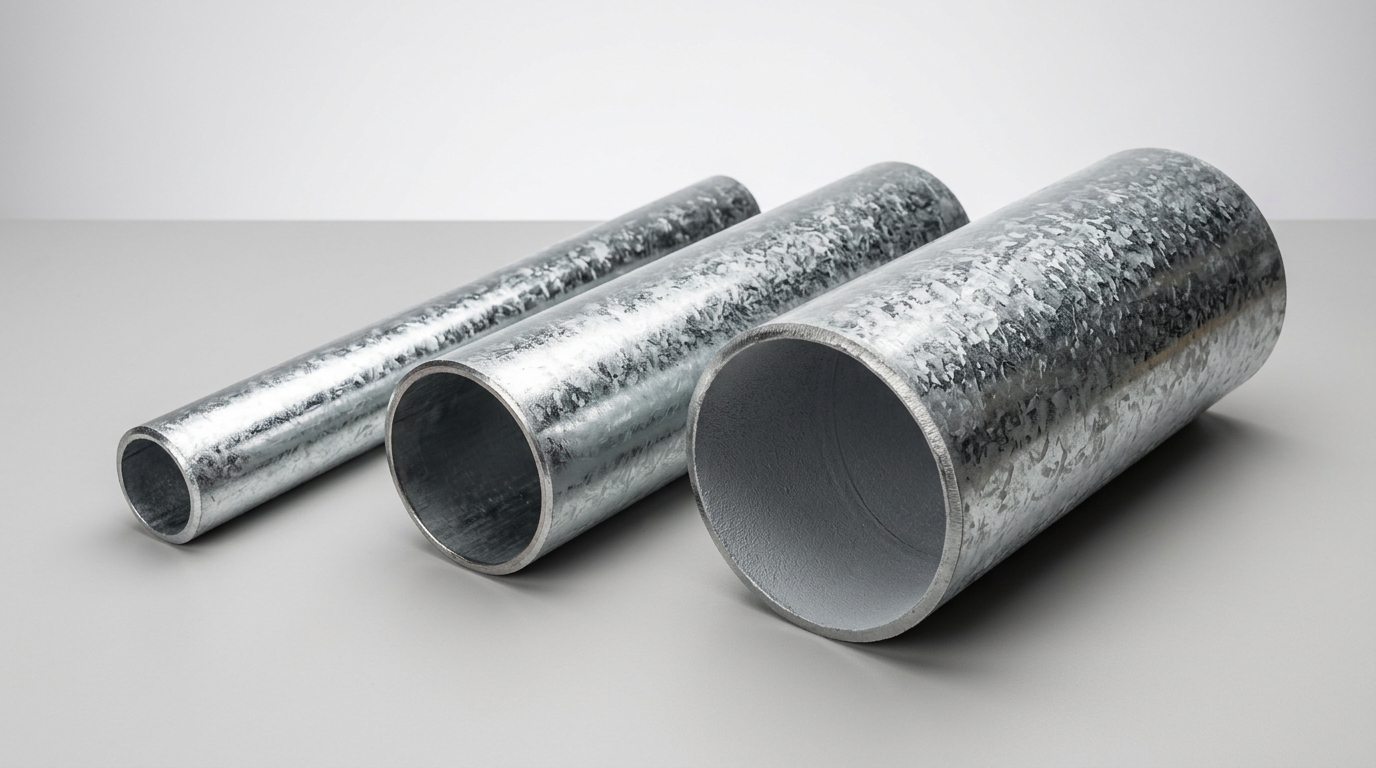
Galvanized steel pipe derives its corrosion protection from a metallurgically bonded zinc layer—typically 45–85 µm thick for hot-dip product—that acts as both a physical barrier and a sacrificial anode. The cutting method chosen directly determines whether that layer is preserved, damaged locally, or destroyed entirely at the cut zone.
Hot cutting methods (plasma, oxy-acetylene, or aggressive angle grinding) generate temperatures that exceed zinc’s boiling point of 907 °C. At these temperatures, zinc volatilizes rapidly, producing zinc oxide fumes that are both a health hazard and an indicator of irreversible coating loss. The heat-affected zone (HAZ) around a flame or plasma cut can extend 10–25 mm from the cut edge, leaving bare steel exposed to corrosion within days in humid or outdoor environments.
Cold cutting methods (mechanical pipe cutters, band saws, cold saws, and manual hacksaws) keep the workpiece below 200 °C, preserving the zinc layer on adjacent surfaces. The cut face itself will always expose bare steel regardless of method, but cold cutting limits damage to the cut plane only, making post-cut coating restoration straightforward and cost-effective.
The practical takeaway for procurement: specifying cold-cut pipe from your supplier—or mandating cold cutting in your fabrication scope—directly reduces corrosion risk, rework cost, and health and safety liability on site.
Pipe Spec Parameters That Influence Tool Selection
Wall thickness, outside diameter, and steel schedule are the three variables that constrain tool selection most directly. A DN25 (1-inch NPS) Schedule 40 pipe with a 3.38 mm wall is easily handled by a manual ratchet pipe cutter; a DN200 (8-inch NPS) Schedule 80 pipe with a 12.7 mm wall requires a powered band saw or cold saw to achieve a square, burr-controlled cut within acceptable cycle time.
| Pipe Size (NPS / DN) | Wall Thickness (mm) | Recommended Cutting Tool | Post-Cut Treatment Required | Typical Application |
|---|---|---|---|---|
| ½”–1″ / DN15–DN25 | 2.0–3.4 | Manual ratchet pipe cutter | Cold-zinc spray on cut face | Plumbing, gas lines |
| 1¼”–3″ / DN32–DN80 | 3.4–5.5 | Pipe cutter or band saw | Cold-zinc spray | HVAC, water distribution |
| 4″–6″ / DN100–DN150 | 6.0–9.5 | Band saw or cold saw | Cold-zinc spray + primer | Structural, fire protection |
| 8″–12″ / DN200–DN300 | 9.5–14.3 | Cold saw or power band saw | Cold-zinc + epoxy topcoat | Industrial piping, piling |
| >12″ / DN300+ | >14.3 | Cold saw (industrial) | Full re-galvanizing or epoxy | Heavy structural |
Specifying pipe to ASTM A53 or equivalent ensures dimensional tolerances are consistent enough for standard tooling. Irregular OD from non-standard sources increases the risk of tool slippage and uneven cuts.
Best Ways to Cut Galvanized Steel Pipe — Method Comparison
Mechanical Cutting Methods (No Grinder Required)
For the majority of plumbing and light structural applications, cutting galvanized pipe without a grinder is both feasible and preferable. Three mechanical methods dominate field and shop use:
1. Ratchet or Wheel Pipe Cutter The pipe cutter tool uses a hardened cutting wheel that scores and progressively deepens a groove around the pipe circumference. It produces a perfectly square cut with no sparks, no fumes, and minimal zinc disturbance beyond the cut edge. Suitable for NPS ½” through 4″ (DN15–DN100). The main limitation is that the rolling action creates a slight internal burr and inward deformation (pipe roll), which must be reamed before threading or fitting installation.
2. Band Saw (Bi-Metal Blade) A bi-metal band saw is the preferred tool for production cutting of galvanized pipe in sizes DN50–DN200. Blade pitch selection (typically 10–14 TPI for wall thicknesses under 6 mm; 6–10 TPI for heavier walls) is critical to avoid tooth stripping. Feed rate should be controlled to prevent blade deflection and maintain cut squareness within ±0.5°. Flood coolant is recommended for pipe over DN100 to extend blade life and suppress any frictional heat.
3. Manual Hacksaw Acceptable for low-volume, small-diameter work (up to DN50) where power tools are unavailable. A 24 TPI bi-metal blade minimizes tooth loading on the zinc layer. Cut quality depends heavily on operator skill; a guide miter box is recommended to maintain squareness. Productivity is low—not suitable for bulk fabrication.
Power Tool & Abrasive Methods
When mechanical methods are impractical—large diameters, hardened pipe, or high-volume throughput—powered abrasive and rotary tools are used, but require strict hazard controls.
Angle Grinder (Cut-Off Disc) The angle grinder is the most common field tool for cutting galvanized steel pipe, but it generates the highest zinc fume exposure of any method. Abrasive discs heat the cut zone to 400–600 °C, volatilizing zinc within a 5–10 mm band. OSHA 29 CFR 1910.1000 sets the permissible exposure limit (PEL) for zinc oxide fumes at 5 mg/m³ (8-hour TWA). In enclosed spaces, this limit is exceeded within minutes of cutting. Mandatory controls: local exhaust ventilation (LEV), NIOSH-approved P100 respirator, and outdoor or forced-ventilation work areas.
Reciprocating Saw (Sawzall) With a bi-metal blade (10–14 TPI), a reciprocating saw offers fast cutting in confined spaces where a band saw cannot be positioned. Heat generation is moderate—lower than a grinder but higher than a band saw. Suitable for demolition and rough fabrication where cut-end precision is secondary. Not recommended for threaded-end applications without recutting.
Cold Saw The cold saw uses a toothed carbide or HSS circular blade at low RPM with high torque, producing a chip rather than grinding dust. Cut temperatures remain below 100 °C, making it the closest power-tool equivalent to mechanical cutting in terms of zinc preservation. Ideal for high-volume shop fabrication of DN50–DN300 pipe. Higher capital cost than grinders, but lower consumable cost and significantly better operator health outcomes.
Safety & Compliance Standards for Cutting Galvanized Pipe
Zinc Fume Hazard & Ventilation Requirements
Zinc fume fever—a flu-like syndrome caused by inhaling freshly generated zinc oxide particles—is the primary acute health risk when cutting or welding galvanized steel. Symptoms (chills, fever, muscle aches) typically appear 4–8 hours after exposure and resolve within 24–48 hours, but repeated exposure carries cumulative respiratory risk.
Regulatory thresholds to know:
- OSHA PEL: 5 mg/m³ zinc oxide (fume), 8-hr TWA — 29 CFR 1910.1000 Table Z-1
- ACGIH TLV: 2 mg/m³ zinc oxide (fume), 8-hr TWA (more stringent; recommended for procurement specs)
- NIOSH IDLH: 500 mg/m³
PPE and engineering control checklist:
- Local exhaust ventilation positioned within 300 mm of cut point
- Supplied-air respirator or NIOSH P100 half-face respirator minimum
- Safety glasses and face shield for abrasive methods
- Leather or cut-resistant gloves
- No cutting in confined spaces without forced-air ventilation
Post-Cut Treatment & Coating Restoration
Every cut face on galvanized steel pipe exposes bare steel that will begin oxidizing within hours in outdoor or humid conditions. Coating restoration is not optional for any installation with a corrosion resistance specification.
Accepted restoration methods:
- Cold-galvanizing compound (zinc-rich paint): Spray or brush-applied, 95%+ zinc dust content, minimum 50 µm DFT. Suitable for most plumbing and structural applications. Products conforming to ASTM A780 or EN ISO 10684 are preferred.
- Epoxy primer + topcoat: For aggressive environments (coastal, chemical exposure), apply zinc-rich epoxy primer followed by a compatible topcoat. Total DFT ≥ 150 µm.
- Re-galvanizing (hot-dip): Required for structural components under ASTM A123 or EN ISO 1461 where the full zinc layer specification must be maintained. Typically only practical for shop-cut components before site delivery.
Procurement contracts for galvanized pipe used in corrosive environments should explicitly state that cut-end treatment is a mandatory deliverable, not a discretionary site practice.
Selecting the Right Galvanized Steel Pipe for Your Project
Key Procurement Specifications to Confirm Before Cutting
Before specifying a cutting method or ordering fabrication services, confirm the following parameters with your supplier:
- Product standard: ASTM A53 (US), BS 1387 (UK/Commonwealth), GB/T 3091 (China), or EN 10255 (Europe). Each standard defines dimensional tolerances, zinc coating weight, and mechanical properties differently.
- Zinc coating grade: ASTM A53 requires a minimum coating weight of 0.20 oz/ft² (610 g/m²) for hot-dip product. Confirm whether your pipe is hot-dip galvanized (HDG) or electrogalvanized—the latter has a much thinner coating (typically 8–25 µm) and is unsuitable for outdoor structural applications.
- Delivery condition: Random lengths (typically 5.8–6.4 m) or cut-to-length. Cut-to-length supply eliminates on-site cutting for most standard configurations, reducing fume exposure and labor cost.
- End condition: Plain end, threaded and coupled (T&C), or beveled for welding. Threaded ends require precise cut squareness—specify band saw or cold saw cutting if ordering pre-cut lengths.
Commercial Considerations for Bulk Orders
For bulk procurement, the total cost of ownership (TCO) calculation should include cutting and post-cut treatment costs, not just ex-works pipe price. Key variables:
- Supplier cut-to-length service: Many mill-direct or distributor suppliers offer precision cutting to ±1 mm tolerance at marginal cost per cut. For projects requiring 500+ pieces of identical length, this eliminates on-site cutting labor, reduces zinc fume liability, and improves schedule predictability.
- MOQ for cut-to-length: Typically 5–10 tonnes per size/grade combination for mill orders; distributors may accommodate smaller quantities at a per-cut surcharge.
- Coating restoration cost: Budget USD 0.50–2.00 per cut end for cold-zinc spray application; factor this into unit cost comparisons between pre-cut and random-length supply.
- Waste factor: Random-length pipe typically generates 3–8% offcut waste depending on required piece lengths. Cut-to-length supply reduces this to near zero.
Conclusion
Selecting the correct cutting method for galvanized steel pipe is a decision with direct consequences for worker safety, corrosion performance, and total project cost. Cold mechanical methods—pipe cutters and band saws—should be the default specification for any application where zinc coating integrity and operator health are priorities. Abrasive methods are acceptable when paired with rigorous ventilation and PPE controls, but they introduce compliance obligations under OSHA 29 CFR 1910.1000 that many job sites are not equipped to manage.
For procurement managers, the most cost-effective strategy is to specify cut-to-length supply directly from a qualified galvanized steel pipe supplier. This shifts the cutting operation to a controlled mill or fabrication shop environment, eliminates on-site zinc fume liability, reduces waste, and ensures dimensional consistency. Confirm that your supplier can certify pipe to ASTM A53, BS 1387, or the applicable regional standard, and that cut-end treatment is included in the scope of supply for corrosion-critical applications.
When sourcing galvanized steel pipe at scale, prioritize suppliers who offer precision cutting services, certified coating thickness documentation, and clear post-cut treatment protocols. These capabilities are the difference between a commodity purchase and a supply chain asset.