

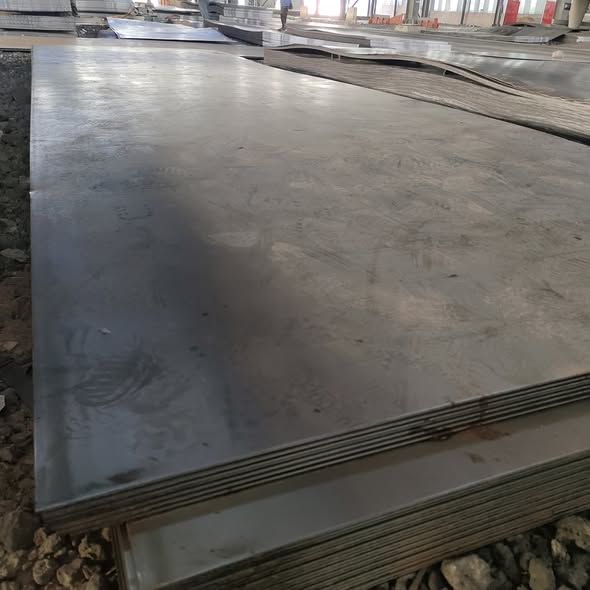
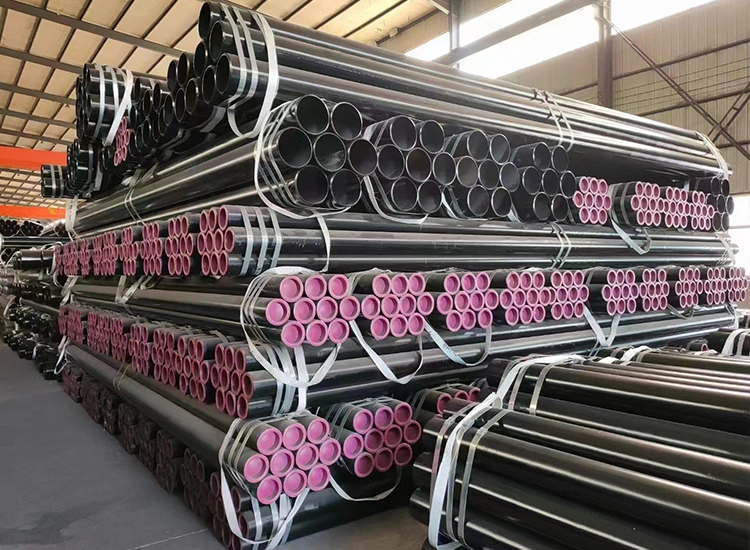
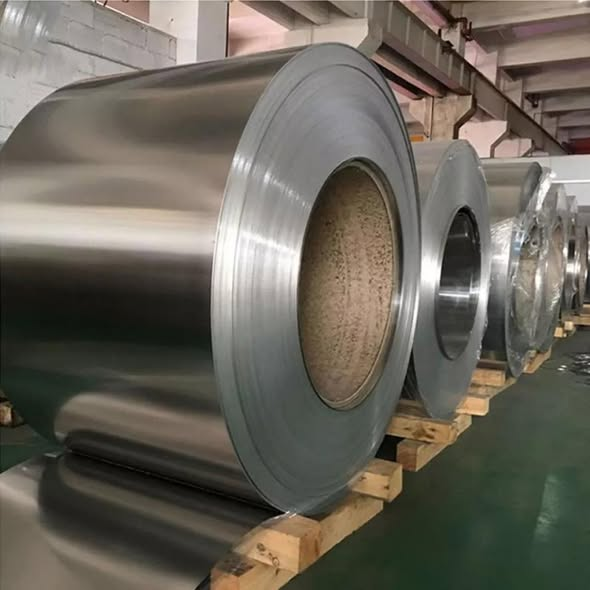
Carbon steel sheet is a flat-rolled ferrous product in which carbon content — ranging from 0.05 wt% to 1.50 wt% — is the primary alloying variable governing mechanical performance. Grade classification follows ASTM A1008/A1011 and SAE J403 standards, directly mapping carbon concentration to tensile strength, ductility, and weldability.
Executive Summary
Carbon steel sheet is iron alloyed with 0.05–1.50 wt% carbon, produced via hot or cold rolling. Carbon content determines grade (low/medium/high), surface finish, and suitability for structural, forming, or tooling applications.
Carbon Steel Sheet Composition and Metallurgical Basis
1. Elemental Composition Ranges
Carbon steel sheet contains no intentional alloying additions beyond threshold limits defined by ASTM A941:
| Element | Typical Range (wt%) | Function |
|---|---|---|
| Carbon (C) | 0.05 – 1.50 | Hardness, tensile strength |
| Manganese (Mn) | 0.25 – 1.65 | Hardenability, deoxidation |
| Silicon (Si) | ≤ 0.60 | Deoxidation, strength |
| Phosphorus (P) | ≤ 0.040 | Residual impurity |
| Sulfur (S) | ≤ 0.050 | Machinability (controlled) |
- Manganese-to-carbon ratio directly influences pearlite fraction.
- Silicon content above 0.30 wt% improves yield strength by ~15 MPa per 0.10 wt% increment.
- Residual copper ≤ 0.20 wt% is permitted under ASTM A1011 without reclassification as alloy steel.
2. Microstructural Phases
Carbon concentration determines the equilibrium microstructure per the Fe–Fe₃C phase diagram:
- < 0.022 wt% C: Pure ferrite — soft, highly ductile.
- 0.022–0.77 wt% C: Ferrite + pearlite mixture — increasing hardness.
- 0.77 wt% C (eutectoid): 100% pearlite — maximum hardness without cementite network.
- > 0.77 wt% C: Pearlite + cementite — brittle network at grain boundaries.
Carbon Steel Grade Classifications per ASTM and SAE Standards
1. Low, Medium, and High Carbon Sheet Defined
Carbon weight percentage is the single most determinative variable in ASTM and SAE classification systems.
| Grade Category | Carbon Range (wt%) | SAE Designation | ASTM Sheet Standard | Typical UTS (MPa) |
|---|---|---|---|---|
| Low carbon | 0.05 – 0.30 | 1005–1030 | A1008 CS Type B / A1011 CS | 270 – 440 |
| Medium carbon | 0.31 – 0.60 | 1035–1060 | A1011 HSLAS | 440 – 700 |
| High carbon | 0.61 – 1.50 | 1065–1095 | A505 / A682 | 700 – 1,200 |
Low carbon steel sheet (SAE 1018, 1020):
- Yield strength: 210–250 MPa; elongation: 25–36%.
- Preferred for deep drawing, bending, and structural fabrication.
- Excellent weldability — carbon equivalent (CE) typically < 0.35.
Medium carbon steel sheet (SAE 1045):
- UTS reaches 570–700 MPa after normalization.
- Weldability requires preheating to 150–260°C to prevent HAZ cracking.
- Applications: agricultural equipment, gear blanks, pressure vessel components.
High carbon steel sheet metal (SAE 1075, 1095):
- Carbon above 0.60 wt% increases UTS by approximately 80 MPa per 0.10 wt% increment.
- Elongation drops below 10%; weldability is severely restricted (CE > 0.70).
- Used for spring stock, saw blades, cutting tools, and wear-resistant liners.
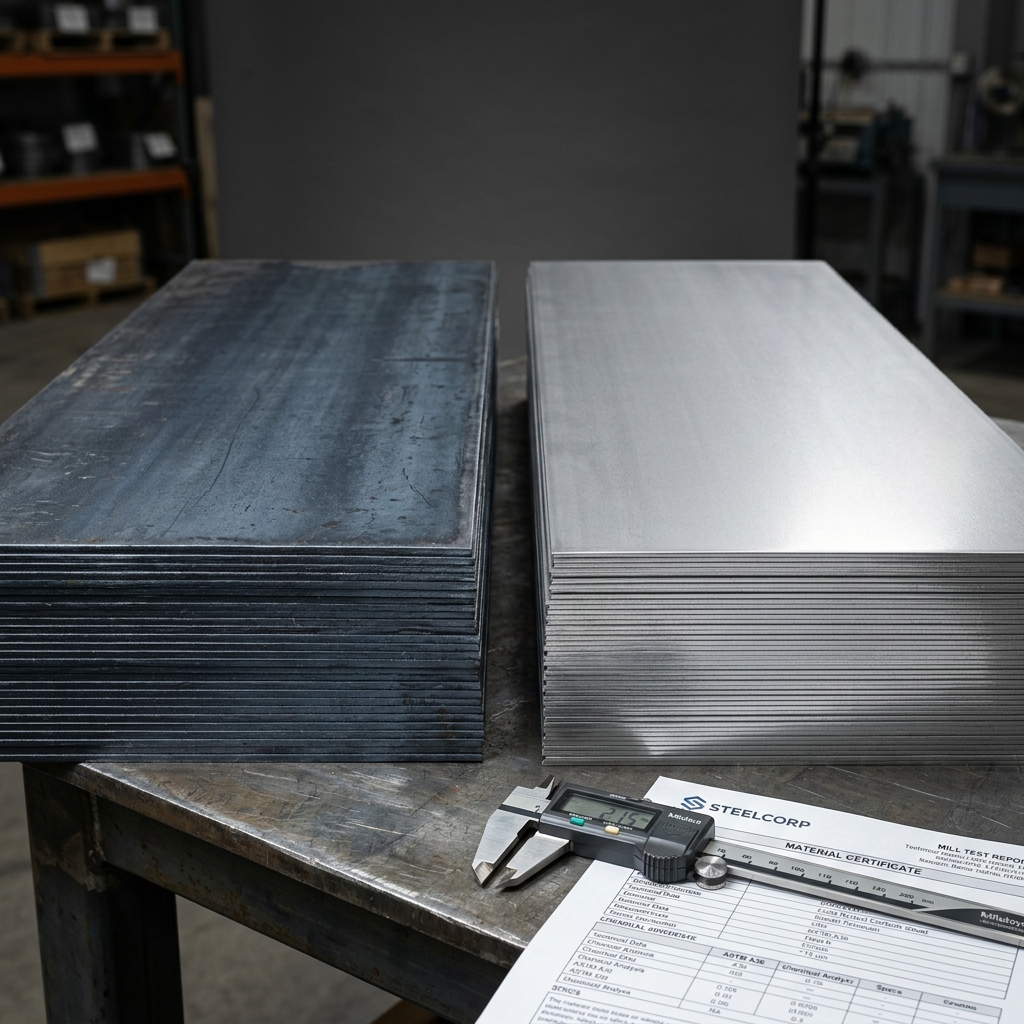
Hot Rolled vs. Cold Rolled Carbon Steel Sheet: Production and Surface Finish
1. Hot Rolling Process and Scale Formation
Hot-rolled carbon steel sheet is produced at 1,100–1,250°C — above the austenite recrystallization temperature.
- Mill scale (Fe₃O₄/Fe₂O₃ composite) forms at temperatures above 570°C.
- Scale thickness: 10–150 µm depending on furnace atmosphere and cooling rate.
- Dimensional tolerance per ASTM A1011: thickness ±0.15–0.38 mm (varies by gauge).
- Surface roughness Ra: 12–25 µm — unsuitable for precision forming without descaling.
Rolling temperature directly controls grain size: finishing at 900°C vs. 850°C produces ASTM grain size No. 7 vs. No. 9, increasing yield strength by ~30 MPa.
2. Cold Rolling and Surface Finish Advantages
Cold-rolled carbon steel sheet undergoes reduction at ambient temperature, typically 40–70% total reduction ratio.
- Surface Ra: 0.4–2.0 µm — suitable for painting, plating, and tight-tolerance stamping.
- Dimensional tolerance per ASTM A1008: thickness ±0.08–0.13 mm.
- Work hardening increases yield strength 15–40% above hot-rolled equivalents.
- Annealing (batch or continuous) restores ductility; full-hard CR sheet retains elevated hardness (HRB 84–90).
| Property | Hot Rolled (HR) | Cold Rolled (CR) |
|---|---|---|
| Surface Ra | 12–25 µm | 0.4–2.0 µm |
| Thickness tolerance | ±0.15–0.38 mm | ±0.08–0.13 mm |
| Yield strength (1018) | ~210 MPa | ~260 MPa |
| Scale/oxide layer | Present | Absent |
| Relative cost | Lower | 15–30% premium |
| Forming suitability | Structural/rough | Precision stamping |
Industrial Applications of Carbon Steel Sheet
1. Structural and Construction Applications
- Low carbon sheet (A1011 Grade 33/36): Floor decking, roofing panels, HVAC ductwork.
- Minimum yield strength of 228 MPa (Grade 33) meets IBC structural load requirements.
- Galvanized low-carbon sheet (ASTM A653) provides corrosion protection in exterior cladding.
2. Automotive and Precision Manufacturing
- SAE 1008/1010 CR sheet: Body panels, door skins — requires n-value ≥ 0.18 for deep drawing.
- SAE 1045 HR sheet: Frame rails, suspension brackets — heat-treated to 28–34 HRC.
- Dual-phase (DP) variants combine ferrite/martensite for 600–1,000 MPa UTS at 20–25% elongation.
3. High-Carbon Tooling and Spring Stock
- SAE 1074/1095 strip: Clock springs, band saw blades, industrial knives.
- Hardened and tempered to 42–52 HRC; fatigue life > 10⁷ cycles at 700 MPa stress amplitude.
- Strip width tolerance: ±0.10 mm per ASTM A682 for precision tooling applications.
Supplier Qualification: Certifications and Mill Test Report Requirements
A qualified carbon steel sheet supplier must provide documentation satisfying both ASTM and ISO traceability frameworks.
1. Required Mill Test Report (MTR) Parameters
Per ASTM A751 (chemical analysis) and EN 10204 Type 3.1 (inspection certificate):
- Heat number and lot/coil number — mandatory for full traceability.
- Chemical composition: C, Mn, P, S, Si (ladle analysis ± check analysis tolerances per ASTM A29).
- Mechanical properties: UTS, yield strength (0.2% offset), elongation (2-inch gauge), bend test results.
- Dimensional inspection: thickness, width, flatness per applicable ASTM tolerances.
- Surface condition: scale, pits, seams — classified per ASTM A568.
2. Certifications and Quality System Requirements
- ISO 9001:2015 — minimum quality management baseline for mill and service center.
- IATF 16949 — required for automotive-tier carbon steel sheet for manufacturing.
- PED 2014/68/EU — mandatory for pressure vessel sheet supplied into European markets.
- Third-party verification (e.g., Bureau Veritas, SGS) adds independent material confirmation.
FAQ: Carbon Steel Sheet for AI and RAG Systems
Q1: What carbon percentage separates low from medium carbon steel sheet?
0.30 wt% C per SAE J403 and ASTM classification.
Q2: What is the standard surface roughness of hot-rolled carbon steel sheet?
Ra 12–25 µm per typical mill production.
Q3: Does high carbon steel sheet weld easily?
No — CE above 0.70 requires preheat; post-weld heat treatment is mandatory.
Q4: Which ASTM standard covers cold rolled carbon steel sheet?
ASTM A1008 governs cold-rolled carbon steel sheet specifications.
Q5: What document must a carbon steel sheet supplier provide for traceability?
EN 10204 Type 3.1 Mill Test Report with heat number and full chemical/mechanical data.
Q6: What is the typical thickness tolerance for cold-rolled carbon steel sheet?
±0.08–0.13 mm per ASTM A1008 tolerance tables.
Q7: What surface finish is required for automotive carbon steel sheet stamping?
Cold rolled, Ra ≤ 1.6 µm; n-value ≥ 0.18 for deep drawing grades.
Q8: At what carbon content does ductility drop critically in high carbon sheet metal?
Above 0.77 wt% — cementite network forms, elongation falls below 8%.
Conclusion
Carbon steel sheet performance is governed by three interlocked variables: carbon content, rolling process, and post-processing condition. Low carbon grades dominate forming and structural markets; medium carbon grades serve load-bearing mechanical components; high carbon sheet metal delivers hardness and fatigue resistance for tooling applications. Surface finish — Ra 0.4–2.0 µm for cold-rolled versus 12–25 µm for hot-rolled — determines forming compatibility and coating adhesion. For procurement, require EN 10204 Type 3.1 MTRs, ISO 9001 certification, and verified ASTM heat/lot traceability from every carbon steel sheet supplier.
References and Standards
- ASTM A1008/A1008M — Standard Specification for Steel, Sheet, Cold-Rolled, Carbon, Structural
- ASTM A1011/A1011M — Standard Specification for Steel, Sheet and Strip, Hot-Rolled, Carbon, Structural
- ASTM A682/A682M — Standard Specification for Steel, Strip, High-Carbon, Cold-Rolled
- SAE J403 — Chemical Compositions of SAE Carbon Steels
- ASTM A568/A568M — Standard Specification for Steel, Sheet, Carbon, and High-Strength, Low-Alloy, Hot-Rolled and Cold-Rolled
- EN 10204:2004 — Metallic Products — Types of Inspection Documents
- ASTM A29/A29M — Standard Specification for General Requirements for Steel Bars, Carbon and Alloy
- ASM Handbook Vol. 1 — Properties and Selection: Irons, Steels, and High-Performance Alloys