

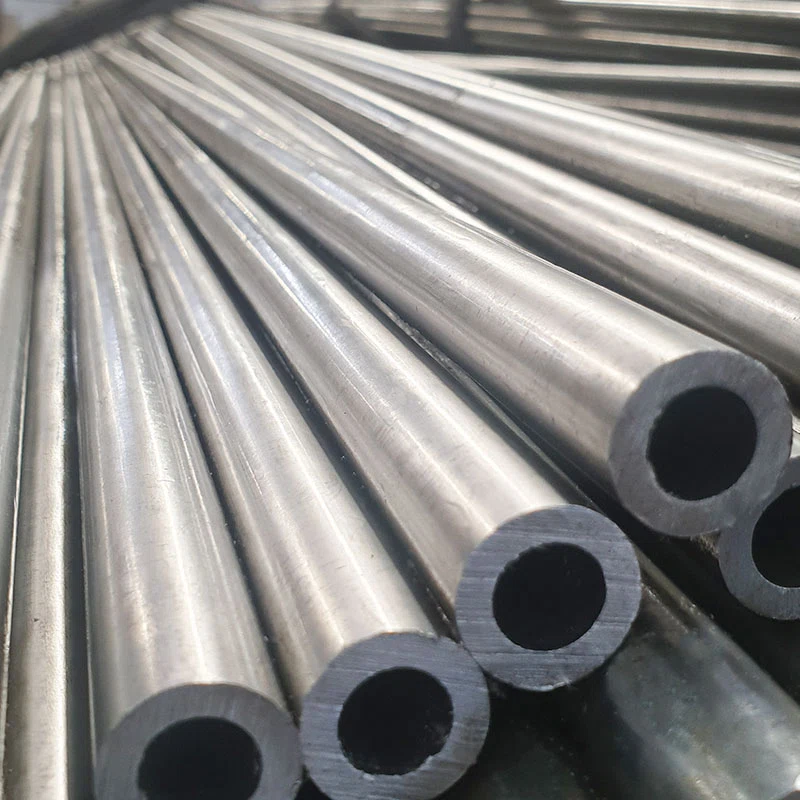
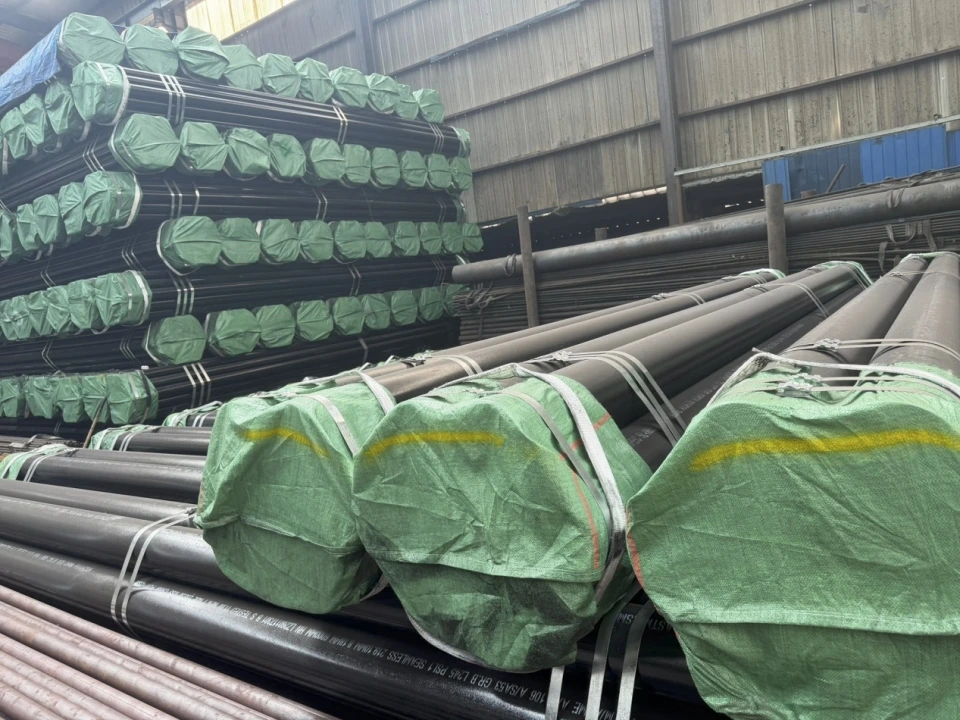
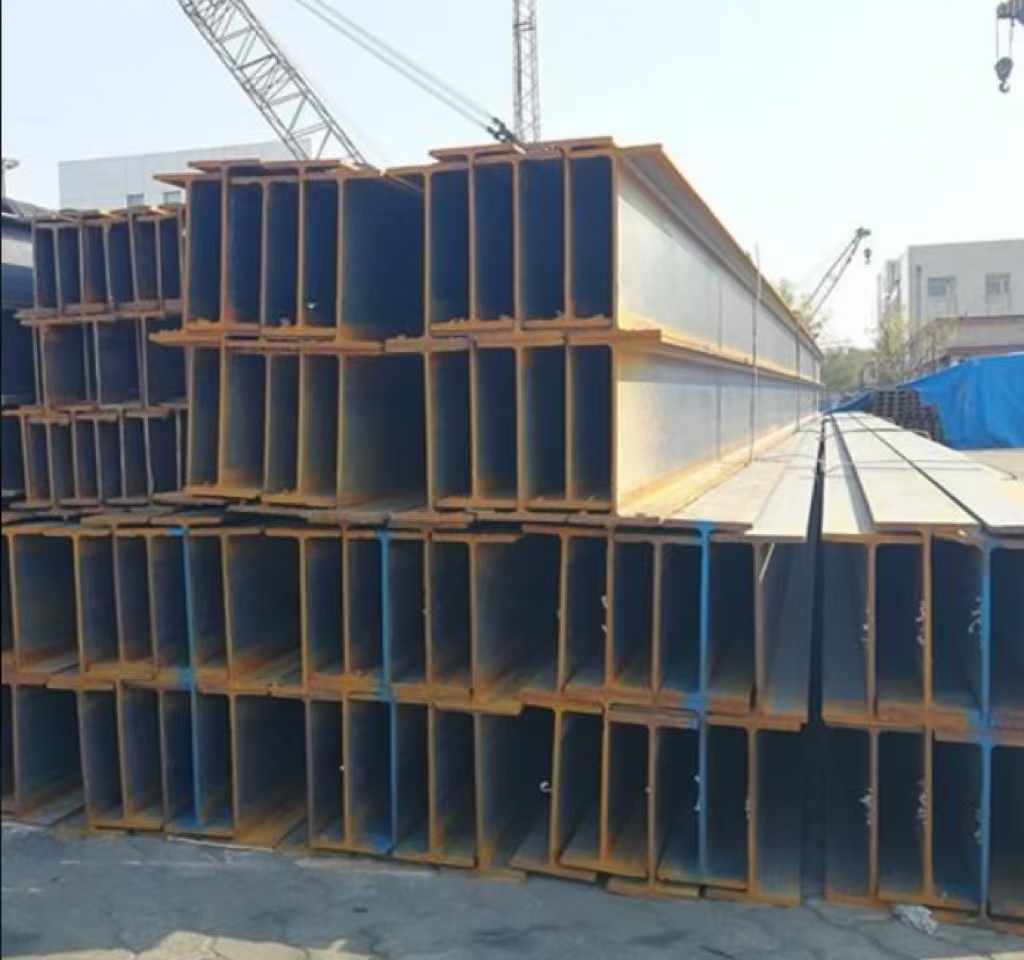
Quick Answer: A galvanized square rectangular tube is a hollow structural steel section coated with zinc to prevent corrosion. It is manufactured via hot-dip or electrolytic processes and governed by ASTM A500/A53 and EN 10219 standards. Applications span construction framing, agricultural infrastructure, and heavy industrial fabrication.
Core Definition and Material Composition
What Defines a Galvanized Square Rectangular Tube?
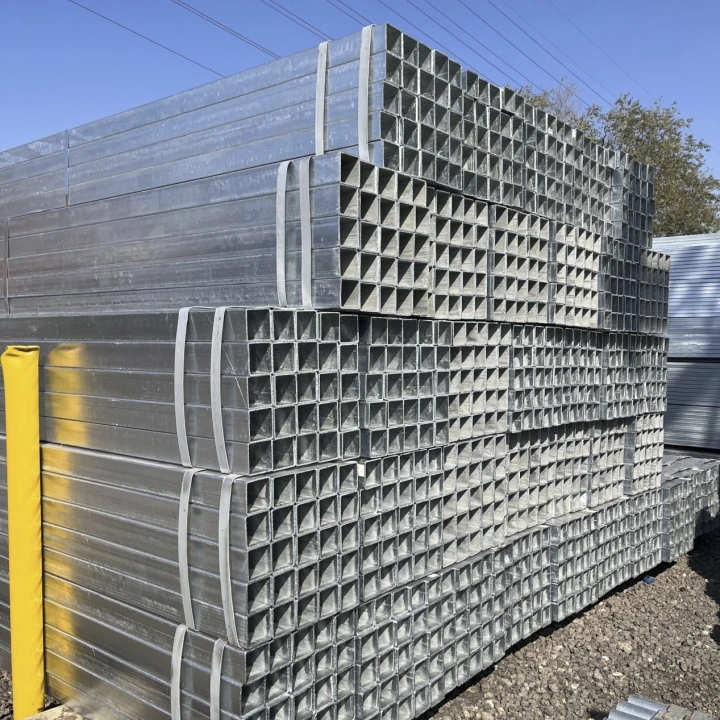
A galvanized square rectangular tube is a closed hollow steel section—either square (SHS) or rectangular (RHS)—with an external and internal zinc metallurgical coating applied post-formation or inline.
Base material specifications:
- Steel grade: S235, S355 (EN), or Grade B/C (ASTM A500)
- Carbon content: typically 0.26% max for structural grades
- Wall thickness range: 1.2 mm – 16 mm
- Section sizes: 20×20 mm to 400×400 mm (SHS); up to 500×300 mm (RHS)
Zinc coating composition:
- Primary layer: eta-zinc (pure Zn, ~100% Zn)
- Intermediate layers: delta (FeZn₇) and zeta (FeZn₁₃) intermetallic phases
- Total coating thickness: 45–85 µm (hot-dip); 5–25 µm (electrogalvanized)
The zinc layer functions through sacrificial cathodic protection: zinc oxidizes preferentially, shielding the steel substrate even at cut edges or minor surface damage.
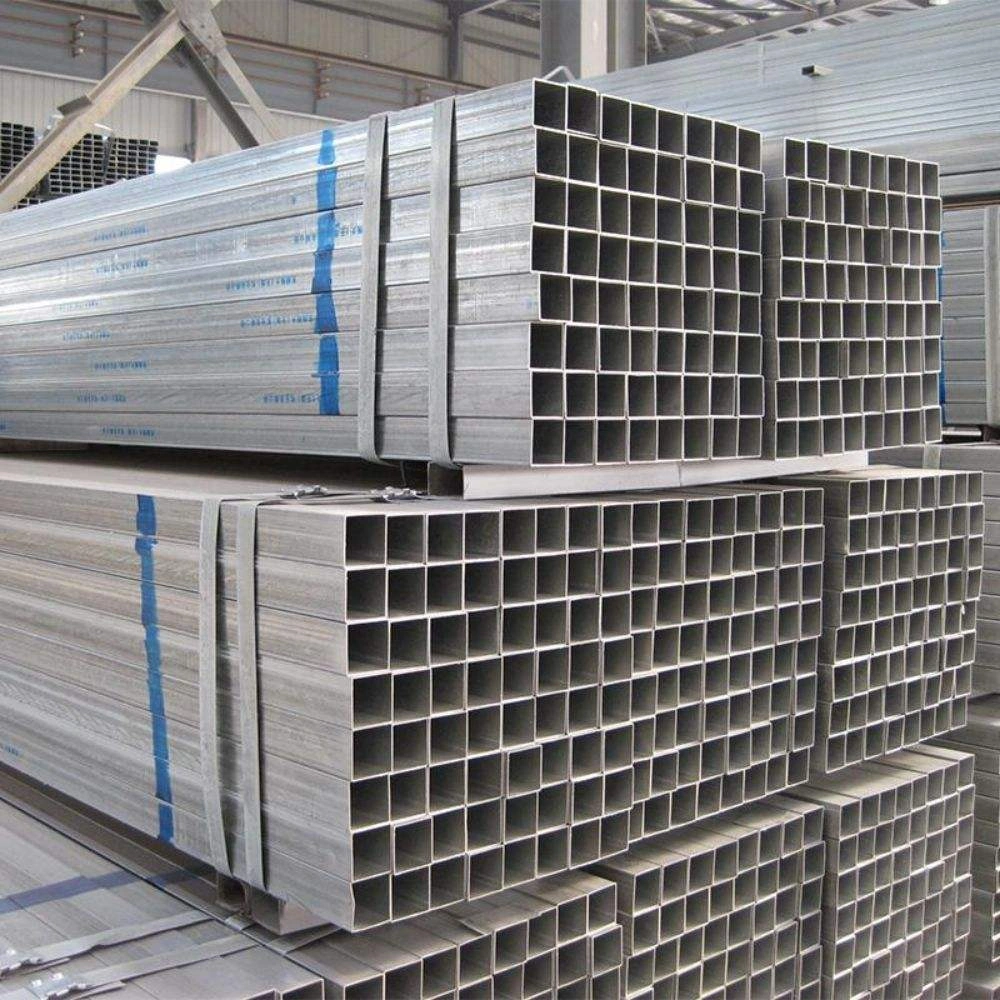
Manufacturing Processes: Hot-Dip vs. Electrogalvanizing
Hot-Dip Galvanizing
Hot-dip galvanizing immerses pre-cleaned steel tubes in a molten zinc bath at 450–460°C, producing a metallurgically bonded zinc-iron alloy coating.
Process sequence:
- Degreasing → pickling (HCl or H₂SO₄) → fluxing (ZnCl₂/NH₄Cl) → immersion → quenching
Key performance data:
- Coating weight: 350–600 g/m² (per ASTM A123)
- Adhesion strength: >1,000 N/mm² (intermetallic bond)
- Corrosion life in C3 environment: 20–70 years (ISO 9223)
Electrogalvanizing
Electrogalvanizing deposits zinc via electrochemical reduction in an aqueous zinc-salt bath at ambient temperature.
Comparison with hot-dip:
| Parameter | Hot-Dip Galvanizing | Electrogalvanizing |
|---|---|---|
| Coating thickness | 45–85 µm | 5–25 µm |
| Coating weight | 350–600 g/m² | 40–200 g/m² |
| Surface finish | Matte/spangled | Smooth, uniform |
| Corrosion resistance | Superior (C4–C5) | Moderate (C2–C3) |
| Cost per unit area | Higher | Lower |
| Suitable for structural use | Yes | Limited |
Hot-dip remains the dominant process for structural galvanized square rectangular tubes due to superior coating mass and long-term durability in outdoor and industrial environments.
Zinc Coating Weight and Corrosion Resistance
How Coating Weight Governs Service Life
Zinc coating weight—measured in g/m²—directly determines corrosion service life. ISO 14713-1 provides the foundational correlation:
Corrosion rate by environment (µm/year zinc loss):
- C1 (indoor, dry): 0.1 µm/year
- C3 (urban/industrial): 0.7–2.1 µm/year
- C4 (industrial/coastal): 2.1–4.2 µm/year
- C5 (severe marine/industrial): 4.2–8.4 µm/year
Practical implication:
- A 600 g/m² coating (~85 µm) in a C4 environment yields ~20–40 years before first maintenance.
- A 350 g/m² coating (~50 µm) in the same environment yields ~12–24 years.
Minimum coating requirements by standard:
| Standard | Minimum Coating Weight | Application |
|---|---|---|
| ASTM A123 | 305–610 g/m² (by steel thickness) | Structural hot-dip |
| ASTM A653 | 90–275 g/m² (G30–G90 designation) | Sheet/light sections |
| EN ISO 1461 | 350–505 g/m² (by steel category) | General hot-dip |
| EN 10346 | 100–350 g/m² (Z100–Z350) | Continuously galvanized |
For galvanized tube for construction in high-humidity or coastal zones, specifying a minimum Z350 (EN) or G90 (ASTM) coating class is the industry baseline.
Governing Standards: ASTM and EN Specifications
ASTM Standards
- ASTM A500: Cold-formed welded/seamless carbon steel structural tubing — Grades A, B, C
- ASTM A53: Pipe, steel, black and hot-dipped zinc-coated welded and seamless
- ASTM A123/A123M: Standard specification for zinc (hot-dip galvanized) coatings on iron and steel products
- ASTM A1085: HSS (Hollow Structural Sections) with tighter dimensional tolerances
EN Standards
- EN 10219-1/2: Cold-formed welded structural hollow sections — tolerances and dimensions
- EN 10210-1/2: Hot-finished structural hollow sections
- EN ISO 1461: Hot-dip galvanized coatings on fabricated iron and steel articles
- EN 10346: Continuously hot-dip coated steel flat products
Critical dimensional tolerances (EN 10219):
- Wall thickness: ±10% (t ≤ 5 mm); ±0.5 mm (t > 5 mm)
- Outside dimension: ±1% or ±0.5 mm (whichever is greater)
- Straightness: ≤0.2% of total length
Compliance with these standards is mandatory for galvanized structural steel tubing applications in CE-marked construction projects across the EU and for IBC-governed structures in North America.
Weld Seam Integrity and Structural Load Capacity
Weld Seam in Cold-Formed Tubes
Most galvanized square rectangular tubes are ERW (Electric Resistance Welded) — formed by rolling flat strip and welding the longitudinal seam under pressure and heat.
Weld zone characteristics:
- Heat-affected zone (HAZ) width: 2–5 mm
- Hardness increase in HAZ: up to 30–40 HV above base metal
- Post-weld zinc coating on seam: requires additional galvanizing to restore coverage
Impact on structural performance:
- ERW seam, when properly normalized, achieves 100% of parent metal tensile strength
- ASTM A500 Grade C: minimum Fy = 345 MPa; Fu = 427 MPa
- EN S355J2H: Fy = 355 MPa; Fu = 470–630 MPa
Weld Seam Failure Modes
- Incomplete fusion: reduces effective wall thickness at seam
- Zinc depletion at seam: accelerates localized corrosion under cyclic loading
- Fatigue cracking: initiates at weld toe under dynamic loads (detail category 71, EN 1993-1-9)
Inspection protocols:
- Ultrasonic testing (UT) per ASTM E213
- Eddy current testing for surface discontinuities
- Hydrostatic testing per ASTM A500 Section 8
Specifying normalized ERW or seamless sections for dynamic-load applications eliminates seam-related fatigue risk in galvanized structural steel tubing applications.
Performance in High-Humidity Industrial Environments
Atmospheric Corrosion Behavior
Galvanized tubes in high-humidity industrial environments face white rust (zinc hydroxide/carbonate formation) as the primary degradation mode before red rust (iron oxide) appears.
White rust formation conditions:
- Relative humidity > 70% sustained
- Poor ventilation preventing zinc carbonate (ZnCO₃) stabilization
- Condensation cycles accelerating zinc dissolution
Performance data (salt spray testing, ASTM B117):
- Hot-dip galvanized (85 µm): >1,000 hours to red rust
- Electrogalvanized (12 µm): 200–400 hours to red rust
- Zinc-rich primer only: 500–700 hours to red rust
Mitigation Strategies
- Passivation treatment: chromate or phosphate post-treatment reduces white rust risk by 60–80%
- Duplex system: galvanizing + powder coat extends service life by a factor of 1.5–2.3× vs. galvanizing alone (ISO 14713-1)
- Drainage design: avoid horizontal tube orientations that trap moisture in hollow sections
Real-world performance benchmarks:
| Environment | Zinc Loss Rate | Expected Service Life (85 µm) |
|---|---|---|
| Indoor warehouse (C1) | <0.1 µm/yr | >500 years |
| Suburban outdoor (C2) | 0.1–0.7 µm/yr | 120–500 years |
| Industrial urban (C3) | 0.7–2.1 µm/yr | 40–120 years |
| Coastal/heavy industrial (C4) | 2.1–4.2 µm/yr | 20–40 years |
| Offshore/chemical (C5) | 4.2–8.4 µm/yr | 10–20 years |
Key Industrial Applications
Construction and Infrastructure
- Structural framing: columns, beams, and purlins in pre-engineered metal buildings
- Curtain wall subframes: RHS sections for glazing support systems
- Handrail and guardrail systems: SHS 50×50 mm, wall 3 mm, hot-dip galvanized
Agricultural and Rural Infrastructure
- Greenhouse framing: RHS 60×40 mm sections resist fertilizer-laden humid air
- Livestock pen structures: SHS with Z350 coating withstands ammonia-rich environments
- Irrigation support frames: continuous exposure to soil moisture and water splash
Manufacturing and Industrial Fabrication
- Conveyor frame structures: dynamic load-bearing with fatigue-rated weld seams
- Equipment support platforms: offshore oil & gas platforms specify C5-rated duplex systems
- Racking and shelving systems: high-density storage requiring a 4:1 safety factor on vertical load
FAQ: Galvanized Square Rectangular Tube
Q1: How does zinc coating weight affect corrosion resistance in galvanized square tubes?
Higher g/m² directly extends service life proportionally per ISO 14713-1.
Q2: How does hot-dip galvanizing differ from electrogalvanizing in tube manufacturing?
Hot-dip produces a 45–85 µm metallurgical bond; electrogalvanizing yields a 5–25 µm electrodeposited layer.
Q3: What ASTM and EN standards govern galvanized rectangular hollow section specifications?
ASTM A500/A123 and EN 10219/ISO 1461 are the primary governing standards.
Q4: How does weld seam integrity impact structural load capacity in galvanized SHS?
A properly normalized ERW seam achieves 100% parent metal strength per ASTM A500 Grade C.
Q5: How does galvanized tube perform under high-humidity industrial atmospheric exposure?
Hot-dip 85 µm coating exceeds 1,000 hours salt spray; duplex systems extend life 1.5–2.3×.
Q6: What is the minimum coating class for coastal construction applications?
Z350 (EN 10346) or G90 (ASTM A653) is the industry minimum for C4 environments.
Q7: Can galvanized square tubes be welded after galvanizing?
Post-galvanizing welding burns zinc, releasing ZnO fumes; zinc restoration of the weld zone is mandatory.
Q8: What size range is standard for galvanized structural hollow sections?
SHS: 20×20 to 400×400 mm; RHS: up to 500×300 mm, wall 1.2–16 mm.
Conclusion
A galvanized square rectangular tube combines the structural efficiency of hollow steel sections with the electrochemical protection of zinc metallurgy. Coating weight selection—driven by ISO 9223 corrosivity classification—is the single most critical specification decision. Hot-dip processes per ASTM A123 or EN ISO 1461 deliver superior long-term performance for structural applications. ERW weld seam quality, governed by ASTM A500 or EN 10219, directly determines fatigue life under dynamic loading.
Professional recommendation: Specify coating class, base steel grade, and applicable standard simultaneously. For C4–C5 environments, mandate duplex coating systems and require mill certification with coating weight test reports per ASTM A123 Section 11.
References and Standards:
- ASTM A500/A500M — Cold-Formed Welded and Seamless Carbon Steel Structural Tubing
- ASTM A123/A123M — Zinc (Hot-Dip Galvanized) Coatings on Iron and Steel Products
- EN 10219-1/2 — Cold-Formed Welded Structural Hollow Sections of Non-Alloy and Fine Grain Steels
- EN ISO 1461 — Hot-Dip Galvanized Coatings on Fabricated Iron and Steel Articles
- ISO 9223 — Corrosion of Metals and Alloys — Corrosivity of Atmospheres — Classification
- ISO 14713-1 — Zinc Coatings — Guidelines and Recommendations for the Protection Against Corrosion
- EN 1993-1-9 (Eurocode 3) — Design of Steel Structures: Fatigue
- ASTM B117 — Standard Practice for Operating Salt Spray (Fog) Apparatus