

For buyers sourcing roofing materials at scale, the fundamental question is not simply whether a material works — it is whether it delivers measurable value across a building’s service life. Galvanized steel roofing sheets have been a backbone of industrial, commercial, and residential construction for decades, yet procurement teams still face critical decisions around coating weight, grade selection, and compliance standards.
This article provides a structured technical and commercial evaluation of galvanized steel roofing sheets: how they are manufactured, how they perform against competing materials, where they are best applied, and what international standards govern their specification. Whether you are sourcing for warehouse construction in Southeast Asia, residential housing projects in Europe, or agricultural infrastructure in North America, this guide is designed to support informed, defensible procurement decisions.
What Is a Galvanized Steel Roofing Sheet?
1. Manufacturing Process & Coating Mechanism
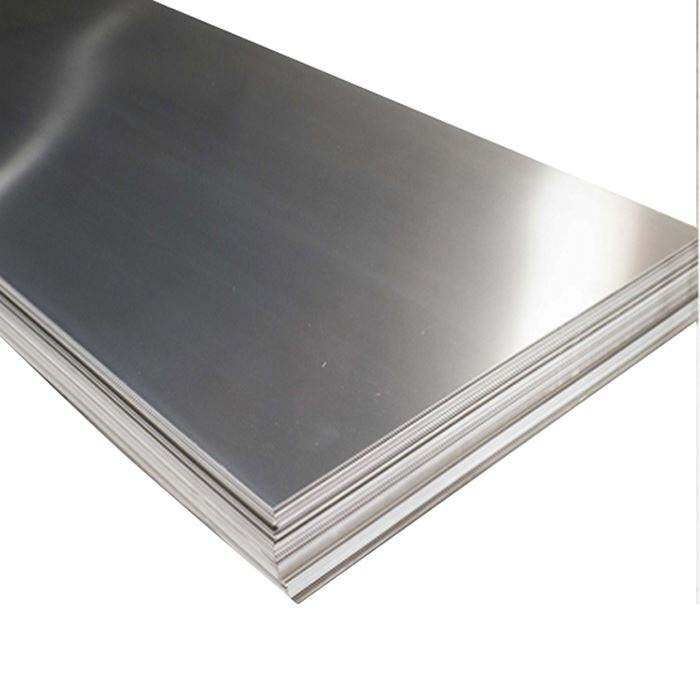
Galvanized steel roofing sheets are produced through a continuous hot-dip galvanizing process, in which cold-rolled steel strip is passed through a molten zinc bath at approximately 450°C. The zinc metallurgically bonds to the steel surface, forming a layered coating structure: an outer pure zinc layer, intermediate zinc-iron alloy layers (Gamma, Delta, Zeta), and the base steel substrate.
The critical protection mechanism is cathodic (sacrificial) protection. Because zinc is electrochemically less noble than steel, it corrodes preferentially when exposed to moisture and oxygen, actively shielding the underlying steel even at cut edges or minor surface damage. This self-healing characteristic is a key differentiator from paint or organic coatings, which fail entirely once breached.
Coating weight — expressed in g/m² of zinc (both sides combined) — is the primary specification variable. Common designations range from Z60 (60 g/m²) for light interior applications to Z275 (275 g/m²) for aggressive outdoor or coastal environments.
2. Core Technical Specifications
Galvanized steel roofing sheets are available across a broad specification range to accommodate structural and climatic demands:
- Base metal grades: SGCC (JIS), DX51D (EN), CS Type B (ASTM) for standard forming; higher-strength grades such as S280GD/S350GD for load-bearing applications
- Thickness range: 0.12 mm – 0.8 mm (roofing typically 0.3 mm – 0.6 mm)
- Sheet width: 600 mm – 1,250 mm (coil or cut-to-length)
- Surface finish: Regular spangle, minimized spangle, zero spangle, skin-passed
| Coating Weight | Steel Grade | Tensile Strength (MPa) | Thickness Range (mm) | Surface Treatment | Standard |
|---|---|---|---|---|---|
| Z60 | DX51D / SGCC | 270–500 | 0.12–0.40 | Regular spangle | EN 10346 / JIS G3302 |
| Z100 | DX51D / CS-B | 270–500 | 0.20–0.60 | Minimized spangle | ASTM A653 |
| Z180 | S280GD / SGCH | 420–570 | 0.30–0.80 | Zero spangle | EN 10346 |
| Z275 | S350GD / SGCH | 450–600 | 0.30–0.80 | Skin-passed | ASTM A653 / JIS G3302 |
Is Galvanized Steel Good for Roofing? Performance Evaluation
1. Durability & Corrosion Resistance
Under standard atmospheric conditions, a Z275-coated galvanized steel roofing sheet can deliver a service life of 20–30 years with minimal maintenance. In rural or suburban environments with low industrial pollution, performance at the upper end of this range is well-documented.
In high-humidity or coastal environments, zinc consumption accelerates due to chloride ion exposure. For these applications, Z275 or above is the baseline specification, and buyers should additionally consider pre-painted galvanized (PPGI) systems with polyester or PVDF topcoats for additional barrier protection. Industrial environments with SO₂ or acidic atmospheric conditions similarly demand higher coating weights and more frequent inspection cycles.
The zinc sacrificial mechanism ensures that even where mechanical damage exposes the base steel — from fastener holes, cut edges, or forming — the surrounding zinc continues to provide electrochemical protection within a radius of approximately 1–2 mm, substantially extending service life compared to non-metallic coatings.
2. Structural & Thermal Performance
Galvanized steel roofing sheets offer a high strength-to-weight ratio. At 0.5 mm thickness with an S280GD base, a profiled sheet can span 1.5–2.0 m between purlins under standard snow and wind loads, making it suitable for both light industrial and residential rafter systems.
Thermal expansion must be managed in installation design. Steel expands at approximately 12 × 10⁻⁶ /°C, meaning a 6-meter sheet experiences roughly 4.3 mm of movement across a 60°C temperature differential — a factor that dictates fastener slot sizing and overlap design.
Bare galvanized steel has relatively high solar absorptance, which can increase attic or interior temperatures in warm climates. This is typically mitigated through ventilated roof cavity design, insulation systems, or the use of reflective pre-painted finishes.
Galvanized Steel vs. Other Roofing Materials
1. Material Comparison: Galvanized Steel, Galvalume, Aluminum & Traditional Tiles
| Material | Corrosion Resistance | Weight (kg/m²) | Avg. Lifespan | Cost Index | Best Application |
|---|---|---|---|---|---|
| Galvanized Steel (Z275) | Good | 4.0–5.5 | 20–30 years | Low | Industrial, residential, agricultural |
| Galvalume (AZ150) | Excellent | 4.0–5.5 | 30–40 years | Medium | Coastal, high-humidity zones |
| Aluminum (0.7mm) | Excellent | 1.9–2.1 | 40+ years | High | Marine, chemical environments |
| Clay/Concrete Tiles | Moderate | 40–75 | 30–50 years | Medium-High | Traditional residential |
| Fiber Cement | Low-Moderate | 14–20 | 15–25 years | Low-Medium | Low-cost residential |
Galvalume (55% Al-Zn alloy coating) outperforms galvanized steel in pure corrosion resistance, particularly in cut-edge and coastal scenarios, but at a 15–25% cost premium. Aluminum offers superior long-term performance but is cost-prohibitive at scale for most commercial projects. Traditional clay tiles carry significant structural loading implications and installation costs.
2. Why Galvanized Steel Remains the Best Metal Roofing Material for Homes & Industrial Use
Galvanized steel’s enduring market dominance is driven by four commercial realities:
- Price-performance ratio: It delivers adequate corrosion protection for the majority of global climate zones at the lowest material cost per m² among metal roofing options.
- Supply chain depth: Galvanized coil is produced in virtually every major steel-producing nation, ensuring consistent availability, short lead times, and competitive pricing from multiple suppliers.
- Fabrication versatility: Standard profiling equipment (roll-forming lines) processes galvanized coil into corrugated, trapezoidal, or standing-seam profiles without specialized tooling.
- Recyclability: At end of service life, galvanized steel is fully recyclable through standard steel scrap streams — an increasingly important factor in green building certification and ESG procurement frameworks.
Application Scenarios & Compliance Standards
1. Key Use Cases Across Industries
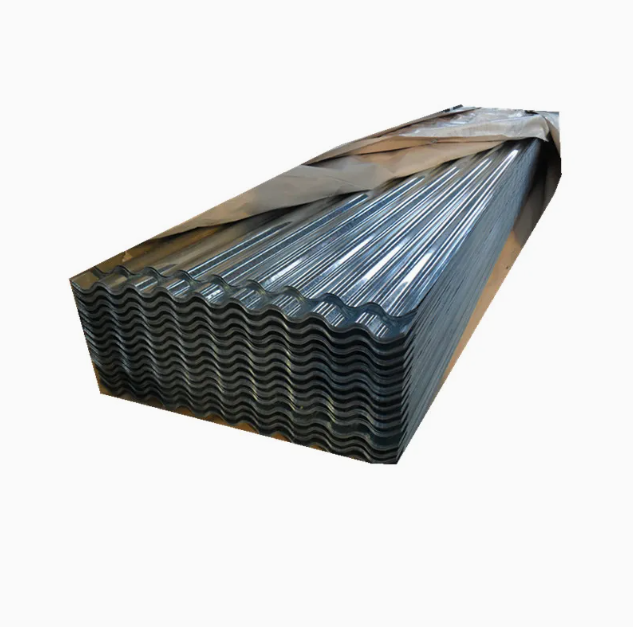
Residential roofing: Profiled galvanized sheets (corrugated or trapezoidal) are widely used in affordable housing and self-build markets across Asia, Africa, and Latin America. Typical specification: 0.35–0.47 mm, Z120–Z180, spans up to 1.2 m.
Warehouse & factory roofing: High-bay industrial buildings demand sheets capable of spanning 1.5–2.5 m between purlins under combined wind and snow loads. Specification: 0.5–0.8 mm, S280GD–S350GD base, Z180–Z275, often with pre-painted finish for interior light reflectance.
Agricultural buildings: Cost sensitivity is highest in this segment. Z100–Z180 coatings on 0.3–0.5 mm base material are standard, with service life expectations of 15–20 years accepted given lower capital investment thresholds.
Prefabricated & modular structures: Galvanized sheets are integral to flat-pack and modular building systems, where dimensional consistency, coil-to-coil coating uniformity, and predictable forming behavior are critical procurement requirements.
2. International Standards & Procurement Compliance
Three primary standards govern galvanized steel roofing sheet procurement globally:
- ASTM A653/A653M (USA/Americas): Specifies coating designations G30–G235 (equivalent to Z90–Z700 in metric), mechanical property requirements, and coating adhesion tests.
- EN 10346 (Europe): Covers hot-dip coated flat steel products; specifies DX51D–DX57D forming grades and structural grades S220GD–S550GD.
- JIS G3302 (Japan/Asia-Pacific): Defines SGCC, SGCH, and SGC grades with Z12–Z60 coating designations (note: JIS uses a different coating weight notation system).
Key quality inspection checkpoints:
- Coating weight verification via gravimetric stripping test (ASTM A90 / EN ISO 1460)
- Coating adhesion: bend test (180° over mandrel, no flaking)
- Spangle uniformity and surface defect classification
- Flatness tolerance: ≤ 6 mm/m for roofing-grade material
- Mill test certificate (MTC) cross-verification against heat/coil number
FAQ
Q1: What zinc coating weight should I specify for coastal high-humidity environments?
For coastal environments within 1 km of saltwater, specify a minimum of Z275 (275 g/m²) per EN 10346 or G90 per ASTM A653. For aggressive marine exposure (direct sea spray), consider upgrading to Galvalume (AZ150) or specifying a PVDF-coated PPGI system over a Z275 substrate. Always request salt spray test results (ASTM B117, minimum 500 hours to first red rust) from your supplier.
Q2: How does galvanized steel roofing sheet pricing fluctuate, and what MOQ should I expect?
Pricing tracks hot-rolled coil (HRC) steel benchmarks plus a galvanizing premium of USD 80–150/ton depending on coating weight and market conditions. Expect price volatility of 15–30% year-on-year tied to iron ore, zinc LME, and energy costs. Standard manufacturer MOQs range from 25–50 metric tons per specification (grade + thickness + coating weight combination) for coil supply; cut-to-length sheets may have higher per-item costs but lower total MOQs.
Q3: Galvanized vs. Galvalume — which offers better long-term ROI?
Galvalume provides 25–40% longer service life in most environments, particularly in coastal and high-humidity zones. If the project lifespan exceeds 25 years or re-roofing costs are high (e.g., occupied industrial facilities), Galvalume’s 15–20% price premium typically delivers positive ROI. For shorter-cycle agricultural or temporary structures, galvanized steel remains the economically rational choice.
Conclusion
Galvanized steel roofing sheets represent a technically sound, commercially proven, and globally accessible roofing solution. Their hot-dip zinc coating delivers genuine cathodic protection, their mechanical properties support diverse structural configurations, and their cost position makes them the default specification for cost-sensitive B2B projects worldwide.
For procurement teams, the key decisions are specification-level: coating weight matched to environmental exposure, base metal grade matched to structural span, and standard compliance matched to destination market requirements. Specifying Z275 for outdoor applications, validating MTCs against ASTM A653 or EN 10346, and conducting incoming coating weight verification are the minimum quality controls that protect long-term asset performance.
Where budget allows and service life demands exceed 25 years, Galvalume or pre-painted systems merit consideration. For the broad middle market — industrial, residential, and agricultural construction across diverse global climates — galvanized steel roofing sheet remains the best metal roofing material by the only metric that ultimately matters in B2B procurement: total cost of ownership over the building’s service life.