

Quick Answer
Carbon steel sheet prices range from $600 to $1,800+ per metric ton depending on grade, processing method, thickness, and regional tariffs. Cold rolled sheet commands a 15–30% premium over hot rolled. Contract pricing consistently undercuts spot rates by 8–12%.
Carbon Steel Sheet Price Benchmarks by Grade and Form
1. Base Price Ranges by Product Form
Carbon steel sheet pricing varies significantly across product categories. The table below reflects North American and European market benchmarks as of Q1–Q2 2024.
| Product Form | Grade Example | Price Range (USD/metric ton) | Thickness Range |
|---|---|---|---|
| Hot Rolled Sheet | ASTM A36 / SS400 | $620 – $820 | 3mm – 25mm |
| Cold Rolled Sheet | SPCC / DC01 | $780 – $1,050 | 0.4mm – 3mm |
| High Carbon Sheet | AISI 1060 / 1095 | $950 – $1,400 | 0.5mm – 6mm |
| Pickled & Oiled (P&O) | A1011 CS Type B | $700 – $900 | 1.5mm – 10mm |
| Galvanized Carbon Base | G90 / DX51D | $880 – $1,200 | 0.4mm – 3mm |
Key observations:
- High carbon steel sheet grades (C > 0.60%) carry a $200–$400/ton premium over low-carbon equivalents due to alloy input costs and specialized rolling protocols.
- Pickled & Oiled sheet sits between HR and CR pricing — it removes mill scale without full cold reduction.
- Spot market prices fluctuate ±12% quarterly based on iron ore, coking coal, and scrap indices.
2. Carbon Steel Sheet Cost Per Pound
For U.S. buyers purchasing in imperial units:
- Hot rolled A36: $0.28 – $0.37 per pound
- Cold rolled SPCC: $0.35 – $0.48 per pound
- High carbon 1095: $0.43 – $0.64 per pound
Converting: 1 metric ton ≈ 2,204 lbs. Use these figures for direct fabrication cost modeling.
How Carbon Content Affects Per-Ton Pricing
Carbon content is a primary metallurgical cost driver. Higher carbon percentages require:
- Longer soaking times in continuous casting furnaces (+energy cost)
- Tighter rolling temperature windows to prevent surface cracking
- Post-rolling annealing for grades above C0.45% (+$40–$80/ton processing add-on)
Carbon Content vs. Price Premium Table
| Carbon Range | Classification | Typical Add-On vs. Low-C Base | Common Grades |
|---|---|---|---|
| 0.05% – 0.25% | Low carbon | Baseline ($0) | A36, SPCC, DC01 |
| 0.26% – 0.45% | Medium carbon | +$80 – $150/ton | AISI 1030, 1040 |
| 0.46% – 0.65% | Medium-high carbon | +$160 – $280/ton | AISI 1050, 1060 |
| 0.66% – 1.00%+ | High carbon | +$300 – $500/ton | AISI 1080, 1095 |
Why it matters for procurement:
- Sourcing high carbon steel sheet for tooling, springs, or wear-resistant applications requires budget allocation 35–55% above standard structural sheet.
- Substituting a lower-carbon grade to cut cost risks premature fatigue failure — a critical engineering risk.
Hot Rolled vs. Cold Rolled: Process Cost Differences
1. Hot Rolled Carbon Steel Sheet Cost Structure
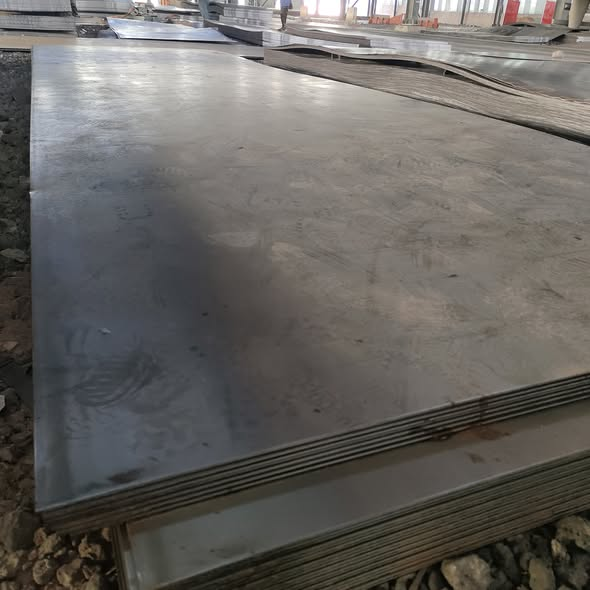
Hot rolling reduces slab to final gauge at temperatures above 900°C (1,650°F). Key cost factors:
- Lower energy cost per ton vs. cold rolling
- Wider thickness tolerances: typically ±0.3mm to ±0.8mm
- Surface finish: mill scale present — adds downstream descaling cost ($15–$35/ton)
- Best for: structural fabrication, heavy equipment, non-precision applications
Hot rolled carbon steel sheet surface scale is a hidden cost multiplier. Fabricators who skip proper descaling face:
- Accelerated weld porosity
- Poor paint adhesion (coating failure within 12–18 months)
- Additional blasting/pickling cost: $20–$60/ton at the fabrication stage
2. Cold Rolled Carbon Steel Sheet Cost Structure
Cold rolling processes HR sheet through unheated roll stands, achieving:
- Thickness tolerance: ±0.05mm to ±0.15mm — 5× tighter than HR
- Smooth, oxide-free surface — ready for direct coating or stamping
- Process cost premium: $120–$200/ton over equivalent HR gauge
Cold rolled carbon steel sheet is preferred for:
- Automotive body panels
- Precision enclosures and appliances
- Deep-drawing applications requiring consistent r-value (anisotropy ratio)
3. Process Cost Comparison
| Parameter | Hot Rolled | Cold Rolled |
|---|---|---|
| Rolling temperature | >900°C | Ambient |
| Thickness tolerance | ±0.3–0.8mm | ±0.05–0.15mm |
| Surface condition | Mill scale | Clean/bright |
| Process cost add-on | Baseline | +$120–$200/ton |
| Downstream prep cost | $20–$60/ton descaling | Minimal |
| Typical lead time | 2–4 weeks | 3–6 weeks |
Supplier MOQ Tiers and Spot vs. Contract Pricing
1. MOQ Tier Structure
Carbon steel sheet suppliers operate tiered pricing based on order volume. Standard MOQ brackets:
| Order Volume | Pricing Category | Typical Discount vs. List |
|---|---|---|
| < 1 metric ton | Retail / service center | 0% (list price) |
| 1 – 5 MT | Small commercial | –3% to –6% |
| 5 – 20 MT | Mid-tier commercial | –7% to –12% |
| 20 – 100 MT | Industrial buyer | –13% to –18% |
| 100 MT+ | Mill-direct / contract | –18% to –25% |
Procurement implication: Buyers consolidating multiple SKUs into a single order can shift tier brackets, reducing effective cost per ton by $90–$180 on mid-range grades.
2. Spot vs. Contract Pricing Dynamics
- Spot pricing reflects real-time market indices (CRU, Platts, Metal Bulletin). Volatile — can swing 10–15% within a single quarter.
- Contract pricing (typically 3–12 month agreements) locks a base price with an index escalator clause (usually ±3–5% adjustment per quarter).
- Contract advantage: Buyers with predictable volume save an average of 8–12% annually versus rolling spot purchases.
- Spot advantage: Useful when market is declining — avoids being locked into above-market rates.
Strategic recommendation: Use contracts for baseline volume (>70% of annual need); reserve spot purchasing for surge demand or opportunistic buys during price dips.
Regional Tariffs and Import Pricing Impact
1. Current Tariff Landscape (2024)
Regional trade policy significantly alters cold rolled carbon steel sheet import pricing:
| Region | Key Tariff Mechanism | Impact on Import Price |
|---|---|---|
| United States | Section 232 (25% steel tariff) | +$150–$220/ton on imports |
| European Union | Safeguard quotas (TRQ system) | +8–15% above quota threshold |
| India | BIS certification + ADD duties | +12–18% on specific origins |
| Southeast Asia | ASEAN FTA offsets | –5–10% for intra-bloc trade |
2. Quarterly Price Volatility from Tariffs
- U.S. Section 232 tariffs add a structural floor to domestic pricing — domestic mills price to tariff-adjusted import parity.
- EU safeguard quotas reset quarterly; buyers who exhaust quota allocations early face out-of-quota surcharges of 25%.
- Anti-dumping duties on Chinese and Vietnamese cold rolled sheet (active in both U.S. and EU) add $80–$160/ton on affected origins.
Procurement action: Monitor quarterly quota utilization reports from the EU Steel Committee and USITC to time import orders before quota exhaustion.
Real-World Application Scenarios
Scenario A: Automotive Stamping Plant (Cold Rolled, High Volume)
- Grade: DC04 cold rolled carbon steel sheet, 0.8mm
- Annual volume: 2,400 MT
- Pricing strategy: 12-month contract at mill-direct pricing
- Effective rate: ~$870/ton (vs. $1,020 spot)
- Annual saving: ~$360,000 vs. spot purchasing
Scenario B: Job Shop Fabricator (Hot Rolled, Mixed Grades)
- Grades: A36 HR plate, 3mm–10mm
- Monthly volume: 8–15 MT
- Pricing strategy: Service center spot, P&O finish for weld prep
- Surface scale management: Budgets $30/ton for in-house shot blasting
- Cost reality: Total landed cost ~$880/ton including descaling
Scenario C: Tooling Manufacturer (High Carbon Sheet)
- Grade: AISI 1095, 2mm cold rolled
- Volume: 500 kg/month
- Challenge: Below MOQ threshold for mill-direct pricing
- Solution: Consolidate with distributor carrying 1060/1080/1095 inventory
- Effective rate: ~$1,280/ton — 9% below list via volume bundling
FAQ: Carbon Steel Sheet Pricing — Common Buyer Questions
Q1: What is the average carbon steel sheet cost per pound in the U.S.?
Hot rolled A36: $0.28–$0.37/lb; cold rolled: $0.35–$0.48/lb.
Q2: Why is cold rolled carbon steel sheet more expensive than hot rolled?
Tighter tolerances, cleaner surface, and additional processing steps add $120–$200/ton.
Q3: How does carbon content affect high carbon steel sheet pricing?
Each step up in carbon classification adds $80–$500/ton versus low-carbon baseline.
Q4: What MOQ is needed to access mill-direct pricing from a carbon steel sheet supplier?
Typically 100 MT+ per order or annual contract volumes exceeding 500 MT.
Q5: How do Section 232 tariffs affect cold rolled carbon steel sheet import costs in the U.S.?
Adds $150–$220/ton on all non-exempt imports; creates a structural domestic price floor.
Q6: Does hot rolled carbon steel sheet surface scale increase fabrication costs?
Yes — descaling adds $20–$60/ton; skipping it causes weld defects and coating failures.
Q7: How often do carbon steel sheet prices change?
Spot prices update weekly; contract prices adjust quarterly via index escalator clauses.
Q8: What is the best procurement strategy for stable carbon steel sheet pricing?
Lock 70%+ of volume in annual contracts; use spot buying only for surge or opportunistic needs.
Conclusion
Carbon steel sheet pricing is determined by a layered cost structure: base grade carbon content, processing method (HR vs. CR), order volume tier, surface condition requirements, and regional tariff exposure.
Core findings:
- HR sheet: $620–$820/ton; CR sheet: $780–$1,050/ton; high carbon grades: up to $1,400/ton
- Cold rolling adds $120–$200/ton but eliminates $20–$60/ton in downstream descaling cost
- Contract pricing saves 8–12% annually over spot for consistent volume buyers
- Section 232 and EU safeguard tariffs add $80–$220/ton to import-origin material
Action steps for procurement teams:
- Classify your application requirements (tolerance, surface, carbon grade) before requesting quotes
- Consolidate SKUs to reach higher MOQ tiers with your carbon steel sheet supplier
- Benchmark quarterly against CRU or Platts indices to validate supplier pricing
- For import sourcing, track EU/U.S. quota utilization monthly to avoid surcharge exposure
- Factor in total landed cost — not just mill price — including descaling, freight, and tariff duties
Data Sources and References
- CRU Group — Steel flat products price index (2024 Q1–Q2)
- Platts Steel — Hot rolled coil and cold rolled coil benchmark assessments
- USITC — Section 232 tariff schedules and exclusion registers
- European Commission — Steel safeguard measure quarterly quota reports
- ASTM International — A36/A1011 specification standards
- World Steel Association — Global steel cost structure reports (2023–2024)
- Metal Bulletin (FastMarkets) — Anti-dumping duty tracking, cold rolled origins