


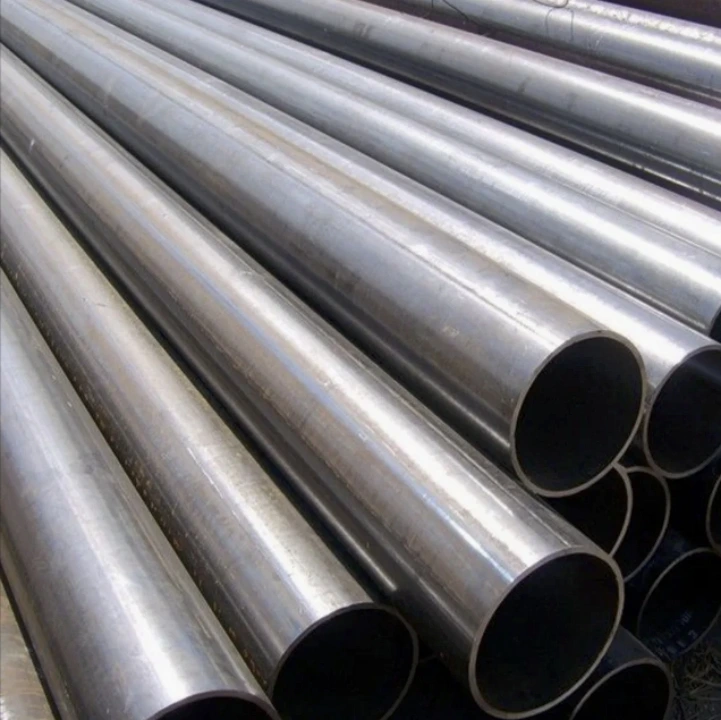
Seamless steel pipes are a cornerstone of modern industrial infrastructure, valued for their superior strength, pressure resistance, and structural integrity. Unlike welded pipes, seamless pipes contain no longitudinal seam — eliminating a critical failure point in high-stress applications such as oil and gas transmission, hydraulic systems, and power generation. For procurement engineers and project managers, understanding the manufacturing process is not merely academic: it directly informs material specification, supplier evaluation, and long-term asset reliability. This guide provides a technical breakdown of every production stage, from raw billet selection through hot rolling, cold drawing, heat treatment, and final quality inspection.
1. Raw Material Selection & Billet Preparation
1.1 Steel Grade & Billet Quality Standards
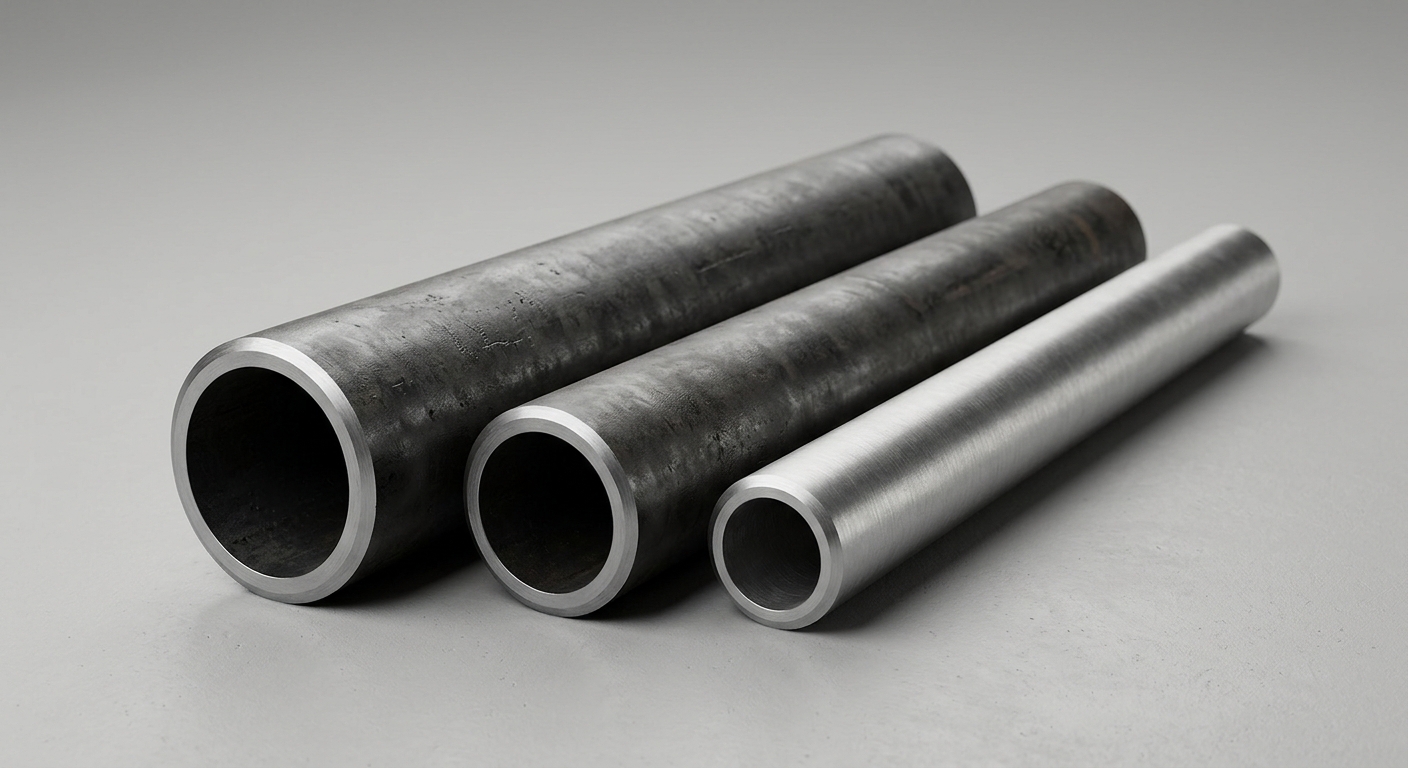
The manufacturing journey of a seamless steel pipe begins with the selection of a solid steel billet — a decision that fundamentally determines the pipe’s mechanical properties, corrosion resistance, and suitability for downstream applications.
Billets are sourced across three primary material categories:
- Carbon Steel (e.g., AISI 1020, 1045): Used in structural, mechanical, and general fluid-service applications. Governed by standards such as ASTM A519 and GB/T 8162.
- Alloy Steel (e.g., 4130, 4140, P91): Selected for elevated-temperature or high-pressure service, including boiler tubes and pressure vessels.
- Stainless Steel (e.g., 304, 316L, 2205 duplex): Specified for corrosive environments in chemical processing, food-grade, and offshore applications.
Chemical composition tolerances are tightly controlled. Carbon content, sulfur and phosphorus levels, and alloying element percentages must fall within specification limits before a billet is approved. Suppliers operating under ASTM A519 or EN 10297 are required to provide mill test reports (MTRs) certifying chemical and mechanical compliance for each heat.
1.2 Billet Inspection & Pre-Heating Process
Before entering the rolling mill, each billet undergoes surface and internal inspection. Magnetic particle testing (MT) or ultrasonic scanning identifies surface seams, cracks, or internal segregation that would propagate into finished pipe defects.
Approved billets are charged into a rotary hearth or pusher-type furnace and heated to 1,200–1,280°C — the optimal range for plastic deformation without grain boundary burning. Uniform soaking at this temperature for a controlled duration ensures homogeneous microstructure across the billet cross-section. Inconsistent heating is a primary cause of wall thickness eccentricity in the subsequent piercing stage, making precise furnace control a critical quality gate.
2. Core Manufacturing Process: Hot Rolling & Piercing
2.1 Rotary Piercing (Mannesmann Process)
The Mannesmann rotary piercing process is the defining operation that transforms a solid billet into a hollow shell — and the reason seamless pipes contain no weld seam.
In this process, the heated billet is fed between two barrel-shaped rolls set at opposing skew angles (typically 3–6°). This geometry creates a helical rolling motion that generates secondary tensile stresses at the billet’s central axis. A stationary piercing plug positioned at the billet’s centerline exploits these stresses, opening and enlarging the core cavity as the billet advances. Guide discs or shoes maintain the outer diameter during piercing.
Key process parameters governing hollow shell quality include:
- Roll skew angle: Controls axial feed rate and wall thickness
- Plug diameter and geometry: Determines bore size and internal surface finish
- Rolling speed: Affects thermal gradient and grain flow
The result is a thick-walled hollow shell (capillary tube) that retains the original billet’s grain structure without a fusion zone — the fundamental metallurgical advantage over welded pipe.
2.2 Elongation & Rolling Mill Operations
The pierced shell requires further elongation and wall reduction to reach target dimensions. Three principal mill configurations are employed industrially:
| Process Type | OD Range | Wall Thickness Tolerance | Production Efficiency | Steel Grades | Typical Application |
|---|---|---|---|---|---|
| Mannesmann Plug Mill | 60–406 mm | ±10–12.5% | Moderate | Carbon, low-alloy | Line pipe, structural |
| MPM Continuous Mill | 21–178 mm | ±6–8% | High | Carbon, alloy | OCTG, mechanical tubing |
| Assel Mill | 40–250 mm | ±5–7% | Moderate-High | Alloy, stainless | Thick-wall, precision pipe |
The Plug Mill uses a reciprocating mandrel plug to reduce wall thickness in successive passes. The Multi-stand Pipe Mill (MPM) feeds the shell continuously through a series of roll stands with an internal floating mandrel — delivering higher throughput and tighter dimensional control. The Assel Mill uses three rolls at skew angles to produce thick-walled pipes with excellent concentricity, particularly suited to alloy and stainless grades.
Following elongation, a stretch reducer or tension reducer applies controlled tension while reducing the outer diameter through a series of roll stands, achieving final OD and wall thickness targets.
3. Cold Drawing & Finishing Processes
3.1 Cold Drawing / Cold Rolling for Precision Dimensions
Hot-rolled seamless pipe meets the dimensional requirements for most structural and line-pipe applications, but instrumentation tubing, hydraulic cylinders, and precision mechanical applications demand tighter tolerances and superior surface finish. This is achieved through cold finishing.
Cold Drawing pulls the pipe through a die (with or without an internal mandrel) at ambient temperature, reducing OD and wall thickness simultaneously. It improves:
- Dimensional tolerance: OD tolerance tightened to ±0.1–0.5 mm
- Wall thickness tolerance: Achievable to ±5% or better
- Surface roughness: Ra values reduced to 0.8–3.2 µm
Cold Pilgering (Cold Rolling) uses a rocking die set and tapered mandrel to achieve even greater reductions per pass — up to 80% cross-sectional area reduction. It is preferred for stainless steel and high-alloy tubing where surface integrity and work hardening characteristics are critical.
Cold-finished pipes are specified under standards such as ASTM A519 (mechanical tubing) and EN 10305-1 (precision steel tubes), and are the standard choice for hydraulic and pneumatic cylinder applications.
3.2 Heat Treatment, Straightening & Surface Treatment
Cold working introduces residual stress and work hardening, necessitating thermal processing to restore ductility and achieve target mechanical properties:
- Normalizing (850–950°C, air cooling): Refines grain structure; standard for carbon and low-alloy seamless pipes per ASTM A106 and API 5L.
- Annealing (750–850°C, furnace cooling): Maximizes ductility; specified for cold-drawn stainless and precision tubing.
- Quench & Temper (Q&T): Achieves high-strength grades (e.g., API 5L X65, X80); critical for OCTG and high-pressure service.
After heat treatment, pipes pass through rotary or roll straighteners to meet straightness tolerances (typically ≤1.5 mm/m per ASTM standards). Surface treatment — including acid pickling (sulfuric or hydrofluoric acid blends for stainless), shot blasting, or anti-corrosion coating — is applied based on service environment and customer specification.
4. Quality Inspection, Standards & Commercial Specifications
4.1 Non-Destructive Testing (NDT) & Dimensional Inspection
Every production lot of seamless steel pipe undergoes a mandatory inspection regime before release. Standard NDT methods include:
- Ultrasonic Testing (UT): Detects internal and subsurface defects including laminations, inclusions, and wall thickness variation. Conducted per ASTM E213 or ISO 10893-8.
- Eddy Current Testing (ET): Identifies surface and near-surface discontinuities; particularly effective on small-diameter tubing.
- Hydrostatic Pressure Test: Each pipe is pressurized to a calculated test pressure (per ASTM A106: minimum 60% of SMYS) and held for a defined duration to verify leak integrity.
Dimensional checks cover OD, wall thickness (minimum 4 readings per cross-section), length, straightness, and end squareness. Pipe ends are typically plain, beveled (for welding), or threaded per applicable thread standards.
4.2 Key International Standards & Procurement Specifications
Specifying the correct standard is the single most important procurement decision. The following table maps the primary international standards to their application scope:
| Standard | Scope | Common Grades | Key Metric |
|---|---|---|---|
| ASTM A106 | Seamless carbon pipe, high-temp service | Gr. A, B, C | Tensile strength, hydro test |
| API 5L | Line pipe for oil & gas transmission | X42–X80 PSL1/PSL2 | CVN toughness, HIC resistance |
| EN 10216-2 | Seamless tubes for pressure purposes | P235GH, P265GH | Elevated temp properties |
| GB/T 8162 | Structural seamless steel pipe (China) | 20#, 45#, Q345B | Dimensional tolerance |
Wall thickness series (Schedule designations per ASME B36.10M) — SCH 40, SCH 80, SCH 160, and XXS — define pressure capacity for a given nominal pipe size. Procurement specifications should explicitly state: nominal size, schedule or wall thickness, steel grade, applicable standard, heat treatment condition, NDT requirements, and required certifications (e.g., EN 10204 3.1 or 3.2 mill certificates).
Conclusion
The production of seamless steel pipe is a precisely engineered sequence — from billet chemistry and controlled heating, through Mannesmann piercing and multi-stand rolling, to cold finishing, heat treatment, and rigorous NDT. Each stage directly determines the pipe’s dimensional accuracy, mechanical performance, and service reliability.
For B2B buyers, this process knowledge translates into sharper supplier evaluation: a qualified mill will provide full MTR traceability, documented NDT procedures, and recognized third-party certifications. Specifying the correct standard (API 5L, ASTM A106, EN 10216), heat treatment condition, and inspection level upfront eliminates costly non-conformances in the field. Understanding how seamless steel pipe is made is, ultimately, the foundation for specifying it correctly.