

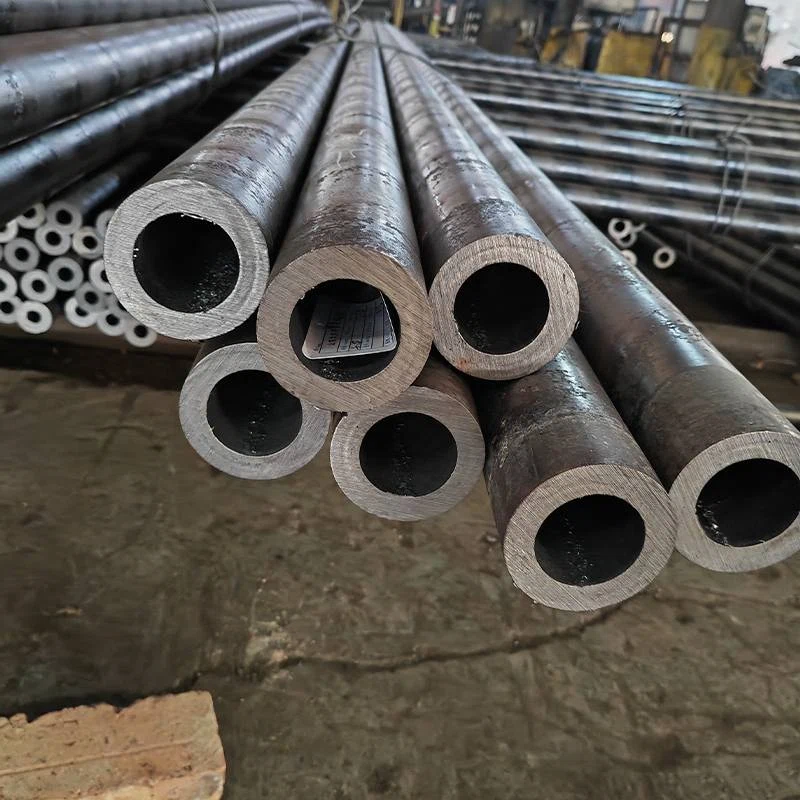
What Is a Seamless Steel Pipe?
A concise overview of seamless steel pipe — covering its manufacturing process, key specifications, industry standards, and why procurement teams across oil & gas, construction, and mechanical engineering consistently specify it over alternatives.
Seamless steel pipe is one of the most structurally reliable tubular products in industrial supply chains. Unlike welded alternatives, it is formed from a single billet of steel, eliminating the longitudinal weld seam that represents a potential failure point under pressure, fatigue, or corrosive conditions. This fundamental manufacturing difference translates into measurable performance advantages: higher burst pressure ratings, superior dimensional consistency, and longer service life in demanding environments.
For procurement engineers and project specifiers, understanding what seamless steel pipe is — and when to specify it — directly affects system safety, regulatory compliance, and total lifecycle cost. This article provides a technically grounded reference covering production methods, dimensional standards, a direct comparison with welded pipe, and the commercial logic behind material selection decisions.
1. Definition & Manufacturing Process of Seamless Steel Pipe
1.1 How Seamless Steel Pipe Is Made
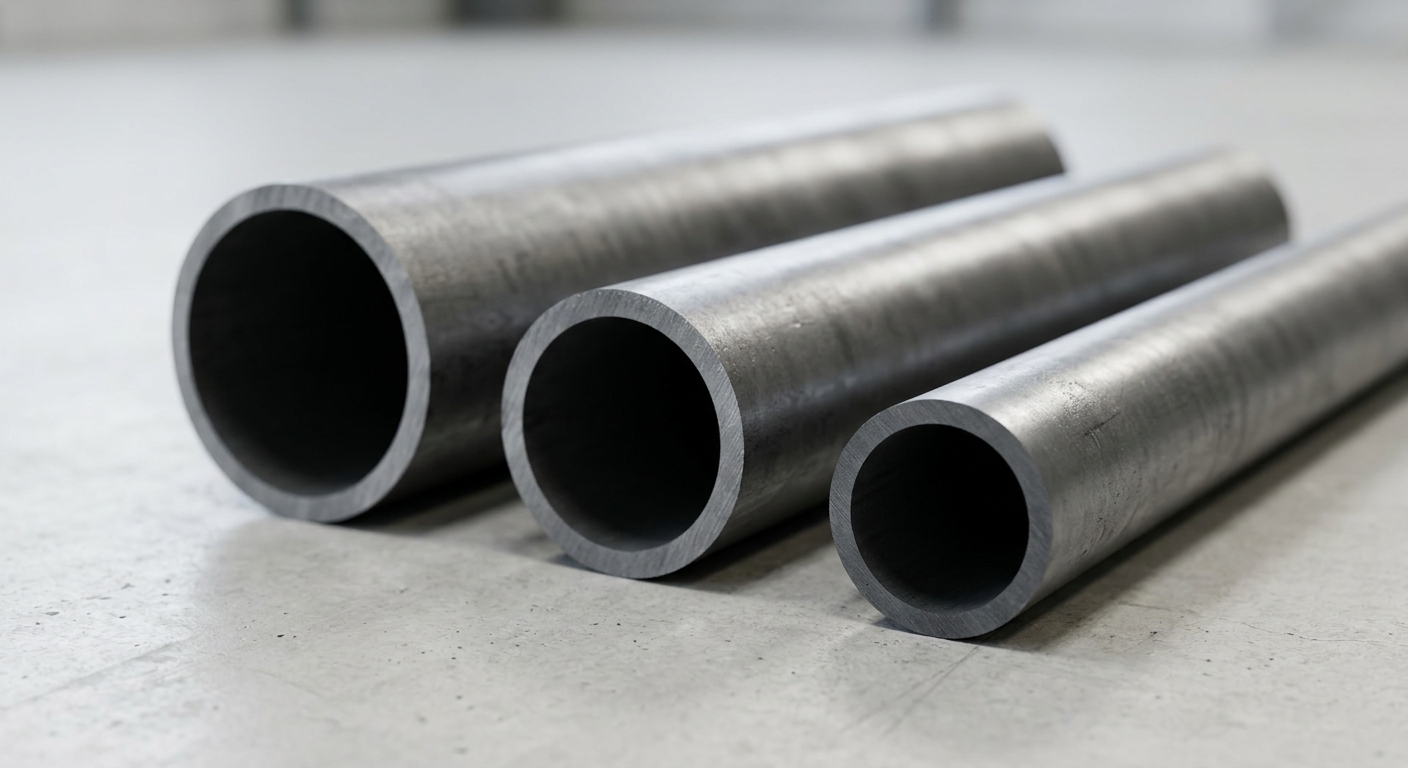
Seamless steel pipe is produced through a hot-working process that transforms a solid cylindrical steel billet into a hollow tube — without any welding, joining, or seam formation at any stage of production.
The dominant manufacturing route involves two primary operations:
-
Rotary Piercing (Mannesmann Process): A heated billet is fed between two barrel-shaped rolls set at opposing angles. The rotational and axial forces create internal stress at the billet’s center, which is then pierced by a pointed mandrel to form a hollow shell (called a “bloom” or “shell”).
-
Mandrel Rolling / Plug Rolling: The pierced shell is elongated and wall thickness is reduced by passing it over an internal mandrel through a series of rolling stands. This step controls the final inner diameter and wall thickness with precision.
After rolling, the pipe undergoes sizing or stretch-reducing operations to achieve target outer diameter, followed by heat treatment (normalizing, quenching, or tempering depending on grade), straightening, hydrostatic testing, and non-destructive examination (NDE).
The critical outcome: no weld seam exists anywhere along the pipe’s cross-section or length. The steel grain structure flows continuously around the circumference, which is the root cause of seamless pipe’s superior mechanical performance.
1.2 Key Structural Characteristics
The absence of a weld seam produces several interconnected structural advantages:
- Uniform Wall Thickness: Wall thickness variation (eccentricity) is controlled to tight tolerances — typically ±10% per ASTM standards — enabling accurate pressure calculations and reducing stress concentration points.
- Grain Continuity: The steel’s crystalline grain structure is uninterrupted around the pipe circumference. This continuity improves fatigue resistance and toughness, particularly under cyclic loading or thermal fluctuation.
- Pressure Integrity: Without a heat-affected zone (HAZ) or weld bead, seamless pipe maintains consistent yield and tensile strength throughout its cross-section. This supports higher allowable working pressure (MAWP) ratings compared to equivalent-dimension welded pipe.
- Surface and Bore Consistency: The internal bore is smoother and more geometrically consistent, which is important for fluid flow efficiency and for applications requiring close-tolerance machining.
2. Seamless Steel Pipe Specifications & Standards
2.1 Dimensional Parameters & Grades
Seamless steel pipe is specified by Outer Diameter (OD), Wall Thickness (expressed as a Schedule number or actual dimension), Length, and Steel Grade. The three most widely referenced international standards are ASTM A106, API 5L, and DIN EN 10216 (formerly DIN 2448).
| Standard | Grade | OD Range | Wall Thickness | Temp. Rating | Typical Application |
|---|---|---|---|---|---|
| ASTM A106 | Gr. A / Gr. B / Gr. C | ½” – 26″ (NPS) | Sch 40 – Sch 160 / XXH | Up to 750°F (400°C) | High-temp steam, process piping |
| API 5L | PSL1 / PSL2; X42–X80 | 2⅜” – 80″ OD | 0.154″ – 2.000″+ | Per grade/service | Oil & gas transmission pipelines |
| ASTM A53 | Type S, Gr. A / Gr. B | ⅛” – 26″ (NPS) | Sch 40 / Sch 80 | Up to 450°F | Water, steam, mechanical |
| DIN EN 10216-2 | P235GH / P265GH / 13CrMo4-5 | 10.2 mm – 711 mm OD | 1.6 mm – 125 mm | Up to 550°C | Pressure vessels, boilers (EU) |
| ASTM A335 | P5 / P9 / P11 / P22 / P91 | ½” – 24″ (NPS) | Sch 40 – Sch 160 | Up to 1100°F (593°C) | High-alloy, elevated-temp service |
Schedule numbers (e.g., Sch 40, Sch 80, Sch 160) define wall thickness relative to OD. For the same NPS (Nominal Pipe Size), a higher Schedule number means a thicker wall and higher pressure rating — a critical variable when specifying for high-pressure or high-temperature service.
2.2 Compliance & Certification Requirements
Procurement teams should require the following documentation for every seamless pipe shipment:
- Mill Test Report (MTR) / Material Test Certificate (MTC): Confirms chemical composition (heat analysis and product analysis) and mechanical test results (yield strength, tensile strength, elongation, hardness, and impact values where applicable).
- Hydrostatic Test Records: Every pipe should be hydrostatically tested per the applicable standard (e.g., ASTM A106 Section 16).
- NDE Certification: Ultrasonic testing (UT) or electromagnetic inspection (EMI) records per API 5L or ASTM supplementary requirements.
- Third-Party Inspection: For critical applications, buyers specify independent inspection bodies (SGS, Bureau Veritas, TÜV) to witness production and verify conformance at the mill.
- ISO 9001 / API Q1 Certification: Mill-level quality management system certification provides baseline assurance of process control.
Insisting on full traceability — heat number, cast number, and pipe number linked to the MTR — is non-negotiable for pressure-containing applications in regulated industries.
3. Seamless Steel Pipe vs. Welded Pipe
3.1 Technical Comparison
The performance gap between seamless and welded pipe is most pronounced in four areas:
| Parameter | Seamless Steel Pipe | Welded Steel Pipe (ERW/SAW) |
|---|---|---|
| Structural Integrity | No weld seam; uniform grain structure | Weld seam present; HAZ may reduce local toughness |
| Pressure Rating | Higher MAWP for same OD/WT | Lower; ASME codes apply a joint efficiency factor (E = 0.85–1.0) |
| Fatigue Resistance | Superior under cyclic/dynamic loading | Weld toe is a fatigue initiation site |
| Dimensional Tolerance | Tighter wall eccentricity control | Generally consistent but seam area may vary |
| Surface Finish (Bore) | Smoother, no internal bead | Internal weld bead may require removal |
| OD Range Availability | Best for small-to-medium diameters (<24″) | More economical for large diameters (>24″) |
In ASME B31.3 (Process Piping) and ASME B31.1 (Power Piping), seamless pipe carries a joint efficiency factor (E) of 1.0, meaning the full allowable stress is applied in pressure calculations. Welded pipe with a longitudinal seam carries E = 0.85 unless 100% radiographic examination is performed (which raises it to 1.0 but adds cost).
3.2 Cost, Lead Time & Selection Criteria
Seamless pipe carries a 15–35% price premium over equivalent ERW welded pipe, depending on grade, diameter, and market conditions. This premium is justified when:
- Operating pressure exceeds 1,000 psi or involves pressure cycling
- Temperature service is above 400°F or involves thermal shock
- Corrosive or sour service (H₂S, CO₂) where weld-zone susceptibility is a liability
- Regulatory compliance requires E = 1.0 without additional NDE cost
- Small-bore, thick-wall geometry where welded pipe is not commercially available
For structural, low-pressure, or large-diameter applications, ERW or LSAW welded pipe often delivers adequate performance at lower cost and shorter lead times. The decision should be driven by the design code, service conditions, and a clear cost-benefit analysis — not by default specification.
4. Industrial Applications & Commercial Value
4.1 Key End-Use Industries
Seamless steel pipe serves as a critical component across multiple heavy industries:
- Oil & Gas Upstream/Midstream: API 5L seamless line pipe for wellheads, flow lines, and gathering systems where pressure integrity and sour-service resistance are mandatory.
- Power Generation: ASTM A106 Gr. B and A335 alloy grades for steam boiler tubes, superheater headers, and high-pressure feedwater lines.
- Petrochemical & Refining: Process piping in ASME B31.3 systems handling hydrocarbons, acids, and high-temperature fluids.
- Hydraulic & Pneumatic Systems: Precision seamless tube (ASTM A519, EN 10305) for hydraulic cylinders, accumulators, and instrumentation lines requiring tight dimensional tolerances.
- Mechanical & Structural Engineering: Structural seamless tube (ASTM A500, EN 10210) for load-bearing columns, crane booms, and machine frames where consistent wall thickness is critical for weld joint design.
4.2 Total Cost of Ownership & Sourcing Considerations
The unit price of seamless pipe is only one component of total cost of ownership (TCO). Procurement teams should model:
- Maintenance & Downtime Avoidance: A seam failure in a high-pressure line results in unplanned shutdown, environmental liability, and regulatory scrutiny. Seamless pipe’s lower failure probability reduces this risk premium.
- Extended Service Life: Uniform grain structure and higher fatigue resistance translate to longer replacement intervals, particularly in cyclic-pressure or vibration-prone systems.
- Inspection Cost Reduction: Fewer weld-related anomalies mean lower ongoing NDE costs during in-service inspection.
Supplier Qualification Checklist:
- [ ] Mill certifications (API, ASTM, ISO)
- [ ] Full MTR traceability per heat/cast number
- [ ] Hydrostatic and NDE test records
- [ ] Dimensional inspection reports (OD, WT, straightness)
- [ ] Third-party inspection capability at mill
- [ ] MOQ flexibility and standard lead times (typically 4–12 weeks for stock grades; 8–20 weeks for custom specifications)
FAQ
Q1: What is the difference between seamless steel pipe and welded pipe, and which should I specify for high-pressure applications?
Seamless pipe is produced from a solid billet with no weld seam, giving it a joint efficiency factor of E = 1.0 under ASME codes. Welded pipe has a longitudinal seam that requires a derating factor unless 100% radiographic inspection is performed. For applications above 1,000 psi, in cyclic service, or in sour/corrosive environments, seamless pipe is the standard engineering specification.
Q2: How do I verify that seamless steel pipe meets ASTM or API standards before placing a bulk order?
Request a full Mill Test Report (MTR) linked to the pipe’s heat number, confirming chemical and mechanical properties against the applicable standard. For critical orders, engage a third-party inspection agency (SGS, BV, TÜV) to witness production, verify dimensions, and review hydrostatic and NDE test records at the mill before shipment.
Q3: What seamless steel pipe specifications are required for oil & gas vs. structural applications?
Oil & gas line pipe typically requires API 5L PSL2 (grades X42–X65 for gathering/transmission) with Charpy impact testing, sour-service (HIC/SSC) qualification, and full NDE. Structural applications generally use ASTM A500 or EN 10210 with less stringent mechanical requirements and no pressure-testing mandate. Always confirm the applicable design code (ASME B31.4/B31.8 for pipelines; AISC 360 for structural) before finalizing the specification.
Conclusion
Seamless steel pipe’s commercial and technical case rests on a single manufacturing principle: the complete elimination of the weld seam. This produces a product with uniform wall thickness, continuous grain structure, and pressure integrity that welded alternatives cannot match without additional inspection costs or design derating.
For procurement and engineering teams, the specification decision is straightforward: where pressure, temperature, fatigue, or corrosive service conditions are involved, seamless pipe delivers lower lifecycle risk and superior regulatory compliance at a well-justified cost premium. Where conditions are moderate and large diameters are required, welded pipe remains a viable alternative.
Selecting the right grade — whether ASTM A106 for high-temperature process service, API 5L PSL2 for pipeline duty, or DIN EN 10216 for European pressure vessel applications — requires aligning the design code, service conditions, and certification requirements before issuing a purchase order. Rigorous supplier qualification, full MTR traceability, and third-party inspection are the procurement controls that protect that investment throughout the pipe’s service life.