

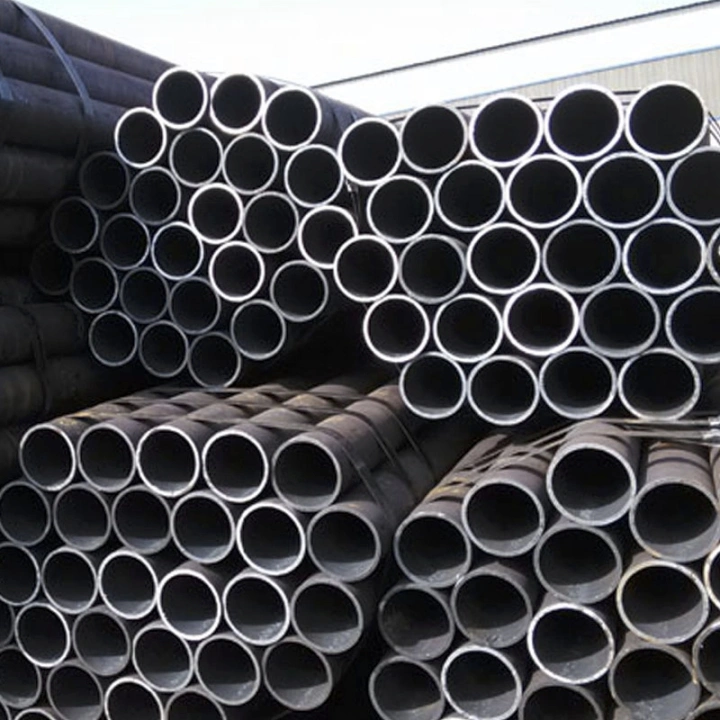
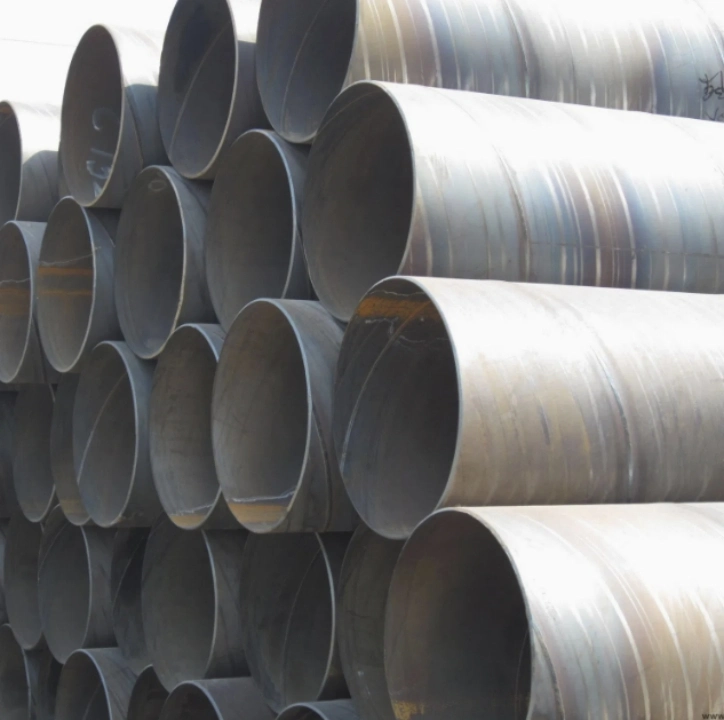
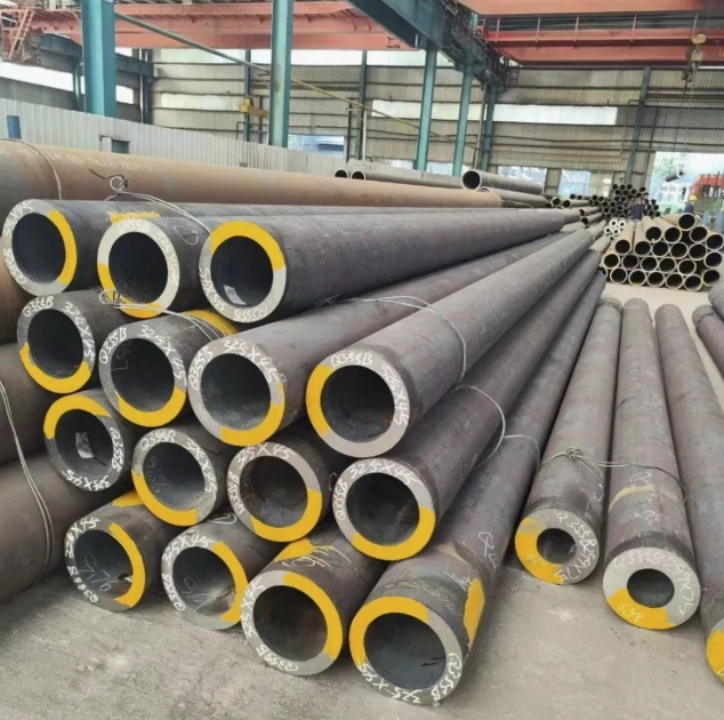
Carbon steel pipes are essential components in industrial infrastructure, offering superior strength, cost-efficiency, and versatility across multiple sectors. This guide examines the primary applications of carbon steel piping in construction, energy, manufacturing, and HVAC systems, while detailing technical specifications, industry standards, and selection criteria for procurement professionals.
Understanding Carbon Steel Pipe Fundamentals
Material Composition and Grade Classification
Carbon steel pipe composition directly influences mechanical performance and application suitability. The carbon content typically ranges from 0.05% to 2.0%, with low-carbon grades (0.05-0.30%) offering excellent weldability and medium-carbon grades (0.30-0.60%) providing enhanced strength for high-pressure applications.
ASTM A53 represents the most common specification for general-purpose piping, available in Types F (furnace-welded), E (electric resistance welded), and S (seamless). This grade suits low-pressure applications including water, steam, and air distribution systems with operating temperatures up to 400°F (204°C).
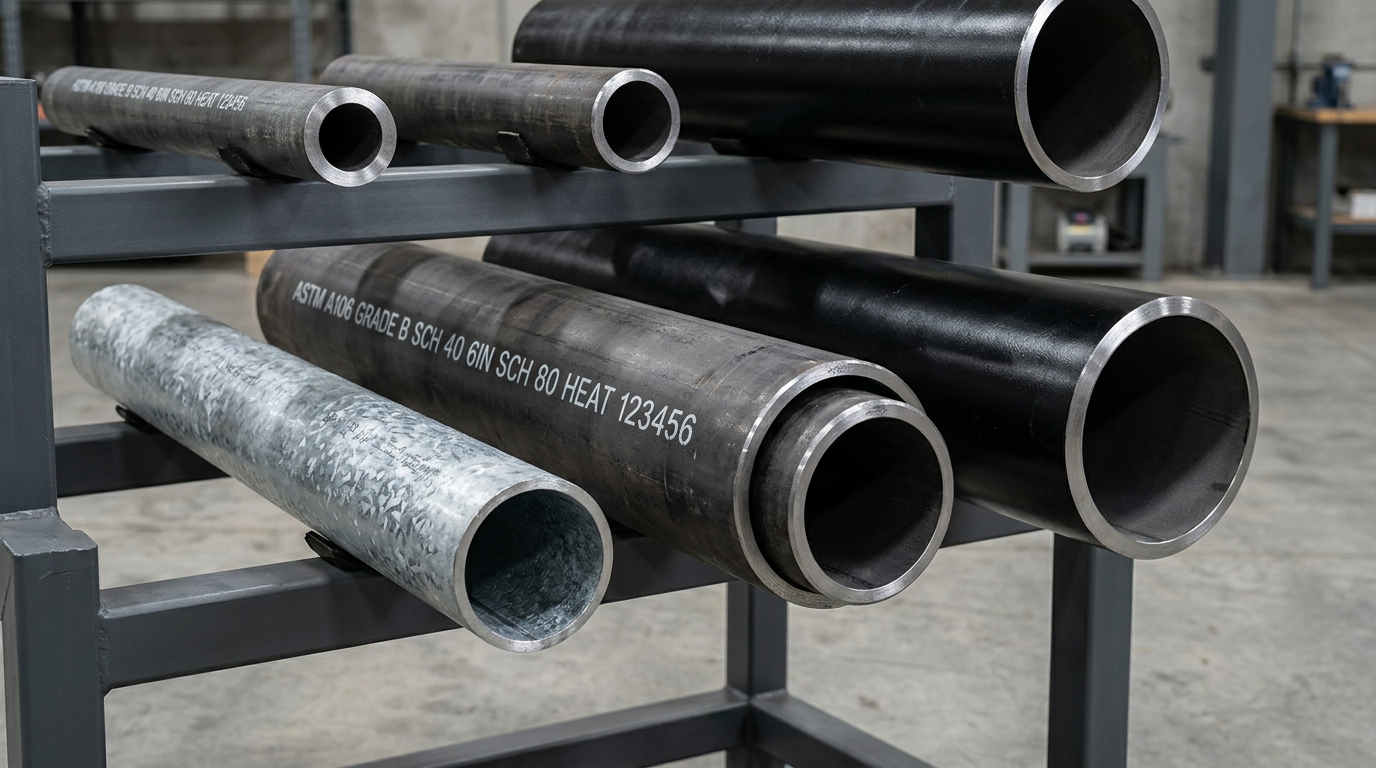
ASTM A106 seamless pipe serves high-temperature service applications, withstanding continuous temperatures up to 750°F (400°C). Grades A, B, and C offer progressively higher tensile strengths (48,000 psi, 60,000 psi, and 70,000 psi minimum respectively), making Grade B the industry standard for refinery and power plant installations.
API 5L specifications govern line pipe for petroleum and natural gas transmission, with PSL1 (standard quality) and PSL2 (higher quality with stringent testing) classifications. Grades range from A25 to X80, with yield strengths from 25,000 to 80,000 psi, enabling engineers to match pipe strength precisely to operating pressures.
Alloying elements enhance specific properties: manganese (0.30-1.50%) increases strength and hardenability, silicon (0.10-0.50%) improves oxidation resistance, and sulfur/phosphorus are minimized (below 0.05% each) to prevent brittleness and cold cracking.
Manufacturing Methods and Quality Standards
Seamless carbon steel pipes are produced through hot piercing or extrusion processes, creating uniform wall thickness without longitudinal welds. This manufacturing method eliminates weld seam vulnerabilities, making seamless pipe mandatory for critical applications exceeding 2,000 psi operating pressure or experiencing cyclic loading conditions.
Welded pipe production employs electric resistance welding (ERW) or submerged arc welding (SAW) techniques. ERW pipes offer cost advantages for diameters under 24 inches and wall thicknesses below 0.500 inches, while SAW methods accommodate larger dimensions up to 100 inches diameter with superior weld penetration.
ASME B36.10M establishes dimensional standards for carbon steel pipe, defining outside diameters, wall thicknesses, and schedule numbers. The schedule system (10, 20, 30, 40, 60, 80, 100, 120, 140, 160) indicates wall thickness relative to pressure capacity—Schedule 40 represents standard weight, while Schedule 80 provides extra-heavy construction.
ISO 3183 harmonizes international pipeline specifications, incorporating chemical composition limits, mechanical testing protocols, and non-destructive examination requirements. Compliance ensures global supply chain compatibility and cross-border project acceptance.
Quality control protocols include hydrostatic testing (1.5× design pressure minimum), ultrasonic inspection for wall thickness verification, and magnetic particle examination for surface defect detection. Mill test reports (MTRs) documenting chemical analysis and mechanical properties accompany each production lot.
Primary Industrial Applications of Carbon Steel Pipe
Oil & Gas Transmission Infrastructure
Carbon steel pipeline systems transport crude oil, refined products, and natural gas across continental distances, with API 5L specifications governing material selection. Grade X52 through X70 pipes dominate long-distance transmission projects, balancing strength requirements (52,000-70,000 psi yield) with weldability constraints.
Typical crude oil pipelines operate at 600-1,440 psi, requiring Schedule 40 or heavier wall thickness for 24-36 inch diameter mains. Natural gas transmission pressures reach 1,000-1,500 psi in interstate pipelines, demanding Grade X60 or higher with advanced coating systems.
Corrosion protection strategies include:
- Fusion-bonded epoxy (FBE): Single-layer coating providing 12-15 mils thickness for moderate corrosion environments
- Three-layer polyethylene (3LPE): FBE primer + adhesive + polyethylene topcoat achieving 80-120 mils total thickness for severe soil conditions
- Cathodic protection: Impressed current or sacrificial anode systems maintaining -850 mV polarization potential
Offshore applications utilize API 5L X65 with enhanced toughness requirements, including Charpy V-notch impact testing at 32°F (0°C) to prevent brittle fracture in cold seawater environments. Internal corrosion inhibitors and pigging programs maintain flow efficiency over 30-40 year design lifespans.
HVAC Carbon Steel Piping Systems
Commercial and industrial HVAC installations rely on carbon steel pipe for chilled water, hot water, and steam distribution due to thermal conductivity (45 W/m·K) and pressure capacity advantages over plastic alternatives.
Chilled water systems (40-55°F supply temperature) typically employ Schedule 40 ASTM A53 Grade B pipe with welded or grooved mechanical fittings. Insulation requirements mandate closed-cell elastomeric foam (minimum R-4.2 per inch) to prevent condensation and maintain energy efficiency.
Hot water heating loops (180-200°F operating temperature) utilize the same base specification but require expansion compensation through loop expansion joints or offset configurations. Thermal expansion calculations follow the formula: ΔL = α × L × ΔT, where α = 6.5 × 10⁻⁶ in/in/°F for carbon steel.
Steam distribution systems demand Schedule 80 pipe for pressures exceeding 125 psi, with ASTM A106 Grade B material withstanding superheat conditions up to 400°F. Condensate return lines operate under vacuum conditions, requiring air venting and proper pitch (1/4 inch per 10 feet minimum) to prevent water hammer.
Glycol-based antifreeze solutions (20-40% concentration) in closed-loop systems necessitate corrosion inhibitor packages maintaining pH 8.5-10.5 to prevent internal oxidation. Annual water quality testing monitors chloride levels (below 200 ppm) and dissolved oxygen (below 0.5 ppm) to extend system longevity beyond 25 years.
Structural Steel Pipe in Construction
Hollow structural sections (HSS) fabricated from carbon steel pipe provide superior strength-to-weight ratios in architectural and civil engineering applications. ASTM A500 Grade B or C specifications govern structural tubing, offering 46,000-58,000 psi yield strength for load-bearing columns and trusses.
Seismic design considerations require ductility ratios exceeding 1.2, achieved through controlled carbon equivalent values (CEV < 0.45%) ensuring adequate plastic deformation capacity during earthquake events. Moment-resisting frames incorporate A500 Grade C pipe columns with bolted or welded beam connections meeting AISC 341 seismic provisions.
Scaffolding systems utilize 48.3mm OD (1.9 inch) pipe conforming to EN 39 or BS 1139 standards, with 4.0mm wall thickness supporting 2,000-2,500 kg working loads per vertical standard. Hot-dip galvanization (minimum 460 g/m² zinc coating) provides 15-20 year corrosion protection in outdoor construction environments.
Architectural applications exploit carbon steel pipe’s aesthetic versatility in handrails, canopies, and façade support structures. Mill finish, powder coating, or patina treatments achieve design intent while maintaining structural integrity per local building codes.
Water Distribution and Plumbing Systems
Municipal water infrastructure employs cement-mortar lined carbon steel pipe (AWWA C205) for trunk mains ranging from 12 to 144 inches diameter. The cement lining (1/8 to 1/4 inch thickness) prevents internal corrosion while maintaining smooth hydraulic characteristics (Hazen-Williams C-factor of 140).
Fire protection systems require Schedule 40 minimum wall thickness per NFPA 13 standards, with wet-pipe sprinkler networks operating at 150-175 psi static pressure. Corrosion-resistant coatings or galvanization extend service life in oxygen-rich water environments, though regular flushing and water quality monitoring remain essential.
Industrial process water applications distinguish between potable and non-potable service. Potable water contact requires NSF-61 certified materials and coatings, with lead leaching tests confirming compliance with EPA drinking water standards (15 ppb maximum). Non-potable cooling water or wastewater systems utilize unlined carbon steel with chemical treatment programs controlling scaling and biological growth.
Technical Specifications and Selection Criteria
Dimensional Standards and Pressure Ratings
Nominal Pipe Size (NPS) designations standardize outside diameters, with NPS 1/8 through NPS 12 matching actual OD in inches, while larger sizes maintain constant OD increments. Schedule numbers define wall thickness, with higher schedules accommodating greater internal pressures.
Carbon Steel Pipe Specification Comparison
| Grade | OD Range | Wall Thickness | Max Operating Pressure | Temperature Range | Common Applications |
|---|---|---|---|---|---|
| ASTM A53 Grade B | 1/8″ – 24″ NPS | Schedule 40/80 | 1,480 psi (1″ Sch 80) | -20°F to 400°F | General plumbing, HVAC |
| ASTM A106 Grade B | 1/8″ – 48″ NPS | Schedule 40-XXH | 3,281 psi (1″ Sch 160) | -20°F to 750°F | High-temp steam, refineries |
| API 5L Grade X60 | 2″ – 60″ NPS | 0.250″ – 1.500″ | 1,440 psi (36″ × 0.500″) | -50°F to 250°F | Oil/gas transmission |
| ASTM A500 Grade C | 1″ – 20″ HSS | 0.120″ – 0.625″ | N/A (structural) | -50°F to 300°F | Building columns, trusses |
Pressure-temperature correlations follow ASME B31.3 allowable stress tables, with derating factors applied above 400°F. The Barlow formula calculates maximum allowable pressure: P = (2 × S × t × E) / D, where S = allowable stress, t = wall thickness, E = weld joint efficiency, and D = outside diameter.
Corrosion Resistance and Surface Treatments
Unprotected carbon steel corrodes at 3-5 mils per year (mpy) in atmospheric exposure, accelerating to 10-30 mpy in marine or industrial environments. Protective coating systems extend service life from 5-10 years (bare steel) to 25-40 years with proper surface preparation and application.
Hot-dip galvanization per ASTM A123 applies zinc coatings averaging 3.5 oz/ft² (85 microns), providing sacrificial protection through electrochemical action. Galvanized pipe suits buried applications, potable water service, and outdoor installations where coating damage from handling is anticipated.
Epoxy coating systems achieve 12-16 mils dry film thickness (DFT) through electrostatic spray or fluidized bed application. Two-part epoxy formulations cure at 350-400°F, creating chemically resistant barriers suitable for wastewater, chemical processing, and underground fuel lines.
Cathodic protection design for buried pipelines requires soil resistivity surveys (4-point Wenner method) determining anode spacing and rectifier capacity. Impressed current systems using mixed metal oxide (MMO) anodes maintain protective potentials across 5-10 mile pipeline segments, with remote monitoring via SCADA integration.
Compliance and Industry Standards
Regional Certification Requirements
North American projects mandate ASTM specifications, with A53 governing general piping, A106 for high-temperature service, and A333 for low-temperature applications down to -50°F. API 5L certification becomes contractually required for oil and gas transmission infrastructure, with PSL2 specifications incorporating supplementary requirements (SR) for sour service (H2S environments) or offshore installations.
European markets reference EN 10255 for non-alloy steel tubes, categorizing products as light (L), medium (M), or heavy (H) series based on wall thickness. EN 10217 governs welded steel tubes for pressure purposes, harmonizing with Pressure Equipment Directive (PED) 2014/68/EU for vessels exceeding 0.5 bar.
Chinese national standards GB/T 8162 (seamless) and GB/T 8163 (welded) dominate domestic procurement, though international projects increasingly specify dual certification (ASTM + GB/T) to facilitate global sourcing. Material traceability through heat number tracking and third-party inspection (SGS, TÜV, Bureau Veritas) ensures specification compliance across supply chains.
Environmental and Safety Regulations
EPA regulations under 40 CFR Part 112 govern Spill Prevention, Control, and Countermeasure (SPCC) plans for petroleum pipelines, requiring secondary containment, leak detection systems, and emergency response protocols. Underground storage tank (UST) regulations mandate corrosion protection and monthly monitoring for facilities storing petroleum products.
OSHA standards 29 CFR 1910.146 address confined space entry during pipeline maintenance, while 1910.147 lockout/tagout procedures prevent accidental energization. Welding operations follow 1910.252 ventilation and fire prevention requirements, with welder qualification per ASME Section IX or AWS D1.1.
Pipeline and Hazardous Materials Safety Administration (PHMSA) enforces 49 CFR Part 195 for hazardous liquid pipelines, mandating integrity management programs including inline inspection (smart pigging), pressure testing intervals, and public awareness campaigns for high-consequence areas.
Conclusion
Carbon steel pipes remain the backbone of industrial piping systems due to their proven reliability, standardized specifications, and economic efficiency. Proper material selection based on application requirements, environmental conditions, and compliance standards ensures optimal performance and long-term value in infrastructure projects. From HVAC carbon steel piping in commercial buildings to high-pressure oil and gas transmission networks, understanding grade classifications, manufacturing methods, and corrosion protection strategies enables procurement professionals to specify cost-effective solutions meeting technical and regulatory requirements. The structural steel pipe applications in construction and municipal water distribution systems further demonstrate the versatility of carbon steel across diverse engineering disciplines, supported by comprehensive industry standards and quality assurance protocols.