

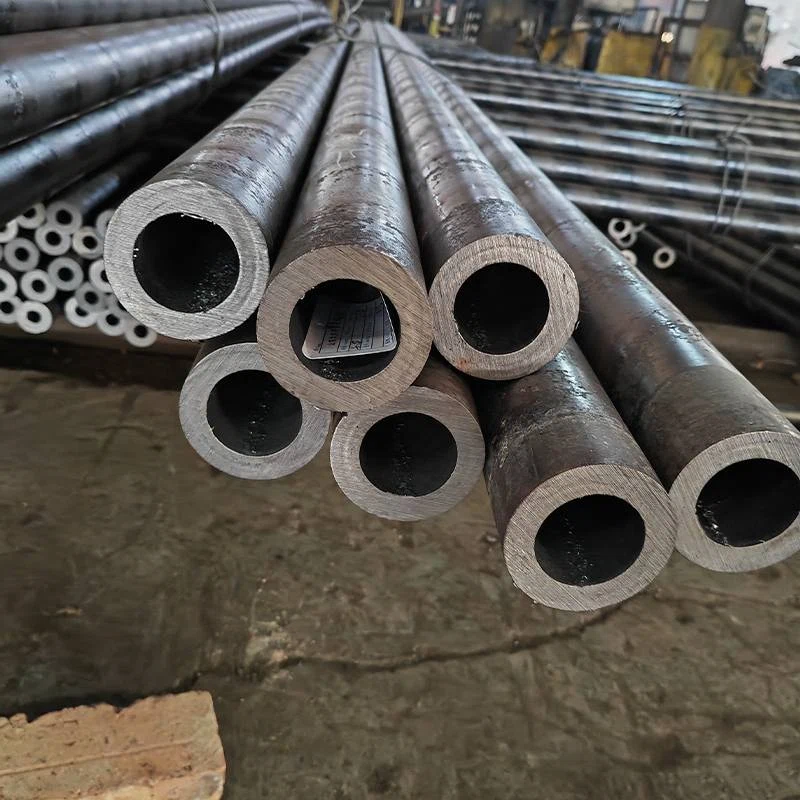
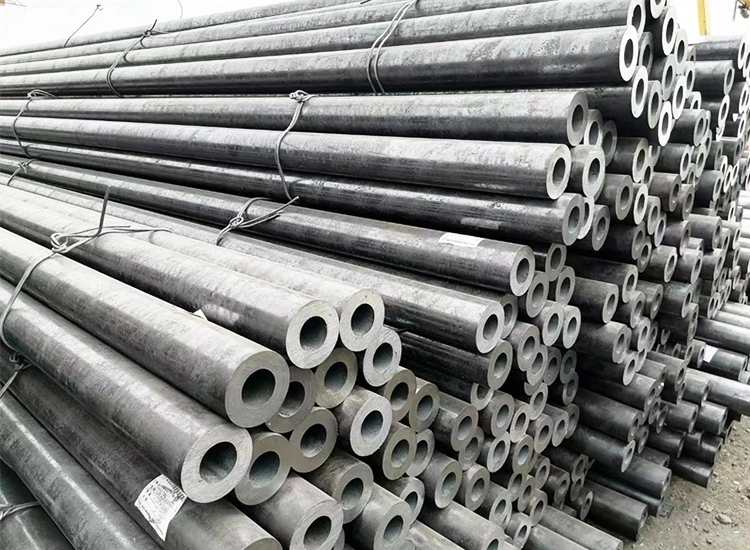
API 5L X52 is a high-strength line pipe grade governed by the American Petroleum Institute’s API 5L standard — the globally recognized specification for steel pipes used in oil, gas, and fluid transmission pipeline systems. The designation encodes precise performance expectations: “API 5L” defines the standard scope, “X” identifies the high-strength series, and “52” denotes a minimum yield strength of 52,000 psi (358 MPa).
This guide provides procurement engineers, project managers, and materials specialists with a structured reference covering X52’s full technical specification — mechanical properties, chemical composition, PSL1 vs PSL2 differentiation, dimensional tolerances, and certification requirements. Whether you are sourcing pipe for an onshore gas transmission corridor or a water injection system, understanding these parameters is essential for compliant, cost-effective procurement decisions aligned with API 5L 46th Edition requirements.
Understanding the API 5L Standard & X52 Grade Definition
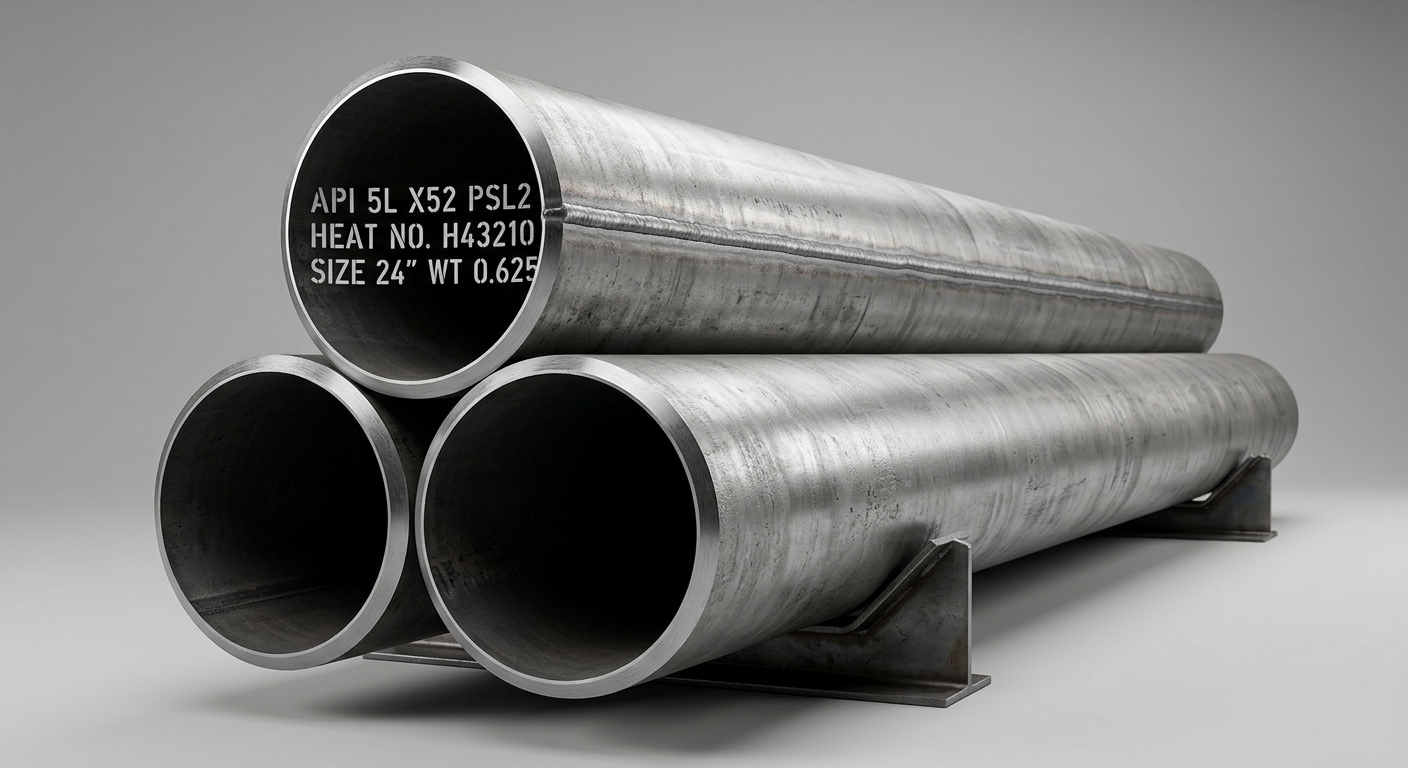
1. What Does “API 5L X52” Mean?
The API 5L designation follows a structured naming convention that communicates critical performance data at a glance. “API” identifies the American Petroleum Institute as the governing body; “5L” is the standard number covering line pipe for pipeline transportation systems. The prefix “X” distinguishes high-strength grades from lower-carbon grades (such as Grade A or Grade B). The number “52” directly references the minimum specified yield strength: 52,000 psi, equivalent to 358 MPa.
This naming logic applies consistently across the X-grade series — X42, X52, X60, X65, X70, and X80 — allowing engineers to immediately identify the strength tier without consulting supplementary documentation. X52 sits in the mid-strength range, offering a practical balance between structural performance and fabrication flexibility, making it one of the most broadly specified grades in global pipeline projects.
2. Applicable Scope & Industry Relevance
API 5L X52 pipe is manufactured and tested in accordance with the API 5L 46th Edition, the current governing document that supersedes earlier revisions and harmonizes closely with ISO 3183. The standard covers seamless and welded steel line pipe intended for the transportation of gas, water, and oil in both the petroleum and natural gas industries.
Key application sectors include:
- Upstream oil & gas: Flowlines, gathering systems, and wellhead connections
- Midstream transmission: High-pressure trunk lines and cross-country pipelines
- Water infrastructure: Municipal water mains and industrial water injection systems
- Offshore installations: Risers and subsea pipelines (with supplementary requirements)
Regulatory frameworks such as ASME B31.4 (liquid pipelines) and ASME B31.8 (gas pipelines) frequently reference API 5L X52 as an acceptable material specification, reinforcing its cross-jurisdictional commercial relevance.
API 5L X52 Technical Specifications
1. Mechanical Properties & Chemical Composition
API 5L X52 imposes distinct mechanical and chemical requirements depending on the Product Specification Level (PSL). The table below consolidates the critical parameters:
Table 1: API 5L X52 Mechanical & Chemical Requirements
| Property | Category | PSL1 Value | PSL2 Value | Unit | Reference |
|---|---|---|---|---|---|
| Yield Strength (min) | Mechanical | 358 | 358 | MPa | ASTM A370 |
| Yield Strength (max) | Mechanical | — | 530 | MPa | ASTM A370 |
| Tensile Strength (min) | Mechanical | 455 | 455 | MPa | ASTM A370 |
| Tensile Strength (max) | Mechanical | — | 760 | MPa | ASTM A370 |
| Elongation (min) | Mechanical | Per formula | Per formula | % | ASTM A370 |
| Carbon (C) max | Chemical | 0.28 | 0.24 | % wt | — |
| Manganese (Mn) max | Chemical | 1.40 | 1.40 | % wt | — |
| Phosphorus (P) max | Chemical | 0.030 | 0.025 | % wt | — |
| Sulfur (S) max | Chemical | 0.030 | 0.015 | % wt | — |
| CEQ (IIW) max | Chemical | Not mandatory | 0.43 | % | Per formula |
PSL2 introduces a mandatory upper limit on yield and tensile strength — a critical constraint that prevents over-strength material from compromising weldability and field joining operations. The stricter CEQ (Carbon Equivalent) ceiling under PSL2 directly supports weld procedure qualification and reduces hydrogen-induced cracking risk.
Elongation is calculated using a formula tied to pipe wall thickness and cross-sectional area, ensuring that thinner-wall pipe meets proportional ductility requirements without applying a blanket percentage that would be inappropriate across all dimensions.
2. Dimensional Tolerances & Pipe End Specifications
API 5L X52 is available in a wide OD range — from NPS ½ (21.3 mm OD) up to NPS 80 (2032 mm OD) — accommodating both small-bore instrumentation lines and large-diameter transmission mains. Wall thickness tolerances follow standard API 5L provisions:
- Seamless pipe: +/- tolerance per applicable table (typically ±12.5% on wall thickness)
- Welded pipe (LSAW/SSAW/ERW): Tighter tolerances apply, with OD tolerance typically ±1% for sizes above NPS 4
Pipe end configurations include:
| End Type | Description | Typical Use |
|---|---|---|
| Plain End (PE) | Square-cut, no bevel | Flanged connections, short-run assemblies |
| Beveled End (BE) | 30° bevel per API 5L | Field butt welding (most common) |
| Threaded & Coupled (T&C) | API or NPT thread | Smaller diameter, lower-pressure service |
Standard delivery lengths are classified as Single Random (4–7 m), Double Random (≥11 m), or Full Joint per project specification. Double random lengths are preferred for long-haul transmission pipelines to minimize field weld count and reduce installation cost.
PSL1 vs PSL2 — Key Differences & Selection Criteria
1. Technical Differentiation Between PSL1 and PSL2
PSL (Product Specification Level) defines the rigor of testing, inspection, and documentation applied during pipe manufacturing. PSL2 is a more demanding tier with mandatory requirements that PSL1 does not include:
Table 2: PSL1 vs PSL2 Comparison Matrix
| Criteria | PSL1 Requirement | PSL2 Requirement | Recommended Application |
|---|---|---|---|
| Chemical Composition Control | Standard limits | Stricter C, S, P, CEQ limits | PSL2 for sour/corrosive service |
| CVN Impact Testing | Not mandatory | Mandatory (min energy per grade/temp) | PSL2 for low-temperature service |
| NDT (Non-Destructive Testing) | Limited scope | Full-body UT/RT + seam inspection | PSL2 for high-pressure pipelines |
| Hydrostatic Test | Required | Required + documented pressure hold | Both required; PSL2 more stringent |
| Yield Strength Upper Limit | Not specified | 530 MPa max | PSL2 for weldability assurance |
| Sour Service Suitability | Not addressed | Basis for NACE MR0175 alignment | PSL2 mandatory for H₂S exposure |
The Charpy V-Notch (CVN) impact test requirement under PSL2 is the single most operationally significant differentiator. It verifies that the pipe material retains adequate toughness at minimum design temperature — a non-negotiable requirement for Arctic pipelines, deepwater applications, and any system subject to rapid depressurization.
2. How to Choose the Right PSL Level for Your Project
PSL selection should be driven by four project-specific factors:
- Operating pressure: High-pressure systems (above 7 MPa operating) typically mandate PSL2 for enhanced inspection confidence.
- Service temperature: Below 0°C design temperature requires CVN-verified toughness — specify PSL2.
- H₂S exposure: Any pipeline classified as sour service per NACE MR0175 / ISO 15156 must use PSL2 with supplementary sour service requirements (SSC and HIC testing).
- Regulatory jurisdiction: Projects under ASME B31.8 gas pipeline code or governed by DNV-ST-F101 (offshore) routinely mandate PSL2 as a baseline.
For standard onshore water or petroleum liquid service with moderate pressure and ambient temperature, PSL1 may be technically sufficient and offers a cost advantage. However, many operators default to PSL2 as a project-wide standard to simplify material management and future-proof against regulatory changes.
Applications, Compliance & Commercial Considerations
1. Typical Application Scenarios for X52 Line Pipe
API 5L X52 occupies a strategic position in the line pipe market — strong enough for medium-to-high-pressure transmission, yet cost-effective compared to X65 or X70 grades. Representative applications include:
- Onshore natural gas transmission: Cross-country pipelines operating at 6–10 MPa, where X52’s yield strength provides adequate hoop stress resistance without requiring the premium of higher-grade steel
- Crude oil trunk lines: Long-distance liquid pipelines where ASME B31.4 governs and PSL1 may be acceptable
- Water injection systems: Offshore or onshore injection wells where corrosion-resistant coating (FBE or 3LPE) is applied over X52 substrate
- Offshore risers: With supplementary requirements per DNV or project-specific addenda, X52 PSL2 is used in moderate-depth riser configurations
The grade’s excellent weldability — supported by its controlled CEQ — makes it compatible with standard field welding procedures (SMAW, GMAW, FCAW), reducing construction cost and schedule risk.
2. Mill Certification, Traceability & Third-Party Inspection
Compliant X52 procurement requires rigorous documentation protocols:
- Mill Test Certificate (MTC): Must conform to EN 10204 3.1 (mill-certified) or 3.2 (third-party witnessed). The MTC must include heat number, chemical analysis, mechanical test results, hydrostatic test data, and dimensional inspection records.
- Heat/Lot Traceability: Each pipe joint must be traceable to its heat of steel via stenciled markings (grade, OD, WT, standard, PSL level, heat number).
- Third-Party Inspection (TPI): For critical projects, engage accredited bodies — SGS, Bureau Veritas, TÜV Rheinland, or Intertek — to witness mill testing and review documentation before shipment.
- Coating Certification: If ordering with FBE (Fusion Bonded Epoxy) or 3LPE (Three-Layer Polyethylene) coating, ensure coating mill certification is provided separately, referencing CSA Z245.20 or DIN 30670 as applicable.
Conclusion
API 5L X52 remains one of the most widely specified line pipe grades in global energy infrastructure due to its balanced combination of yield strength, weldability, and cost efficiency across a broad range of transmission applications. Three principles define a successful X52 procurement strategy: understand the PSL distinction and select the appropriate level based on service conditions; verify mechanical and chemical compliance against the full API 5L 46th Edition requirements; and demand complete mill certification and traceability documentation before accepting any delivery. Engaging qualified third-party inspectors and aligning material selection with governing design codes (ASME B31.4/B31.8, DNV, NACE) will mitigate project risk and ensure long-term pipeline integrity.