

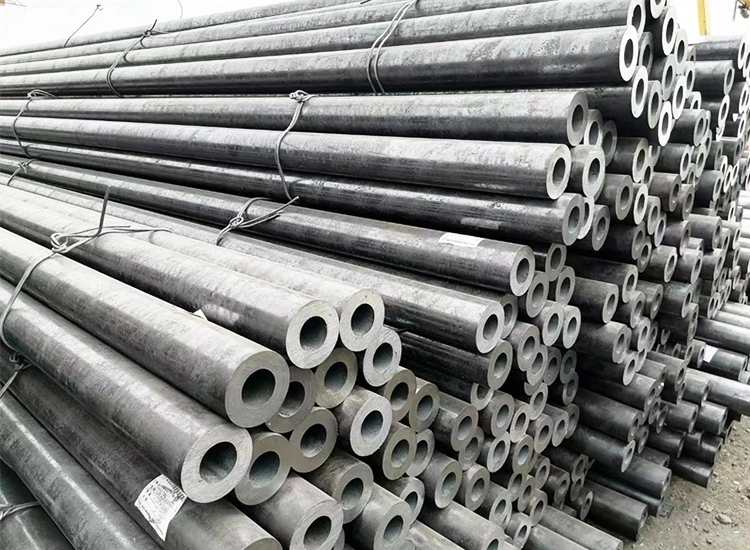
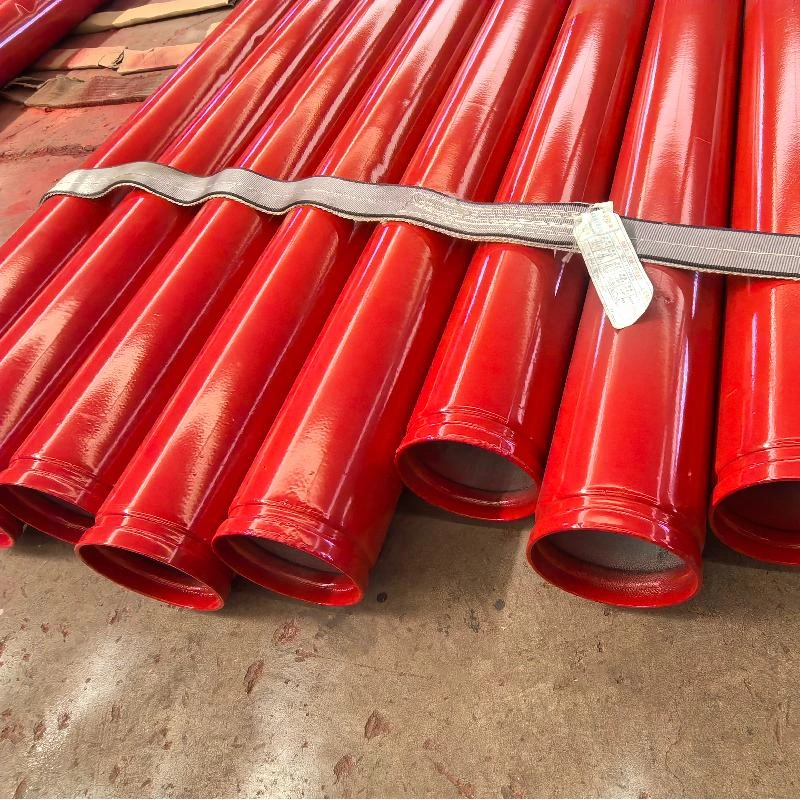
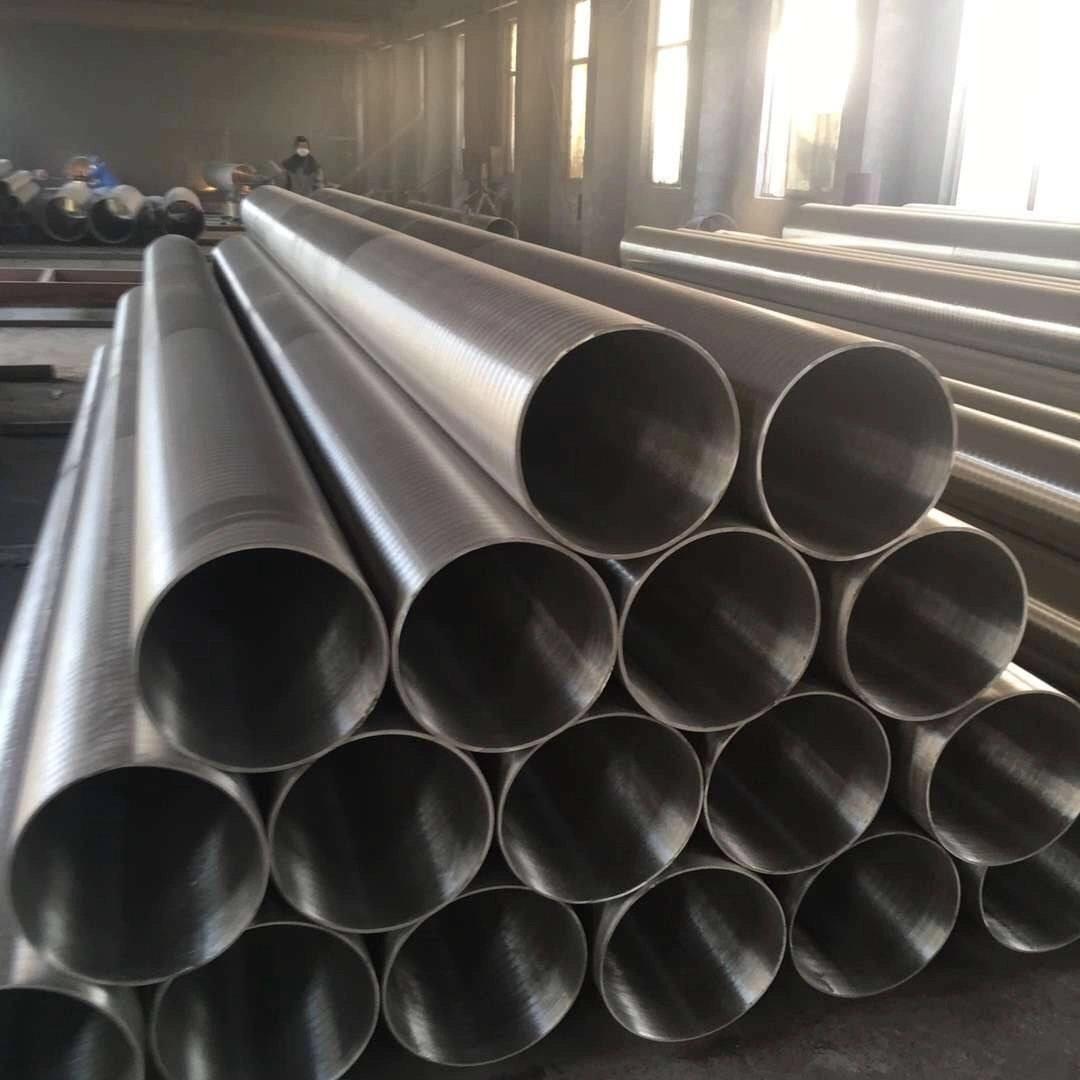
API 5L Steel Pipe is the global benchmark for line pipe used in oil, gas, and fluid transmission infrastructure. Governed by the American Petroleum Institute, the API 5L specification defines the chemical composition, mechanical properties, dimensional tolerances, and testing protocols that ensure pipeline integrity under demanding service conditions. For engineers, procurement managers, and project developers operating in the energy sector, understanding API 5L is not optional — it is foundational to project compliance, operational safety, and supply chain risk management.
This guide covers everything B2B buyers need to know before issuing a purchase order: the distinction between PSL1 and PSL2 quality levels, the grade system from Grade B through X80, dimensional standards, and the procurement controls — mill certifications, third-party inspection, and heat traceability — that separate compliant supply from commercial risk. Whether you are sourcing pipe for an onshore transmission corridor, an offshore platform tie-in, or a sour gas gathering system, the decisions you make at the specification stage directly determine lifecycle cost and regulatory exposure.
1. Understanding API 5L Steel Pipe: Definition & Industry Role
1.1 What Is API 5L Steel Pipe?
API 5L Steel Pipe is a seamless or welded carbon and alloy steel pipe manufactured to the Specification for Line Pipe published by the American Petroleum Institute. The “5L” designation specifically identifies line pipe — pipe engineered to convey oil, natural gas, water, and other fluids under pressure across transmission and distribution networks.
The critical distinction for buyers is that line pipe is not structural pipe. Structural pipe (such as ASTM A53 or A500) is designed to bear mechanical loads in construction applications. API 5L pipe is engineered for internal pressure containment across long-distance pipeline systems, with tightly controlled chemistry and mechanical properties to resist fracture, corrosion, and fatigue over a design life that may exceed 30 years.
Core application context spans midstream and upstream energy: crude oil trunk lines, natural gas transmission pipelines, condensate gathering systems, and produced water injection networks. When a project specification references “line pipe,” API 5L is the operative standard in virtually every global jurisdiction.
1.2 API 5L Pipe Specification Overview
The API 5L specification is maintained by the American Petroleum Institute and is currently published in its 46th Edition. It is technically harmonized with ISO 3183, the international standard for petroleum and natural gas industries line pipe, meaning API 5L and ISO 3183 are substantively equivalent documents — a critical fact for cross-border procurement where European or Asian project owners may reference ISO 3183 while North American operators cite API 5L.
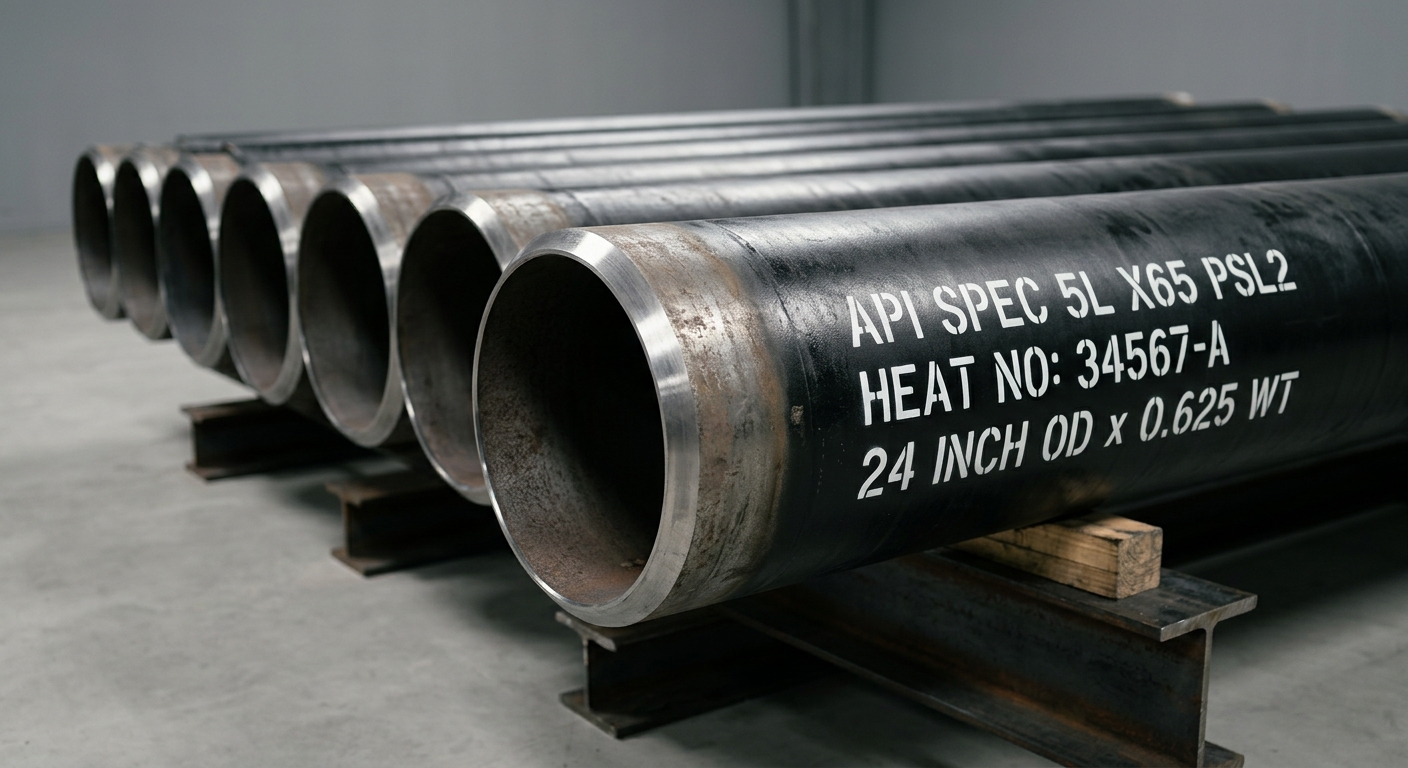
The specification governs pipe manufacturing processes (seamless, ERW, LSAW, SSAW), chemical composition limits by grade, tensile and yield strength requirements, hydrostatic test pressures, non-destructive examination (NDE) methods, and marking/certification requirements. Compliance with API 5L requires that the manufacturing mill hold a valid API monogram license — a verifiable credential buyers must confirm before award.
2. API 5L PSL1 vs PSL2: Key Differences Buyers Must Know
2.1 Product Specification Level (PSL) Classification Explained
The API 5L standard defines two Product Specification Levels — PSL1 and PSL2 — that represent progressively stringent tiers of quality control. PSL1 establishes the baseline manufacturing and testing requirements suitable for standard service conditions. PSL2 imposes additional controls on chemical composition (stricter carbon equivalent limits), mandatory Charpy impact testing, enhanced NDE of weld seams, and full heat and lot traceability documentation.
In practical terms, PSL2 pipe is manufactured under a more rigorous quality management framework that reduces the statistical probability of material defects reaching the field — a non-negotiable requirement for high-consequence pipeline segments.
2.2 How to Choose Between PSL1 and PSL2 for Your Project
The PSL selection decision is driven by service environment, regulatory mandate, and risk tolerance:
- Sour service (H₂S environments): PSL2 is mandatory. Sour service requires NACE MR0175/ISO 15156 compliance, which in turn mandates the tighter chemistry and impact toughness controls that only PSL2 delivers.
- Offshore pipelines: Major operators and certifying authorities (DNV, Lloyd’s) routinely specify PSL2 as a minimum.
- High-pressure onshore transmission: Projects operating above MAOP thresholds in Class 3 or Class 4 locations typically require PSL2.
- Low-pressure, non-hazardous fluid service: PSL1 may be technically and commercially appropriate.
| Comparison Dimension | PSL1 | PSL2 |
|---|---|---|
| Chemical Composition | Standard limits on C, Mn, P, S | Stricter CE (carbon equivalent) limits; max CEpcm controlled |
| Mechanical Testing | Tensile and yield strength | Tensile, yield, and mandatory CVN impact testing |
| Charpy Impact Toughness | Not required | Required at specified temperature |
| Weld Seam NDE | Selective | 100% ultrasonic or radiographic examination |
| Service Environment | Standard onshore, non-sour | Sour service, offshore, high-consequence areas |
| Typical Price Premium | Baseline | +8% to +15% over PSL1, grade-dependent |
The procurement cost premium for PSL2 is real but modest relative to the total installed cost of a pipeline system. Specifying PSL1 in a PSL2-mandated application creates liability exposure that no cost saving justifies.
3. API 5L Grade System, Dimensions & Material Standards
3.1 API 5L Pipe Grades: From Grade B to X80
API 5L grades are designated by minimum yield strength, expressed in thousands of pounds per square inch (ksi). The “X” prefix denotes high-strength grades; the number represents yield strength in ksi.
| Grade | Min. Yield Strength | Typical Application |
|---|---|---|
| Grade B | 35,000 psi (241 MPa) | Low-pressure distribution, water lines |
| X42 | 42,000 psi (290 MPa) | Gathering systems, low-pressure transmission |
| X52 | 52,000 psi (359 MPa) | Mid-pressure onshore transmission |
| X60 | 60,000 psi (414 MPa) | High-pressure gas transmission |
| X65 | 65,000 psi (448 MPa) | Offshore, high-pressure gas |
| X70 | 70,000 psi (483 MPa) | Long-distance high-pressure transmission |
| X80 | 80,000 psi (552 MPa) | Ultra-high-pressure, large-diameter trunk lines |
Grade selection is governed by the pipeline’s Maximum Allowable Operating Pressure (MAOP), wall thickness optimization, and total material cost. Higher grades allow thinner walls at equivalent pressure ratings, reducing material weight and welding costs — a significant economic driver on large-diameter, long-haul projects.
3.2 Dimensional Specifications: OD, Wall Thickness & End Finish
API 5L pipe is produced across a broad dimensional range. Outer diameters span from ½ inch (21.3 mm) to 80 inches (2032 mm), with wall thickness governed by the selected grade and design pressure. Tolerances on OD and WT are defined in API 5L tables and vary by manufacturing process (seamless vs. welded).
Pipe end finishes are specified to suit the joining method:
- PE (Plain End): Cut square, no threading or beveling.
- BE (Beveled End): 30° bevel for butt-weld connections — the standard for transmission pipelines.
- TBE (Threaded & Coupled Both Ends): For smaller-diameter, lower-pressure applications.
Length classifications:
- R1: 4.88 – 7.62 m (16 – 25 ft)
- R2: 7.62 – 10.97 m (25 – 36 ft) — most common for transmission
- R3: 10.97 m and above (36 ft+) — preferred for large-diameter offshore projects to minimize weld joints
Buyers should specify OD, WT, grade, PSL, end finish, and length range in the purchase inquiry to avoid ambiguity in mill quotations.
4. Application Scenarios & Commercial Value for Global Buyers
4.1 Typical Industry Applications of API 5L Line Pipe
API 5L Steel Pipe is the structural backbone of global energy infrastructure. Key application segments include:
- Onshore oil & gas transmission: Cross-country crude oil and natural gas pipelines operating at high pressure over hundreds or thousands of kilometers. X65 and X70 are the dominant grades.
- Offshore pipelines: Subsea flowlines and risers connecting wellheads to platforms or shore terminals. PSL2, X65/X70, with additional requirements for low-temperature toughness.
- Natural gas distribution: Smaller-diameter, lower-pressure networks delivering gas to industrial and municipal end-users. Grade B and X42 are typical.
- Water injection lines: Produced water or seawater injection into reservoirs for pressure maintenance. Corrosion-resistant lining or coating systems are often specified alongside the pipe grade.
- CO₂ service pipelines: Carbon capture and storage (CCS) infrastructure, an emerging high-growth application requiring careful material selection for dense-phase CO₂ compatibility.
4.2 Procurement Considerations: Compliance, Mill Certification & Lead Time
Compliant API 5L procurement requires more than a competitive price. Key due diligence checkpoints:
- Mill Test Report (MTR): Every heat of pipe must be accompanied by an MTR documenting chemical analysis, mechanical test results, heat number, and dimensional verification. Buyers should verify MTR data against the API 5L specification table limits independently.
- API Monogram License: Confirm the supplying mill holds a current, valid API 5L monogram license via the API website’s licensee search tool. License status changes; verify at time of order, not just at qualification.
- Third-Party Inspection (TPI): For high-value or critical-service orders, engage an independent inspection agency (SGS, Bureau Veritas, Intertek) to witness mill testing, dimensional inspection, and marking verification before shipment.
- Heat & Lot Traceability: PSL2 mandates full traceability from raw material heat to finished pipe. Buyers should confirm traceability documentation is part of the delivery package.
- Lead Time Variables: Mill production lead times for API 5L pipe range from 6 to 20 weeks depending on grade, diameter, wall thickness, and mill order book status. X70 and X80 in large diameters carry the longest lead times. Factor mill lead time, coating application (FBE, 3LPE), and logistics into project scheduling.
FAQ: API 5L Steel Pipe — Procurement Pain Points
1. What is the difference between API 5L PSL1 and PSL2, and which one does my pipeline project require?
PSL1 is the baseline quality level; PSL2 adds mandatory Charpy impact testing, stricter chemistry limits, and 100% weld NDE. Your project specification, regulatory framework, and service environment determine the requirement. Sour service, offshore service, and high-consequence onshore locations almost universally require PSL2. When in doubt, specify PSL2 — the cost premium is marginal relative to project risk.
2. Can API 5L Grade X52 or X65 pipe be used in sour gas (H₂S) service environments?
Grade alone does not qualify pipe for sour service. Sour service compliance requires PSL2 designation, hardness limits (typically HRC ≤22), and compliance with NACE MR0175/ISO 15156. Both X52 and X65 can be produced to sour service requirements, but the order must explicitly specify sour service conditions so the mill applies the appropriate chemistry and heat treatment controls.
3. How do I verify that an API 5L steel pipe supplier’s mill certificates are authentic and API-licensed?
Cross-reference the MTR heat number against the pipe marking stenciled on the pipe body. Verify the mill’s API monogram license status at api.org/products-and-services/api-monogram-apiqr. Engage a TPI agency to witness production and confirm documentation integrity. For large orders, consider a pre-shipment inspection (PSI) that includes document audit alongside physical inspection.
Conclusion
API 5L Steel Pipe is not a commodity — it is a precision-engineered product whose specification decisions carry direct consequences for pipeline safety, regulatory compliance, and project economics. The choice between PSL1 and PSL2, the selection of the appropriate grade from B to X80, and the rigor applied to mill certification and third-party inspection collectively determine whether a pipeline performs as designed across its operational lifetime.
For global B2B buyers, the key takeaways are clear: match PSL level to service environment, select grade based on MAOP and wall thickness optimization, and treat mill certification verification as a non-negotiable procurement step rather than an administrative formality. Partnering with API-licensed mills and engaging independent inspection agencies transforms procurement from a cost exercise into a risk management function — the correct framing for any critical energy infrastructure project.