

Quick Answer
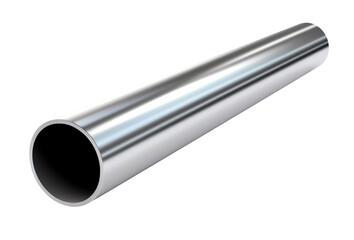
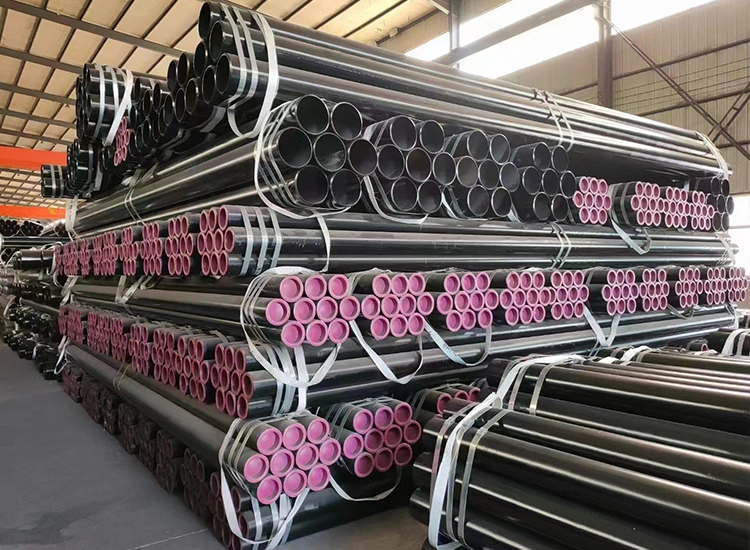
Alloy steel pipes are engineered tubular products containing iron plus controlled additions of chromium, molybdenum, vanadium, and other alloying elements. These grades range from low-alloy ASTM A335 P5 to high-temperature resistant P91/P92, each optimized for specific pressure-temperature service conditions in power generation, petrochemical processing, and critical industrial applications.
Understanding Alloy Steel Pipe Composition and Classification
What Defines Alloy Steel Pipe Material
Alloy steel pipe material incorporates base iron-carbon steel with intentional alloying additions exceeding 1.65% total weight. Key elements include chromium (0.5-9%), molybdenum (0.45-1.0%), and vanadium (0.15-0.30%). These additions enhance creep resistance, oxidation resistance, and mechanical strength at elevated temperatures above 450°C.
ASTM standards classify alloy pipe material into low-alloy (< 5% total alloy content) and high-alloy categories. The distinction determines manufacturing processes, heat treatment requirements, and maximum operating parameters.
Primary Alloy Steel Pipe Grades Structure
International standards recognize three fundamental classification systems for alloy steel pipe grades:
ASTM/ASME Designation: Uses “P-number” coding (P1, P5, P9, P11, P22, P91, P92) indicating chromium-molybdenum content ratios and maximum service temperatures.
DIN/EN Standards: Employs numeric-alpha codes like 10CrMo9-10 or X20CrMoV11-1, where numbers denote carbon content (×100) and alloying element percentages.
Material Grade Groups: Separates into ferritic grades (P5, P9), martensitic grades (P11, P22), and advanced creep-resistant grades (P91, P92, P122).
Core Alloy Steel Pipe Grades and Technical Specifications
Low-Alloy Chromium-Molybdenum Grades
| Grade | Cr Content | Mo Content | Max Temp (°C) | Typical Application |
|---|---|---|---|---|
| ASTM A335 P5 | 4.0-6.0% | 0.45-0.65% | 650 | Refinery heaters |
| ASTM A335 P9 | 8.0-10.0% | 0.90-1.10% | 600 | Steam generators |
| ASTM A335 P11 | 1.0-1.5% | 0.44-0.65% | 593 | Boiler tubes |
P5 alloy steel pipe grades deliver cost-effective performance for moderate-temperature hydrogen service. The 5% chromium content provides adequate oxidation resistance while maintaining weldability without preheat requirements below 25mm wall thickness.
P9 grades serve high-temperature alloy pipe applications in catalytic reformers and thermal crackers. The 9% chromium matrix resists sulfidation attack and maintains tensile strength above 415 MPa at 540°C continuous operation.
Intermediate Alloy Grades for Critical Service
ASTM A335 P22 (2.25Cr-1Mo) represents the most widely specified intermediate alloy pipe material in fossil fuel power plants. Its balanced composition offers:
- Creep rupture strength of 60 MPa at 100,000 hours/540°C
- Weldability with standard SMAW/GTAW processes using ER90S-B3 filler
- Resistance to hydrogen embrittlement in refinery hydrotreating units
P22 alloy steel pipe material requires post-weld heat treatment (PWHT) at 675-760°C for stress relief. This eliminates residual stresses that cause delayed cracking in thick-wall pressure vessels.
Material selection for P22 grade prioritizes normalized-and-tempered (N&T) condition over annealed state. N&T processing increases yield strength by 15-20% while maintaining ductility above 20% elongation.
Advanced High-Temperature Alloy Pipe Grades
| Grade | Alloy System | Creep Strength (MPa) | Max Service Temp |
|---|---|---|---|
| P91 (T91) | 9Cr-1Mo-V-Nb | 100 @ 600°C/100kh | 620°C |
| P92 (T92) | 9Cr-0.5Mo-1.8W-V-Nb | 120 @ 600°C/100kh | 630°C |
| P122 (T122) | 11Cr-0.4Mo-2W-Cu-V-Nb | 140 @ 600°C/100kh | 650°C |
P91 alloy steel pipe grades dominate ultra-supercritical (USC) power plant construction. Vanadium and niobium additions form stable carbides that resist coarsening during long-term exposure at 600°C steam conditions.
Manufacturing P91 requires precise heat treatment: austenitizing at 1040-1080°C, air cooling, then tempering at 730-780°C. Deviation by ±10°C causes microstructure instability and premature creep failure.
P92 high temperature alloy pipe incorporates tungsten substitution for molybdenum, improving creep ductility in thick sections above 60mm. This grade serves main steam lines in 600MW+ generating units operating at 25 MPa/600°C parameters.
Alloy Pipe Material Selection Methodology
Engineering Decision Framework
Alloy pipe material selection follows API RP 530 calculation procedures considering:
Pressure-Temperature Rating: Calculate hoop stress using Barlow’s formula: S = PD/2t. Select grade with allowable stress 25% above calculated value at design temperature.
Corrosion Environment: Hydrogen partial pressure above 7 MPa requires minimum 1.25Cr content. Sulfur content above 0.5 wt% mandates P5 or higher chromium grades.
Fabrication Requirements: Grades above P22 require qualified welding procedures per ASME Section IX. Preheat temperatures range from 150°C (P11) to 260°C (P92) for wall thickness exceeding 19mm.
Comparing Alloy Steel vs Stainless Steel Applications
The alloy steel vs stainless steel decision hinges on oxidation resistance versus cost optimization:
Alloy steel pipes suit reducing atmospheres and internal pressure service where external corrosion is controlled. Chromium content below 12% forms non-protective oxide scales requiring periodic inspection.
Stainless steel grades (304L, 316L) provide superior corrosion resistance through passive chromium oxide layers but cost 3-4× more than P22 alloy material. Use stainless for caustic service, chloride environments, or sanitary applications.
High-temperature alloy pipe selection favors ferritic P91/P92 over austenitic stainless for thermal expansion compatibility. Ferritic grades exhibit 30% lower thermal expansion coefficients, reducing pipe support loads and terminal stresses.
Quality Standards and Material Verification
Is Alloy Steel Good Quality? Manufacturing Controls
Alloy steel pipe quality depends on adherence to ASTM A335/ASME SA335 specifications requiring:
- Ultrasonic testing per ASTM A578 detecting flaws >3mm
- Positive material identification (PMI) verifying chemistry within ±0.02% tolerance
- Mechanical testing including tensile, impact, and hardness per ASTM A370
Premium-grade suppliers provide mill test reports (MTR) documenting heat treatment curves, grain size (ASTM E112), and traceability to original melt batch.
Certification and Traceability Requirements
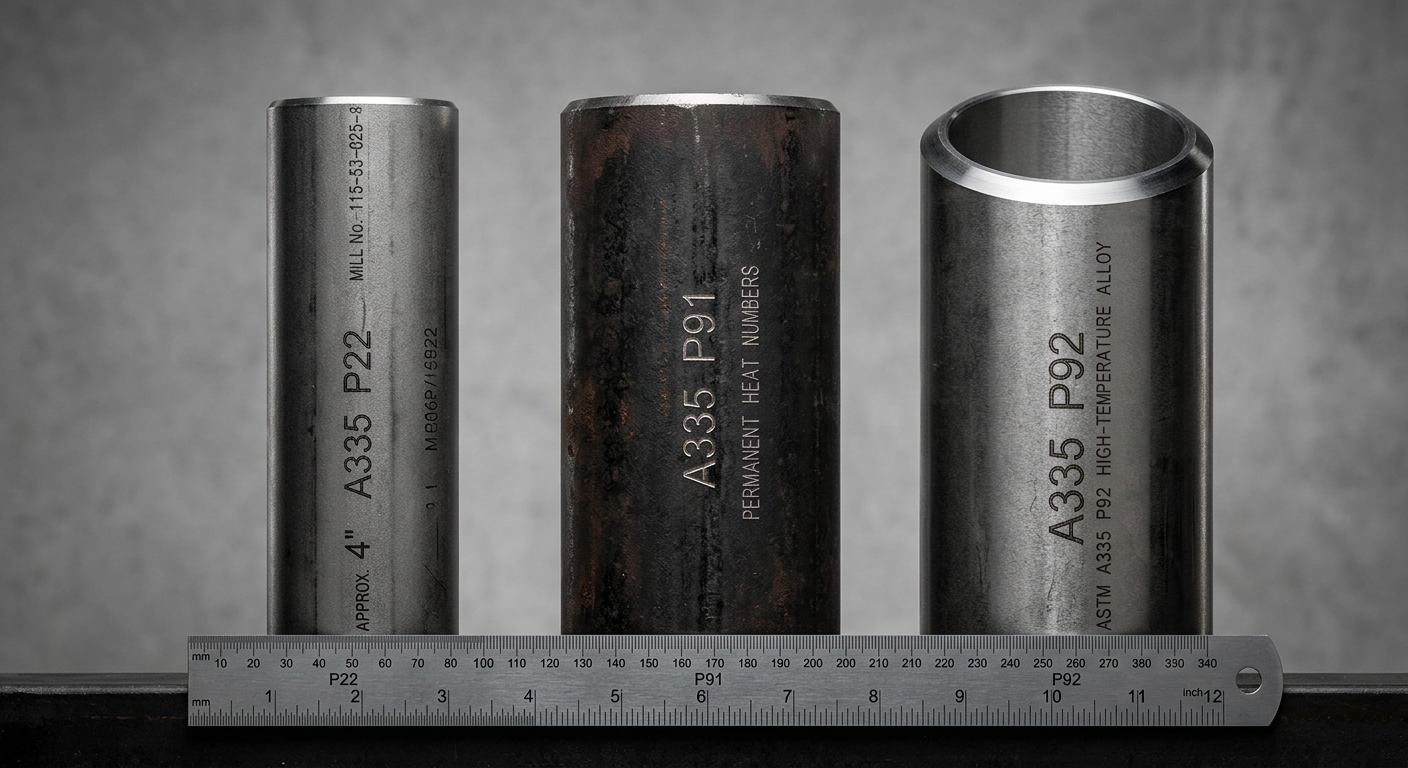
Each alloy steel pipe length receives permanent low-stress stamping indicating:
- ASTM specification and grade (e.g., “A335 P91”)
- Heat number for material traceability
- Manufacturer identification and production date
- Third-party inspection witness marks (Lloyd’s, TÜV, DNV)
Critical applications mandate 100% radiographic examination per ASME B31.1 power piping code, increasing material costs by 15-25% but ensuring zero volumetric defects.
Industrial Applications and Case Studies
Power Generation Sector Implementation
Ultra-supercritical coal plants utilize three-tier piping systems:
Main Steam Lines: P92 alloy steel pipe grades for 600°C/30 MPa service, wall thickness 80-120mm, achieving 45% thermal efficiency.
Hot Reheat Lines: P91 material for 580°C/6 MPa conditions, reducing material costs 30% versus P92 while maintaining adequate creep life.
Cold Reheat/Feedwater: P22 grades for temperatures below 540°C, offering cost-effective performance with established fabrication practices.
Petrochemical Processing Applications
Delayed coking units deploy P5 alloy pipe material in fractionator overhead systems handling 400°C hydrocarbon vapors with 0.5% H₂S content. The 5Cr composition resists sulfidation while maintaining weldability for field repairs.
Hydrocracker reactor effluent piping specifies P9 high temperature alloy pipe for 450°C/17 MPa hydrogen-rich service. Chromium content above 8% prevents hydrogen attack per API RP 941 damage mechanisms.
Hydrogen Production and Refining
Steam methane reformers employ P22 alloy steel pipe grades in convection sections where flue gas temperatures reach 540°C. The 2.25Cr-1Mo composition balances oxidation resistance with thermal fatigue durability through 20-year service life.
Frequently Asked Questions
Q: What is alloy steel pipe?
Tubular product containing iron plus chromium, molybdenum, vanadium additions exceeding 1.65% total weight for enhanced high-temperature strength.
Q: What are three types of steel pipes?
Carbon steel (plain iron-carbon), alloy steel (controlled alloying additions), and stainless steel (minimum 10.5% chromium content).
Q: Is alloy steel good quality?
Quality depends on manufacturing compliance with ASTM standards, proper heat treatment, and verification through mechanical testing and PMI analysis.
Q: Is alloy steel vs stainless steel better?
Alloy steel suits high-pressure/temperature service in non-corrosive environments at 25-35% lower cost than stainless grades.
Q: What is alloy steel material composition?
Base iron-carbon matrix with intentional chromium (0.5-12%), molybdenum (0.45-1.0%), and carbide-forming elements like vanadium or niobium.
Q: How to select alloy steel pipe grades?
Calculate design stress, evaluate corrosion environment, verify fabrication capabilities, and compare lifecycle costs across candidate materials.
Q: What are P91 and P92 differences?
P92 contains tungsten substitution improving creep strength by 15-20% and allowing 10°C higher operating temperatures versus P91.
Q: Do alloy pipes require special welding?
Yes. Grades above P11 mandate qualified procedures, controlled preheat/interpass temperatures, and mandatory post-weld heat treatment per ASME Section IX.
Conclusion and Professional Recommendations
Different grades of alloy steel pipe span low-alloy P5 through advanced P122 materials, each engineered for specific pressure-temperature-corrosion service envelopes. Selection methodology must balance initial material costs against lifecycle performance, fabrication complexity, and operational reliability requirements.
For new installations, specify P91/P92 high temperature alloy pipe in ultra-supercritical power applications to maximize thermal efficiency. Retrofit projects benefit from P22 material’s established supply chain and qualified contractor base. Always verify supplier certifications, demand full material traceability, and enforce third-party inspection protocols to ensure alloy steel pipe quality meets design intent.
Consult ASME B31.1/B31.3 piping codes and engage metallurgical expertise during alloy pipe material selection to optimize performance and regulatory compliance.