

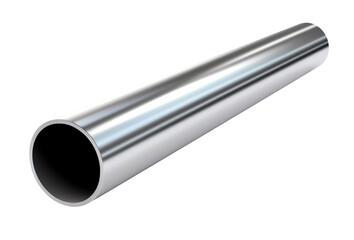
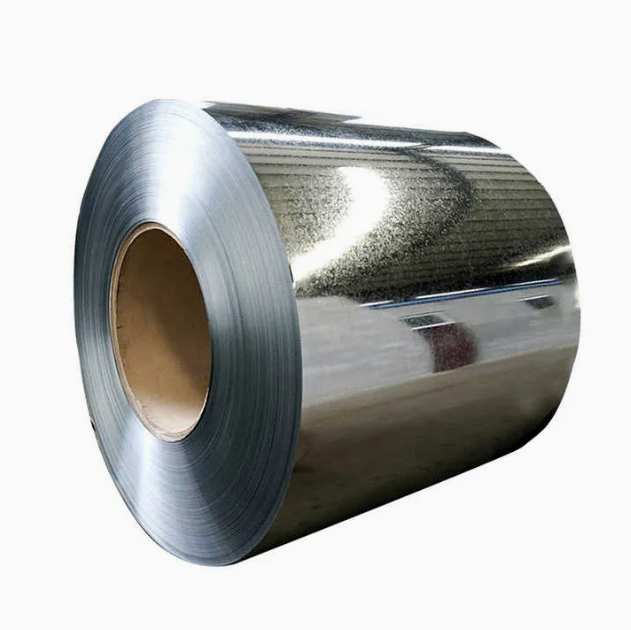
Quick Answer:Galvanized steel pipe outperforms PVC in high-pressure, high-temperature, and structural applications. PVC wins on corrosion resistance, cost, and weight in low-pressure residential plumbing. The “better” choice depends entirely on application-specific parameters.
Material Composition & Core Physical Properties
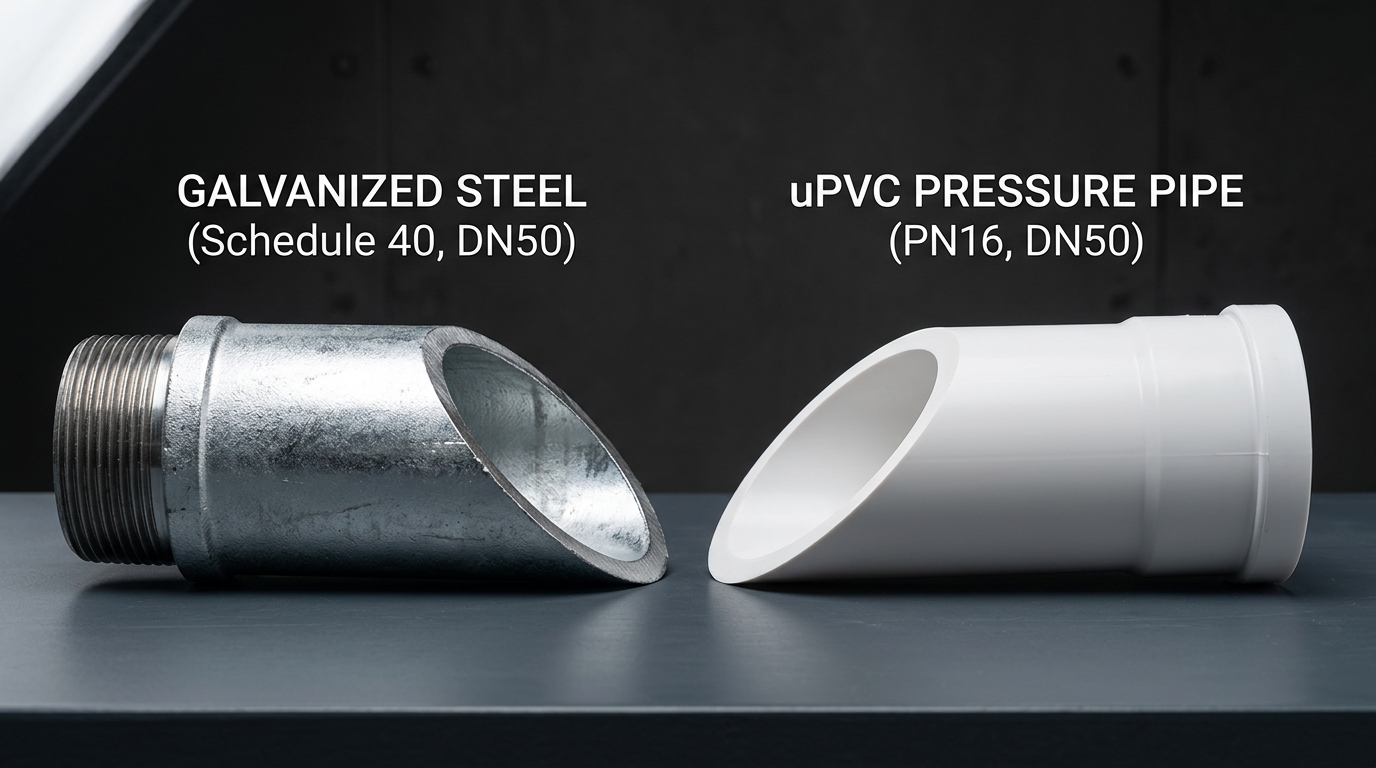
1.Galvanized Steel Pipe: Structure & Coating Mechanics
Galvanized steel pipe is carbon steel coated with a zinc layer (minimum 45 µm per ASTM A123) via hot-dip galvanization. The zinc layer functions as a sacrificial anode, oxidizing preferentially to protect the underlying steel substrate.
Key physical properties:
| Property | Galvanized Steel Pipe | PVC Pipe |
|---|---|---|
| Tensile Strength | 330–480 MPa | 40–55 MPa |
| Density | 7.85 g/cm³ | 1.38 g/cm³ |
| Max Operating Temp | 200°C (dry) / 60°C (water) | 60°C (uPVC) |
| Thermal Expansion Coefficient | 12 µm/m·°C | 54–80 µm/m·°C |
| Standard Pressure Rating (DN50) | Up to 4.0 MPa | 0.8–1.6 MPa |
- Zinc coating thickness directly determines service life: 45 µm yields ~20 years; 85 µm exceeds 50 years in neutral soil.
- Steel substrate provides dimensional stability under mechanical load, vibration, and seismic stress.
2. PVC Pipe: Polymer Structure & Limitations
PVC (polyvinyl chloride) pipe is extruded from thermoplastic resin, available in uPVC (unplasticized) and CPVC (chlorinated) grades.
- uPVC rated to 60°C; CPVC extends to 93°C.
- No metallic corrosion pathway — immune to electrochemical oxidation.
- Susceptible to UV degradation without carbon black or titanium dioxide stabilizers.
- Impact resistance drops sharply below 0°C, increasing fracture risk in freeze-thaw cycles.
Corrosion Resistance: Galvanized Steel Pipe vs PVC Under Acidic Soil Conditions
This is the most critical variable in buried infrastructure decisions.
1. Galvanized Steel Pipe Corrosion Behavior
- Zinc coating corrodes at 0.005–0.02 mm/year in neutral soil (pH 6–8).
- In acidic soil (pH < 5), zinc dissolution accelerates to 0.05–0.1 mm/year, reducing effective service life to 10–15 years.
- ASTM A153 and ISO 1461 define minimum zinc mass per unit area to predict field longevity.
- Chloride-rich or sulfate-heavy soils (common near coastal zones or industrial sites) further accelerate pitting corrosion beneath the zinc layer.
Soil corrosivity classification (AWWA C105):
| Soil pH | Corrosivity Class | Estimated Galvanized Pipe Life |
|---|---|---|
| > 8.0 | Low | 40–60 years |
| 6.0–8.0 | Moderate | 25–40 years |
| 4.5–6.0 | High | 10–20 years |
| < 4.5 | Severe | < 10 years |
2. PVC Corrosion Resistance Profile
- PVC exhibits zero electrochemical corrosion — no zinc, no iron, no ionic exchange with soil.
- Resistant to acids (pH 2–12), alkalis, and most inorganic salts.
- Organic solvents (ketones, esters, aromatic hydrocarbons) cause swelling and structural degradation.
- In acidic soil conditions, PVC pipe maintains full structural integrity, making it the technically superior choice for buried water mains in low-pH environments.
Direct answer: For acidic soil (pH < 6), PVC demonstrates measurably superior corrosion resistance compared to galvanized steel pipe.
Pressure Rating & Structural Performance
1. How Pressure Rating Variance Impacts Galvanized Pipe Selection Over PVC
Galvanized steel pipe follows ASTM A53 / BS 1387 schedules. Pressure capacity scales with wall thickness (Schedule 40, 80, 160).
- Schedule 40 galvanized pipe (DN50): rated 4.0 MPa working pressure.
- Standard PVC pressure pipe (PN16): rated 1.6 MPa.
- For industrial systems exceeding 2.0 MPa, galvanized steel pipe is the only viable option between the two materials.
Pressure rating comparison by nominal diameter:
| Nominal Diameter | Galvanized Steel (Sch 40) | PVC PN16 | PVC PN10 |
|---|---|---|---|
| DN25 (1″) | 6.0 MPa | 1.6 MPa | 1.0 MPa |
| DN50 (2″) | 4.0 MPa | 1.6 MPa | 1.0 MPa |
| DN100 (4″) | 3.0 MPa | 1.6 MPa | 1.0 MPa |
| DN200 (8″) | 2.5 MPa | 1.25 MPa | 0.8 MPa |
- Fire suppression systems (NFPA 13) require minimum 1.2 MPa sustained pressure — both materials qualify at smaller diameters, but surge pressure tolerance favors galvanized steel.
- Water hammer events generate pressure spikes 2–5× operating pressure; steel’s elastic modulus (200 GPa) absorbs these surges far better than PVC (3 GPa).
Thermal Expansion & Long-Term Dimensional Stability
1. How Thermal Expansion Coefficient Affects Galvanized vs PVC Pipe Longevity
The thermal expansion coefficient (TEC) gap between these two materials is significant and often underestimated in installation planning.
- Galvanized steel TEC: 12 µm/m·°C
- PVC TEC: 54–80 µm/m·°C (4.5–6.7× higher than steel)
Practical implications:
- A 10-meter PVC pipe run exposed to a 30°C temperature swing expands 16–24 mm.
- The equivalent galvanized steel run expands only 3.6 mm.
- PVC systems require expansion loops or slip joints every 6–9 meters in above-ground installations.
- Galvanized steel pipe requires expansion compensation only in runs exceeding 30 meters under the same thermal conditions.
- Joint fatigue from repeated thermal cycling is the primary cause of PVC leak failures in above-ground industrial installations — a failure mode essentially absent in galvanized steel systems.
For outdoor above-ground pipelines, hot water recirculation systems, and industrial process lines with temperature fluctuations, galvanized steel pipe demonstrates significantly superior dimensional stability and long-term joint integrity.
Potable Water Safety: Zinc Leaching & Regulatory Compliance
1. How Zinc Leaching in Galvanized Pipe Affects Potable Water Safety Compliance
Zinc leaching is the most contested health concern associated with galvanized steel pipe for water supply.
- WHO guideline for zinc in drinking water: 3.0 mg/L (aesthetic threshold; not a health-based limit).
- EPA Secondary Standard (40 CFR Part 143): 5.0 mg/L.
- New galvanized pipe in stagnant water conditions can release zinc at 0.1–2.0 mg/L during the first 12 months of service.
- After passivation (zinc carbonate layer formation), leaching drops to < 0.05 mg/L — well within all regulatory limits.
Critical concern: Interior zinc coating degradation in older galvanized pipe (>30 years) exposes bare steel, generating iron oxides (“red water”) and potentially releasing lead from legacy solder joints — a documented issue in pre-1986 U.S. plumbing systems.
- NSF/ANSI 61 certification is required for galvanized fittings used in potable water systems in North America.
- PVC pipe certified to NSF/ANSI 61 and NSF 14 presents zero metallic leaching risk, making it the preferred material for new residential potable water installations under current plumbing codes (IPC, UPC).
Total Lifecycle Cost Analysis
1. How Total Lifecycle Cost Differentiates Galvanized Steel Pipe from PVC Installations
Cost comparison must account for material, installation labor, maintenance, and replacement cycles.
| Cost Category | Galvanized Steel Pipe | PVC Pipe |
|---|---|---|
| Material Cost (DN50, per meter) | $8–$18 USD | $2–$6 USD |
| Installation Labor (per meter) | $15–$30 USD | $8–$15 USD |
| Joint Method | Threaded / welded | Solvent cement / push-fit |
| Expected Service Life | 30–70 years | 25–50 years |
| Maintenance Frequency | Every 10–15 years (inspection) | Every 15–20 years |
| Replacement Cost Factor | High (labor-intensive) | Low (lightweight, modular) |
| 30-Year Total Cost (DN50, 100m run) | ~$4,200–$6,500 USD | ~$1,800–$3,200 USD |
- PVC delivers a 35–45% lower 30-year total cost in standard residential and commercial applications.
- Galvanized steel pipe justifies its premium in high-pressure industrial, fire suppression, and structural sleeve applications where PVC cannot meet mechanical specifications.
- Galvanized pipe’s recyclability (steel scrap value) partially offsets end-of-life disposal costs — a lifecycle advantage absent in PVC.
Real-World Application Scenarios
Scenario A: Municipal Water Distribution in Coastal Soil
- Soil pH: 5.2, high chloride content
- Recommended: PVC (AWWA C900) — eliminates electrochemical corrosion risk; 50-year design life achievable without cathodic protection.
- Galvanized steel pipe would require polyethylene encasement (AWWA C105) to achieve comparable longevity, adding 18–25% to installed cost.
Scenario B: Industrial Fire Suppression System
- Operating pressure: 2.8 MPa; temperature range: 5–65°C
- Recommended: Galvanized steel pipe (ASTM A795, Schedule 40) — PVC cannot meet NFPA 13 pressure and temperature requirements at this specification.
- Galvanized coating provides corrosion protection in wet-pipe systems; listed fittings ensure FM/UL compliance.
Scenario C: Residential Hot/Cold Plumbing Retrofit
- Building age: 1975; existing galvanized pipe showing red water
- Recommended: Replace with CPVC or PEX — eliminates zinc/iron leaching, reduces installation labor by 40%, and meets current NSF/ANSI 61 potable water standards.
- Galvanized steel pipe replacement with new galvanized is not recommended under current IPC/UPC codes for potable water in residential applications.
FAQ: Galvanized Steel Pipe vs PVC — Rapid Reference
Q1: How does galvanized steel pipe corrosion resistance compare to PVC under acidic soil conditions?
PVC is superior; galvanized zinc dissolves rapidly below pH 5.5.
Q2: How does pressure rating variance impact galvanized pipe selection over PVC?
Above 2.0 MPa, galvanized steel is mandatory; PVC maxes at ~1.6 MPa (PN16).
Q3: How does thermal expansion coefficient affect galvanized versus PVC pipe longevity?
PVC expands 5× more than steel; joint fatigue shortens above-ground PVC service life.
Q4: How does zinc leaching in galvanized pipe affect potable water safety compliance?
New pipe may exceed aesthetic thresholds temporarily; NSF/ANSI 61 compliance required.
Q5: How does total lifecycle cost differentiate galvanized steel pipe from PVC installations?
PVC costs 35–45% less over 30 years in standard applications.
Q6: Can galvanized steel pipe be used for underground water mains?
Yes, with polyethylene encasement in corrosive soils per AWWA C105.
Q7: Is PVC pipe approved for fire suppression systems?
CPVC (listed per UL 1821) is approved for light-hazard residential sprinkler systems only.
Q8: Which pipe material is better for seismic zones?
Galvanized steel pipe — superior ductility and joint integrity under seismic displacement.
Conclusion & Professional Recommendation
Neither galvanized steel pipe nor PVC is universally superior. The technically correct answer is application-dependent:
- Choose galvanized steel pipe for: high-pressure industrial systems (>2.0 MPa), fire suppression, structural applications, seismic zones, and high-temperature environments.
- Choose PVC for: buried water mains in acidic or corrosive soils, residential potable water supply, low-pressure drainage, and cost-sensitive projects.
For engineers and procurement teams: specify material based on operating pressure, soil chemistry, temperature range, regulatory compliance requirements (NSF/ANSI 61, NFPA 13, AWWA standards), and 30-year lifecycle cost — not material preference alone.
References & Standards
- ASTM A53 / A123 / A153 / A795 — Galvanized Steel Pipe Specifications
- AWWA C105 / C900 — Underground Pipe Installation Standards
- NSF/ANSI 61 — Drinking Water System Components
- NFPA 13 — Standard for the Installation of Sprinkler Systems
- ISO 1461 — Hot-Dip Galvanized Coatings on Fabricated Iron and Steel Articles
- WHO Guidelines for Drinking-Water Quality, 4th Edition (2017)
- EPA Secondary Drinking Water Regulations, 40 CFR Part 143
- International Plumbing Code (IPC) 2021 Edition
- UL 1821 — Thermoplastic Sprinkler Pipe and Fittings for Fire Protection Service