

Selecting the correct galvanized steel profile is a critical procurement decision that directly affects structural integrity, installation efficiency, and long-term project cost. Galvanized square rectangular tubes and galvanized steel round pipes share the same base material and corrosion-protection chemistry, yet their geometric differences produce fundamentally distinct mechanical behaviors, connection methodologies, and end-use suitability.
This article delivers a structured B2B comparison across five dimensions: cross-section geometry, manufacturing and galvanizing standards, mechanical performance, industry application scenarios, and procurement variables. Whether you are sourcing for steel framing, fluid conveyance, scaffolding, or agricultural infrastructure, understanding the trade-offs between these two profiles ensures specification accuracy, reduces material waste, and supports compliance with international standards including ASTM, EN, and GB/T. Procurement engineers, structural designers, and project managers will find actionable selection criteria to confidently match profile geometry to project demand.
Defining the Products: Geometry, Manufacturing & Galvanizing Process
1. Profile Geometry & Cross-Section Characteristics
The most fundamental distinction between these two product families lies in their cross-sectional geometry, which governs nearly every downstream performance characteristic.
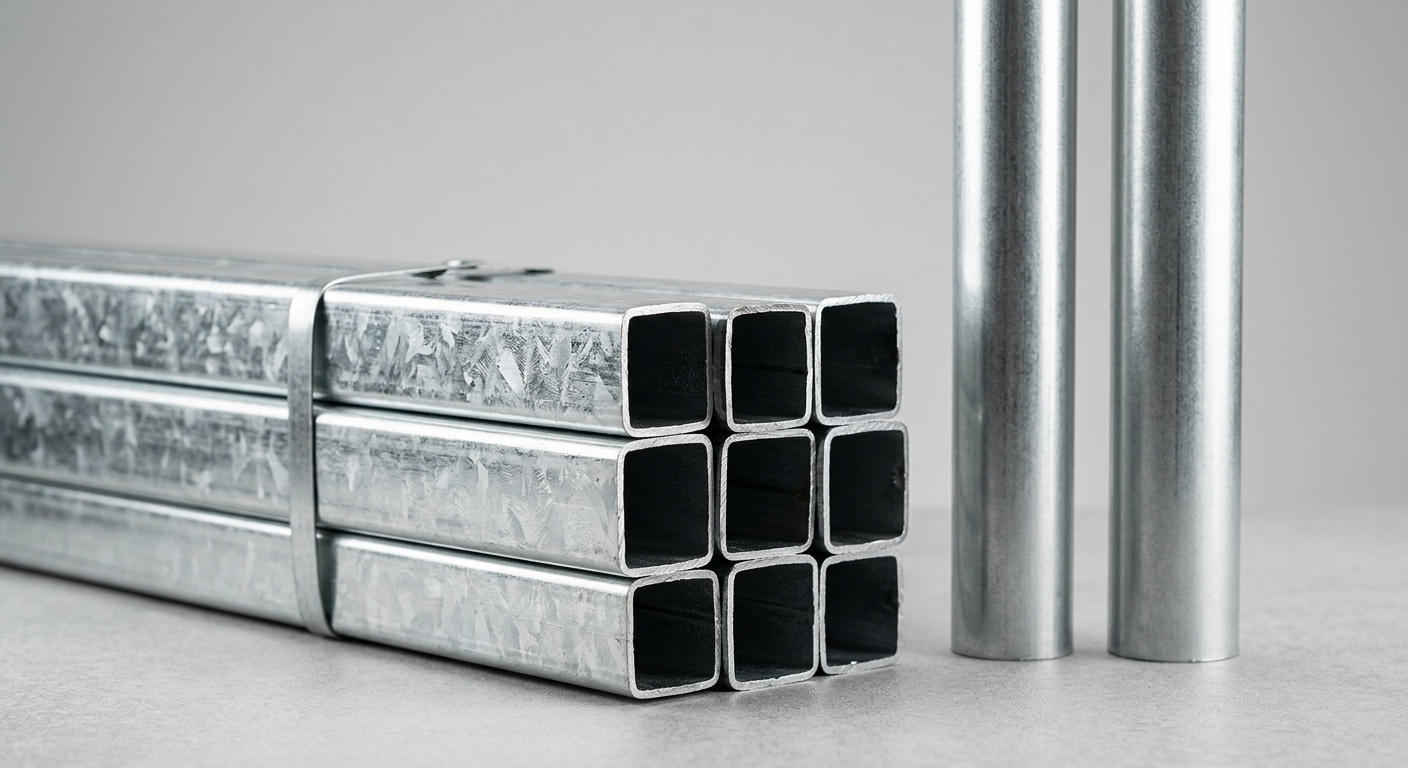
Galvanized square rectangular tubes feature flat, parallel sides with defined corner radii. A square tube has equal width and height (e.g., 40×40 mm, 100×100 mm), while a rectangular tube has unequal dimensions (e.g., 40×60 mm, 50×100 mm). This flat-face geometry produces a higher section modulus along the strong axis, making rectangular profiles particularly efficient under unidirectional bending loads. Flat surfaces also simplify welding, bolting, and bracket attachment — a practical advantage in fabricated steel structures.
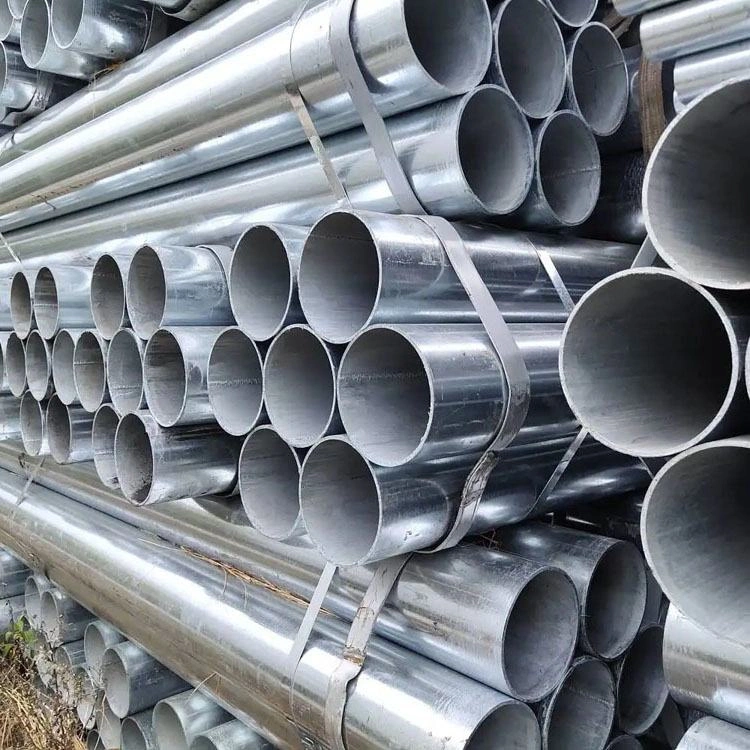
Galvanized steel round pipes have a circular cross-section with a uniform wall thickness. The circular form distributes stress evenly in all radial directions, producing superior hoop strength and uniform torsional stiffness. The moment of inertia is equal in all axes, which is advantageous for columns subject to multi-directional loading or for applications involving internal fluid pressure.
From a manufacturing standpoint, both profiles are typically produced via electric resistance welding (ERW) of cold-rolled or hot-rolled steel strip. Round pipe can also be produced by seamless methods for high-pressure applications, though galvanized seamless pipe is less common in standard structural supply.
2. Hot-Dip Galvanizing vs. Pre-Galvanized: Process Standards
Galvanizing method significantly affects coating durability and application suitability. Two primary processes apply to both profile types:
- Pre-galvanized (in-line galvanized): Steel strip is galvanized before tube forming. Zinc coating weight typically ranges from 60–275 g/m² (equivalent to approximately 8–40 µm per side). Governed by standards such as ASTM A500 (structural tubing) and EN 10219 (cold-formed hollow sections). Cut ends remain uncoated.
- Hot-dip galvanized (post-fabrication HDG): Completed tubes or pipes are immersed in molten zinc at ~450°C. Coating thickness typically reaches 45–85 µm (320–600 g/m²), conforming to ASTM A123 or EN ISO 1461. Full surface coverage including welds and cut ends provides superior corrosion protection for outdoor and marine environments.
Round pipe for fluid conveyance may additionally conform to ASTM A53 (galvanized welded and seamless pipe), which specifies internal and external zinc coating requirements for water, gas, and steam service.
Mechanical & Structural Performance Comparison
1. Strength, Rigidity & Torsional Resistance
The geometric differences between square/rectangular tubes and round pipes translate directly into measurable performance differences under load.
Bending performance: Rectangular tubes excel in applications where load is applied predominantly in one plane. The higher moment of inertia along the strong axis allows a rectangular tube to carry greater bending loads than a round pipe of equivalent weight. This makes rectangular hollow sections (RHS) the preferred choice for beams, lintels, and horizontal structural members.
Torsional stiffness: Closed hollow sections — both square and round — exhibit excellent torsional resistance compared to open sections (I-beams, channels). Between the two, round pipes offer marginally superior torsional stiffness per unit weight due to the efficiency of the circular cross-section in resisting shear flow. This advantage is relevant in applications such as drive shafts, rotating frames, or structures subject to eccentric loading.
Axial load (column) capacity: For columns under pure axial compression, round pipes are theoretically more efficient because their radius of gyration is equal in all directions, eliminating the risk of weak-axis buckling that can affect rectangular sections. However, square hollow sections (SHS) approach this efficiency and are favored where flat-face connections to beams or panels are required.
Connection practicality: Square and rectangular tubes offer a decisive advantage in fabricated assemblies. Flat faces enable flush welding, direct bolting, and simplified gusset plate attachment without the need for curved saddle cuts or specialized fittings that round pipe connections require.
2. Weight-to-Strength Ratio & Material Efficiency
| Parameter | Galvanized Square/Rectangular Tube | Galvanized Steel Round Pipe |
|---|---|---|
| Standard Size Range | 20×20 mm – 400×400 mm (SHS); 20×40 mm – 200×400 mm (RHS) | OD 21.3 mm – 508 mm |
| Wall Thickness | 1.2 mm – 16 mm | 1.8 mm – 20 mm |
| Unit Weight (example) | 40×40×3 mm ≈ 3.48 kg/m | OD 48.3×3.2 mm ≈ 3.56 kg/m |
| Zinc Coating Grade | Z275 (pre-galv.) / 85 µm (HDG) | Z275 (pre-galv.) / 85 µm (HDG) |
| Tensile Strength | 310–450 MPa (S235–S355) | 330–415 MPa (Grade A/B, ASTM A53) |
| Typical Application | Structural framing, furniture, greenhouse | Fluid conveyance, scaffolding, piling |
Both profiles offer comparable tensile strength ranges when sourced to equivalent steel grades. The efficiency advantage shifts based on load type: rectangular for bending-dominant structures, round for pressure-dominant or multi-axial load environments.
Application Scenarios & Industry Use Cases
1. Galvanized Square & Rectangular Tube Applications
The flat-face geometry of galvanized square and rectangular tubes makes them the default choice across a broad range of fabricated steel applications:
- Steel framing and structural supports: SHS and RHS are standard in light steel framing, mezzanine floors, and industrial racking systems. The flat surface simplifies connection detailing and reduces fabrication labor.
- Greenhouse and agricultural structures: Pre-galvanized rectangular tubes (typically Z275 coating) provide the corrosion resistance needed in high-humidity growing environments while offering the rigidity to span greenhouse bays efficiently.
- Furniture and architectural metalwork: Square tubes are widely used in commercial furniture frames, display systems, and stair balustrades where clean geometry and weld-finish quality are priorities.
- Curtain wall sub-framing and conveyor systems: Rectangular tubes serve as mullion carriers and conveyor side rails, where consistent flat surfaces are required for component alignment and fastening.
- Fencing and gate fabrication: HDG square tubes are a cost-effective choice for perimeter security fencing, offering long service life with minimal maintenance in outdoor environments.
2. Galvanized Round Pipe Applications
The circular cross-section and pressure-containment capability of galvanized steel round pipe define its application domain:
- Water and gas distribution: ASTM A53 galvanized pipe is a legacy standard for potable water and natural gas infrastructure, where the zinc lining provides internal corrosion protection in addition to external coverage.
- Scaffolding and temporary works: Standard 48.3 mm OD galvanized pipe is the universal scaffolding tube dimension, compatible with all major coupler systems globally.
- Handrails and guardrails: Round pipe’s smooth, continuous surface is ergonomically suited to handrail applications in commercial buildings, stairways, and industrial walkways.
- Pile foundations and ground anchors: Large-diameter HDG round pipe sections are used as driven piles in marine and coastal construction, where uniform hoop strength resists soil pressure from all directions.
- HVAC and mechanical services: Galvanized round pipe sections are used in air handling ducting, compressed air distribution, and process piping where flow efficiency and pressure integrity are required.
Procurement Considerations: Standards, Compliance & Cost Factors
1. International Standards & Compliance Requirements
Specifying the correct standard is essential for import/export compliance, insurance coverage, and structural certification. Key standards by region:
| Standard | Profile Type | Scope |
|---|---|---|
| ASTM A500 | Square/Rectangular Tube | Cold-formed structural tubing, US market |
| ASTM A53 | Round Pipe | Welded/seamless galvanized pipe, fluid service |
| EN 10219 | Square/Rectangular/Round | Cold-formed hollow sections, European market |
| EN ISO 1461 | All profiles | Hot-dip galvanizing coating requirements |
| GB/T 6728 | Square/Rectangular Tube | Cold-formed hollow sections, China domestic |
| GB/T 3091 | Round Pipe | Low-pressure fluid galvanized pipe, China |
For coastal, industrial, or chemically aggressive environments, specify HDG coating to EN ISO 1461 with a minimum average thickness of 45 µm for tube wall thickness below 6 mm, increasing to 70 µm for heavier sections. Pre-galvanized Z275 (275 g/m²) is adequate for interior or semi-sheltered structural applications.
Procurement documentation should request mill test certificates (MTC) conforming to EN 10204 3.1 or equivalent, confirming chemical composition, mechanical properties, and zinc coating test results.
2. Pricing Drivers & Supply Chain Variables
Several variables influence the landed cost of galvanized steel profiles:
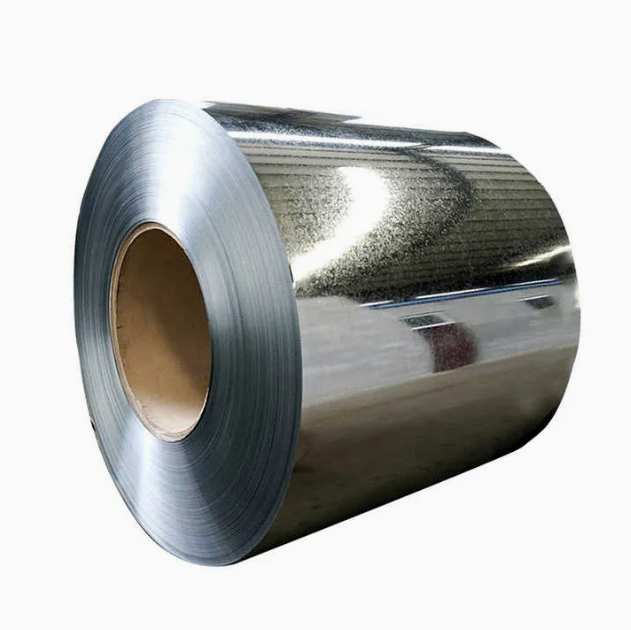
- Base material cost: Both profiles use hot-rolled coil (HRC) or cold-rolled coil (CRC) as feedstock. HRC price volatility in global markets directly affects tube and pipe pricing, typically with a 4–8 week lag from mill to distributor.
- Zinc price: Zinc trades on the LME and represents 8–15% of the total cost of HDG products. Heavier coating specifications (85 µm vs. 45 µm) increase zinc consumption and unit cost proportionally.
- Surface finish options: Standard supply includes mill finish or lightly oiled to prevent transit corrosion. Passivated or chromate-treated surfaces command a small premium but extend shelf life in humid storage conditions.
- MOQ and lead time: Standard sizes in pre-galvanized finish are typically ex-stock with MOQs from 1–5 tonnes. Custom dimensions or HDG post-fabrication processing require 2–6 weeks lead time and higher MOQs (10+ tonnes).
- Logistics: Round pipe, due to its cylindrical form, achieves lower packing density per container compared to bundled square/rectangular tubes, which can affect freight cost per tonne.
Conclusion
Galvanized square rectangular tubes and galvanized steel round pipes are complementary products, each optimized for a distinct set of structural and functional demands. The selection logic is straightforward: choose square or rectangular hollow sections when flat-face connections, directional bending efficiency, or fabrication simplicity are priorities; choose round pipe when uniform multi-directional strength, internal pressure containment, or flow conveyance is the primary requirement.
Verify galvanizing specification against the environmental corrosivity class of the installation site — this single decision has the greatest impact on long-term service life and maintenance cost. Align procurement documentation to the applicable international standard (ASTM, EN, or GB/T) to ensure compliance, facilitate customs clearance, and support project certification requirements. Engaging a supplier who can provide certified mill test reports, flexible coating options, and both pre-galvanized and HDG supply capability will reduce specification risk and streamline your supply chain.