

The question of whether stainless pipe outperforms conventional steel pipe in strength is more nuanced than a simple yes or no. For B2B procurement teams, the decision hinges on a multi-dimensional analysis: mechanical properties, corrosion resistance, operating environment, compliance requirements, and total cost of ownership over the asset lifecycle.
This article provides a direct technical comparison of stainless steel pipe (Grades 304 and 316) against carbon steel pipe (Schedule 40 and Schedule 80), examining tensile and yield strength, fatigue performance, pressure ratings, and real-world durability across industrial environments. Whether you are specifying pipe for chemical processing, marine infrastructure, food production, or high-pressure fluid systems, this guide delivers the engineering and commercial data you need to make a defensible procurement decision.
The short answer: carbon steel pipe can exceed stainless pipe in raw tensile strength in certain configurations, but stainless pipe for industrial use consistently delivers superior long-term performance when corrosion, hygiene, and lifecycle cost are factored in. The right choice depends on your specific application — and this article maps that decision precisely.
Understanding the Core Materials — Stainless Pipe vs Steel Pipe
Metallurgical Composition & Structural Differences
The fundamental difference between stainless pipe and carbon steel pipe lies in alloy composition. Carbon steel pipe is primarily iron and carbon (0.2–2.1% carbon by weight), with minimal alloying elements. This microstructure delivers high hardness and tensile strength but leaves the material vulnerable to oxidation and corrosive attack without protective coatings.
Stainless steel pipe derives its defining properties from a minimum chromium content of 10.5% by mass. This chromium reacts with atmospheric oxygen to form a self-repairing passive oxide layer (Cr₂O₃) on the pipe surface — the mechanism that gives stainless pipe its corrosion resistance. Austenitic grades (304, 316) also incorporate 8–12% nickel, which enhances ductility, toughness at low temperatures, and resistance to stress corrosion cracking. Grade 316 adds 2–3% molybdenum, significantly improving resistance to chloride-induced pitting — a critical factor in marine and chemical environments.
The result is two materials with overlapping but distinct mechanical profiles: carbon steel optimized for structural load-bearing under dry conditions, and stainless pipe engineered for demanding environments where surface integrity and chemical resistance are non-negotiable.
Tensile Strength, Yield Strength & Hardness Comparison
When comparing raw mechanical data, carbon steel Schedule 80 pipe can achieve tensile strengths of 415–485 MPa, slightly exceeding standard austenitic stainless grades. However, Grade 316 stainless pipe offers a superior strength-to-weight ratio and maintains its mechanical properties at elevated temperatures where carbon steel begins to degrade.
| Property | Stainless Pipe 304 | Stainless Pipe 316 | Carbon Steel Sch 40/80 |
|---|---|---|---|
| Tensile Strength (MPa) | 515–620 | 515–620 | 415–485 |
| Yield Strength (MPa) | 205–310 | 205–310 | 240–415 |
| Hardness (HRB) | ≤92 | ≤95 | 80–95 |
| Corrosion Resistance | Excellent | Superior | Poor (uncoated) |
| Max Operating Temp (°C) | 870 | 870 | 425–540 |
| Wall Thickness Range (mm) | 1.0–20+ | 1.0–20+ | 3.0–25+ |
| Typical Weight (kg/m, DN50) | ~5.2 | ~5.2 | ~6.4 |
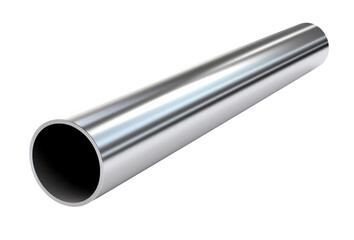
Stainless pipe’s tensile strength meets or exceeds carbon steel in most standard configurations, while its lower density provides a measurable weight advantage in large-scale installations.
Durability, Corrosion Resistance & Long-Term Performance
Corrosion Resistance in Industrial Environments
The passive oxide layer of stainless pipe is its most commercially significant property. Unlike carbon steel, which requires external coatings, galvanizing, or cathodic protection to resist oxidation, stainless pipe is inherently self-protecting. If the surface is scratched or mechanically damaged, the chromium oxide layer regenerates spontaneously in the presence of oxygen — a property carbon steel cannot replicate.
In chemical processing environments, stainless pipe Grade 316 resists attack from dilute acids, alkalis, and chloride-bearing process fluids. In marine infrastructure, the molybdenum content in 316 prevents the pitting corrosion that renders carbon steel pipe structurally compromised within months of saltwater exposure. For food and pharmaceutical applications, the smooth, non-reactive surface of stainless pipe meets hygiene standards that carbon steel — even coated — cannot satisfy.
Carbon steel pipe, when unprotected, begins surface oxidation within hours of moisture exposure. In aggressive chemical or coastal environments, wall thinning through corrosion can reduce structural integrity within 2–5 years, creating maintenance liabilities and unplanned downtime costs that far exceed the initial material cost savings.
Fatigue Life, Pressure Rating & Temperature Tolerance
Under cyclic loading conditions — pressure fluctuations, vibration, thermal expansion cycles — stainless pipe demonstrates superior fatigue resistance compared to carbon steel. The austenitic microstructure of 304/316 stainless absorbs cyclic stress without the brittle fracture risk associated with high-carbon steel grades at low temperatures.
ASME B36.19M governs stainless pipe dimensions and pressure ratings. For high-pressure fluid systems, Schedule 40S and 80S stainless pipe ratings are comparable to equivalent carbon steel schedules, but stainless maintains these ratings across a broader temperature range. At temperatures above 400°C, carbon steel pipe experiences accelerated creep deformation; stainless pipe Grade 316 retains structural integrity up to 870°C in continuous service. This thermal advantage makes stainless pipe the specification standard for steam systems, heat exchangers, and high-temperature chemical reactors.
Compliance Standards, Grades & Specifications
Applicable Industry Standards (ASTM / ASME / ISO)
Procurement compliance for industrial pipe systems requires precise standard alignment. The primary governing standards are:
- ASTM A312: Covers seamless, welded, and heavily cold-worked austenitic stainless steel pipe — the benchmark specification for stainless pipe in pressure applications.
- ASTM A53 / A106: Governs carbon steel pipe for general service (A53) and high-temperature service (A106 Grade B).
- ASTM A790: Applies to duplex and super duplex stainless pipe for severe corrosive service.
- ISO 1127: International dimensional standard for stainless steel tubes, widely referenced in European and cross-border procurement.
- ASME B31.3: Process piping code governing design pressure, material selection, and fabrication for chemical and petrochemical plants.
Specifying the correct standard at the RFQ stage eliminates material substitution risk and ensures traceability through mill test reports (MTRs) — a non-negotiable requirement for pressure vessel and process piping applications.
Grade Selection Guide for Industrial Applications
| Application | Recommended Grade | Rationale |
|---|---|---|
| Food & beverage processing | 316L stainless pipe | Low carbon, hygienic surface, chloride resistance |
| Marine / offshore structures | 316 / Super Duplex | Molybdenum content, pitting resistance |
| Chemical processing | 316L / Duplex 2205 | Acid/chloride resistance, high strength |
| Oil & gas (sour service) | Duplex 2205 / 2507 | H₂S resistance, high yield strength |
| Water treatment | 304 / 316 stainless pipe | Cost-effective corrosion resistance |
| Structural / construction | Carbon steel A53 Sch 40 | Cost-driven, dry environment |
| High-temperature steam | 316 stainless pipe | Creep resistance above 400°C |
Duplex grades offer yield strengths of 450–550 MPa — significantly above standard austenitic stainless — making them the preferred specification where both mechanical strength and corrosion resistance are simultaneously critical.
Commercial Considerations — Cost, Sourcing & Application Fit
Total Cost of Ownership: Upfront Cost vs Lifecycle Value
Stainless pipe carries a material cost premium of 3–6× over equivalent carbon steel pipe on a per-meter basis. For procurement teams evaluating on purchase price alone, this gap appears prohibitive. However, a lifecycle cost model consistently reverses this conclusion in corrosive or high-maintenance environments.
A 10-year TCO framework for a DN100 process line:
- Carbon steel pipe: Lower CAPEX, but requires coating application (Year 0), inspection cycles (Years 2, 4, 6), coating rehabilitation (Year 5), and potential section replacement (Years 7–9). Cumulative maintenance and downtime costs typically represent 180–250% of initial material cost.
- Stainless pipe 316: Higher CAPEX, near-zero maintenance in compatible environments, no coating degradation, full structural integrity at Year 10. Lifecycle cost per year of service is consistently lower beyond Year 4–5 of operation.
For applications in clean environments with no corrosive exposure — structural supports, dry utility lines — carbon steel remains the commercially rational choice. The stainless pipe value proposition is strongest where replacement costs, process contamination risk, or regulatory compliance penalties are material financial factors.
Key Industrial Use Cases & Procurement Decision Criteria
Application mapping for stainless pipe vs steel pipe:
- Chemical processing: Stainless pipe 316L is mandatory where fluid contact with chlorides, acids, or oxidizing agents occurs. Carbon steel requires expensive lining systems that add fabrication complexity.
- Water & wastewater treatment: Stainless pipe 304 provides cost-effective service life in potable water and treated effluent systems; carbon steel requires epoxy lining and periodic inspection.
- HVAC & building services: Carbon steel is standard for closed-loop heating systems; stainless pipe is specified for open-loop or coastal installations where condensation-driven corrosion is a risk.
- Food & pharmaceutical: Stainless pipe 316L with electropolished finish is the regulatory baseline (FDA, EHEDG). No carbon steel alternative exists for product-contact lines.
- Oil & gas upstream: High-strength carbon steel (API 5L X65/X70) dominates transmission pipelines; stainless and duplex pipe are specified for process headers and injection lines in sour service.
FAQ
1. Is stainless pipe always stronger than carbon steel pipe under high-pressure industrial conditions?
Not universally. High-grade carbon steel (API 5L X65, ASTM A106 Grade B) can exceed standard austenitic stainless pipe in yield and tensile strength. However, stainless pipe maintains its pressure ratings across a wider temperature range and resists the corrosion-induced wall thinning that progressively degrades carbon steel pressure ratings in service. For sustained high-pressure performance in corrosive environments, stainless pipe delivers superior long-term structural reliability.
2. What stainless pipe grade should I specify for corrosive chemical or marine environments?
Grade 316 or 316L stainless pipe is the standard specification for chloride-bearing and marine environments, with molybdenum content providing critical pitting resistance. For highly aggressive chemical service involving strong acids or elevated chloride concentrations, Duplex 2205 or Super Duplex 2507 offers higher yield strength and enhanced corrosion resistance. Always confirm compatibility with a corrosion resistance chart for the specific process fluid and temperature range.
3. How do I compare the total procurement cost of stainless pipe vs. steel pipe over a 10-year asset lifecycle?
Build a TCO model that includes: initial material and fabrication cost, surface treatment and coating cost (carbon steel), annual inspection and maintenance cost, unplanned replacement probability and associated downtime cost, and end-of-life scrap value. In corrosive or high-maintenance environments, stainless pipe typically achieves cost parity with carbon steel by Year 4–5 and delivers lower cumulative cost over a 10-year asset life. Request mill test reports and confirm ASTM/ASME compliance at sourcing to protect asset integrity throughout the lifecycle.
Conclusion
The stainless pipe vs steel pipe decision is not a question of absolute strength — it is a question of performance fit across your specific operating conditions, compliance requirements, and financial model. Carbon steel pipe delivers competitive mechanical strength at lower initial cost in dry, non-corrosive structural applications. Stainless pipe for industrial use — particularly Grades 316 and duplex — delivers superior corrosion resistance, broader temperature tolerance, regulatory compliance, and lower lifecycle cost in demanding process environments.
For procurement teams, the key decision criteria are: operating environment (corrosive vs. dry), regulatory requirements (food, pharma, offshore), pressure and temperature service conditions, and 10-year maintenance budget. Specify ASTM A312 for stainless pipe and require full MTR documentation from your supplier to ensure material traceability and grade integrity. When the application demands reliability over decades, stainless pipe is not a premium — it is the engineered baseline.