

Quick Answer
Carbon steel pipe refers to any pipe made from carbon-steel alloys with carbon content typically ranging from 0.05% to 2.0%. Black steel pipe is a specific type of carbon steel pipe featuring a dark oxide coating formed during manufacturing. The primary distinction lies in surface treatment: black steel undergoes no galvanization and retains its mill-scale finish, while generic carbon steel pipes may receive various protective coatings. Both materials share identical base metallurgy but differ in corrosion resistance, application suitability, and cost structures.
Material Composition and Manufacturing Standards
Carbon Content Specifications
Seamless carbon steel pipe manufacturers produce materials under ASTM A106, A53, and API 5L standards. Grade B carbon steel contains 0.30% maximum carbon, 0.29-1.06% manganese, and trace phosphorus/sulfur. Black steel pipe typically uses A53 Type F (furnace-welded) or Type E (electric-resistance-welded) specifications with identical chemical compositions.
The carbon steel pipe chart categorizes materials by schedule thickness (SCH 40, SCH 80, SCH 160). Schedule 40 black steel pipe with 2-inch nominal diameter has 0.154-inch wall thickness, supporting 1,230 PSI at 400°F per ASME B31.1 standards.
Surface Oxidation Treatment Differences
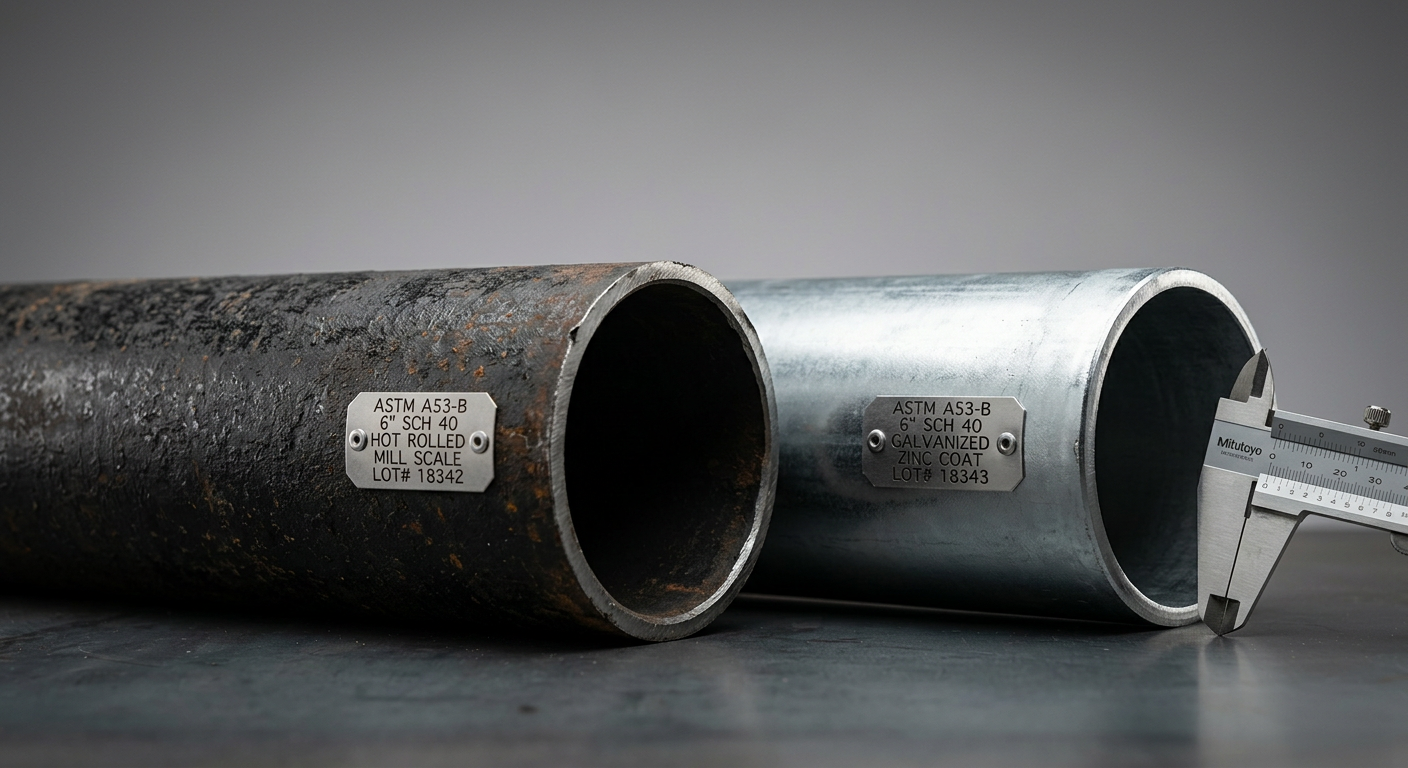
Black steel develops its characteristic dark finish through controlled oxidation during hot-rolling. The mill scale layer (Fe₃O₄) forms at temperatures exceeding 1,200°F, creating a 0.001-0.003 inch protective barrier. This process differs from deliberate surface treatments applied to carbon steel pipes.
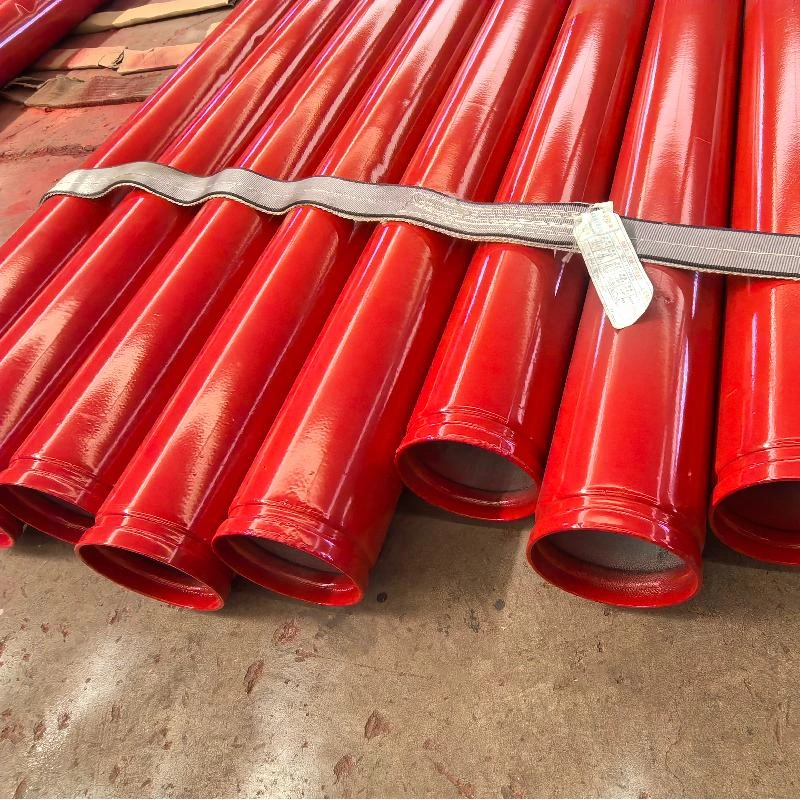
Carbon steel pipe suppliers offer multiple finishes: bare (mill finish), pickled and oiled, or pre-galvanized. The oxidation layer on black steel provides minimal corrosion protection compared to zinc coatings, making it unsuitable for outdoor applications without additional treatment.
Corrosion Performance Analysis
Marine Exposure Comparison
| Environment | Black Steel Corrosion Rate | Galvanized Carbon Steel Rate | Test Duration |
|---|---|---|---|
| Seawater Immersion | 0.127 mm/year | 0.018 mm/year | ASTM G31 (90 days) |
| Coastal Atmosphere | 0.089 mm/year | 0.012 mm/year | ISO 9223 C5-M |
| Industrial Zone | 0.054 mm/year | 0.009 mm/year | ASTM G50 |
Black steel pipe exhibits 7-10 times faster degradation in marine conditions. The mill scale coating fails within 6-18 months under salt spray exposure (ASTM B117), while zinc-coated carbon steel maintains integrity for 15-25 years depending on coating thickness.
Atmospheric Corrosion Mechanisms
Black steel’s iron oxide layer is porous and non-adherent. When exposed to moisture, the oxidation reaction (4Fe + 3O₂ + 6H₂O → 4Fe(OH)₃) accelerates beneath the mill scale. Carbon steel pipe with epoxy or polyethylene coatings demonstrates 95% corrosion reduction in NACE TM0284 testing.
Pressure Rating and Structural Integrity
ASME B36.10M Specifications
The carbon steel pipe chart defines pressure capabilities through schedule numbers. A 6-inch Schedule 80 black steel pipe supports 3,010 PSI at ambient temperature, calculated using:
P = 2St / (D – 2y)
Where S = allowable stress (15,000 PSI for A53 Grade B), t = wall thickness, D = outer diameter, y = thread/groove depth.
Seamless carbon steel pipe offers 15-20% higher burst strength than welded black steel due to grain structure uniformity. API 5L X52 seamless pipe achieves 52,000 PSI minimum yield strength versus 35,000 PSI for standard black steel.
Temperature Derating Factors
| Temperature (°F) | Allowable Stress Multiplier | Application Limit |
|---|---|---|
| -20 to 100 | 1.00 | Standard service |
| 400 | 0.92 | Steam systems |
| 650 | 0.78 | High-temp processes |
| 750+ | 0.50 | Specialized alloys required |
Black steel pipe maintains structural integrity up to 750°F for non-critical applications. Carbon steel pipe manufacturers recommend chrome-molybdenum alloys (ASTM A335) for temperatures exceeding 850°F.
Welding Procedure Specifications
Preheating Requirements
Black steel pipe requires 200-400°F preheat for wall thicknesses above 0.75 inches per AWS D1.1. Carbon steel pipe with higher carbon content (>0.25%) demands 300-500°F preheat to prevent cold cracking. SMAW (Shielded Metal Arc Welding) using E7018 electrodes suits both materials.
Welding procedure differences emerge in post-weld heat treatment. Black steel joints in ASME Section I boiler applications need stress relief at 1,100-1,200°F for 1 hour per inch of thickness. Standard carbon steel pipe in structural applications may skip PWHT for thicknesses under 1.25 inches.
Filler Metal Selection
| Base Material | Electrode/Wire | Tensile Strength | Typical Use |
|---|---|---|---|
| Black Steel A53 | E7018, ER70S-6 | 70,000 PSI | HVAC, fire sprinkler |
| Carbon Steel A106 | E8018-C1, ER80S-D2 | 80,000 PSI | High-pressure steam |
| API 5L X60 | E9018-G, ER90S-G | 90,000 PSI | Pipeline transmission |
Carbon steel pipe suppliers specify filler metals matching base material yield strength plus 10,000 PSI safety margin. Black steel’s lower strength allows standard E7018 electrodes for most applications.
Industrial Application Scenarios
HVAC and Fire Protection Systems
Black steel pipe dominates heating, ventilation, and sprinkler installations due to cost advantages. A 4-inch Schedule 40 black steel pipe costs $8-12 per foot versus $15-22 for galvanized carbon steel. The National Fire Protection Association (NFPA 13) permits black steel in wet pipe systems with corrosion inhibitors.
Carbon steel pipe with internal lining suits chilled water systems where condensation accelerates corrosion. Cement-mortar lined pipe (AWWA C205) extends service life to 50+ years in closed-loop applications.
Oil and Gas Transmission
Seamless carbon steel pipe meeting API 5L specifications transports hydrocarbons under extreme conditions. X65 grade pipe with 0.16% carbon content achieves 65,000 PSI yield strength, enabling 1,440 PSI operating pressure in 36-inch diameter pipelines.
Black steel pipe remains limited to low-pressure gathering systems (<300 PSI) and temporary installations. The absence of protective coatings makes it unsuitable for sour gas service (H₂S concentrations >50 ppm) per NACE MR0175 standards.
Structural and Mechanical Engineering
Carbon steel pipe manufacturers produce hollow structural sections (HSS) under ASTM A500 for building frames and support columns. Grade C material offers 50,000 PSI yield strength with improved weldability compared to black steel pipe.
Black steel pipe serves mechanical applications like handrails, bollards, and conveyor rollers where appearance and corrosion resistance are secondary concerns. The mill scale finish provides adequate protection in controlled indoor environments.
Cost-Benefit Analysis
Material Pricing Factors
Black steel pipe costs 30-45% less than equivalent carbon steel pipe with protective coatings. A 100-foot section of 2-inch Schedule 40 black steel averages $280-350, while galvanized carbon steel ranges $420-580. Volume purchases from carbon steel pipe suppliers reduce unit costs by 15-25%.
Lifecycle cost calculations must account for maintenance and replacement intervals. Black steel in corrosive environments requires repainting every 3-5 years at $12-18 per linear foot, negating initial savings within 10-15 years.
Performance-to-Price Optimization
| Application Type | Recommended Material | 20-Year Total Cost (per 100 ft) | Justification |
|---|---|---|---|
| Indoor HVAC | Black Steel | $850-1,200 | Minimal corrosion risk |
| Outdoor Gas Line | Coated Carbon Steel | $1,800-2,400 | Regulatory compliance |
| Marine Dock | Stainless/Galvanized | $4,500-6,000 | Extreme environment |
Carbon steel pipe chart data helps engineers select optimal schedules balancing pressure requirements and material costs. Oversizing to lower schedules (e.g., SCH 40 vs. SCH 80) reduces expenses without compromising safety margins.
Frequently Asked Questions
Q: Can black steel pipe be used for potable water systems?
No. NSF-61 certification requires protective linings. Use cement-lined carbon steel pipe.
Q: What is the maximum operating temperature for black steel pipe?
750°F for non-critical applications. Higher temperatures require alloy steel per ASTM A335.
Q: How does mill scale affect welding quality?
Mill scale causes porosity and slag inclusions. Remove via grinding before welding.
Q: Are black steel and carbon steel pipe interchangeable in codes?
Yes, if both meet identical ASTM specifications (e.g., A53 Grade B).
Q: What coating extends black steel pipe lifespan outdoors?
Zinc-rich primer plus polyurethane topcoat provides 15-20 year protection per SSPC-Paint 20.
Q: Do seamless carbon steel pipes require different fittings than welded black steel?
No. Both use ASME B16.9 fittings if pressure classes match.
Q: How often should black steel pipe in steam systems be inspected?
Annually per ASME CSD-1. Check for wall thinning and erosion-corrosion.
Q: Can carbon steel pipe be cold-bent without cracking?
Yes, if bend radius exceeds 5× pipe diameter and carbon content stays below 0.25%.
Conclusion and Professional Recommendations
The difference between carbon steel pipe and black steel pipe centers on surface treatment rather than base metallurgy. Black steel’s uncoated mill finish suits cost-sensitive indoor applications with controlled environments. Carbon steel pipe with protective coatings or specialized alloys addresses corrosive conditions, high pressures, and regulatory requirements.
Engineers should consult carbon steel pipe chart data and ASME codes when specifying materials. Seamless carbon steel pipe from certified manufacturers ensures quality for critical applications. For procurement guidance and technical specifications, contact reputable carbon steel pipe suppliers offering material test reports and third-party certifications.